
Planning your first overnight backpacking trip is exciting — and completely overwhelming if you’ve spent any time scrolling through outdoor content online. Everyone seems to have a $400 titanium cookset, a perfectly color-coordinated kit, and a bear canister that doubles as a side table. Here’s the truth about essential overnight backpacking gear: most of what you see online is either overkill, sponsored content, or both. Your first trip does not require a five-figure kit. It requires the right kit.
I’ve watched too many beginners either overpack themselves into misery or blow their budget on gear they don’t need. This guide cuts through the noise. We’re going to cover what genuinely belongs in your pack for a one-night trip, what you can skip entirely, and where to spend versus where to save. No fluff, no affiliate-driven hype — just real talk from someone who’s made every beginner mistake so you don’t have to.
The golden rule of backpacking is simple: every ounce matters, and every dollar should earn its place. Let’s build your kit the right way.
What Essential Overnight Backpacking Gear Actually Looks Like
Strip everything back to the fundamentals and your overnight kit is really just six categories: shelter, sleep system, pack, navigation, water, and food. That’s it. Instagram loves to add a seventh, eighth, and ninth category — camp chairs, solar lanterns, portable espresso makers — but for your first night out, those are luxuries you can evaluate after the fact. Nail the six essentials first.
A shelter doesn’t mean a three-season freestanding tent with a vestibule for your “gear garage.” A basic two-person backpacking tent in the 3–4 lb range is completely fine for a beginner one-nighter. Your sleep system is a sleeping bag rated slightly below the temperatures you’ll encounter, plus a sleeping pad — the pad matters more than most beginners realize since it’s your insulation from the cold ground. Your pack just needs to be comfortable, fit the load, and not be a 75-liter behemoth that tempts you to fill every pocket.
Navigation means a downloaded offline map on your phone (free via apps like Gaia GPS or AllTrails) plus a paper map if the trail is at all complex. Water means a filter — we’ll cover those below. Food means calorie-dense, simple meals that don’t require a full kitchen setup. That’s your complete list. Everything else is optional.
The Gear Instagram Tells You That You Need (But You Don’t)
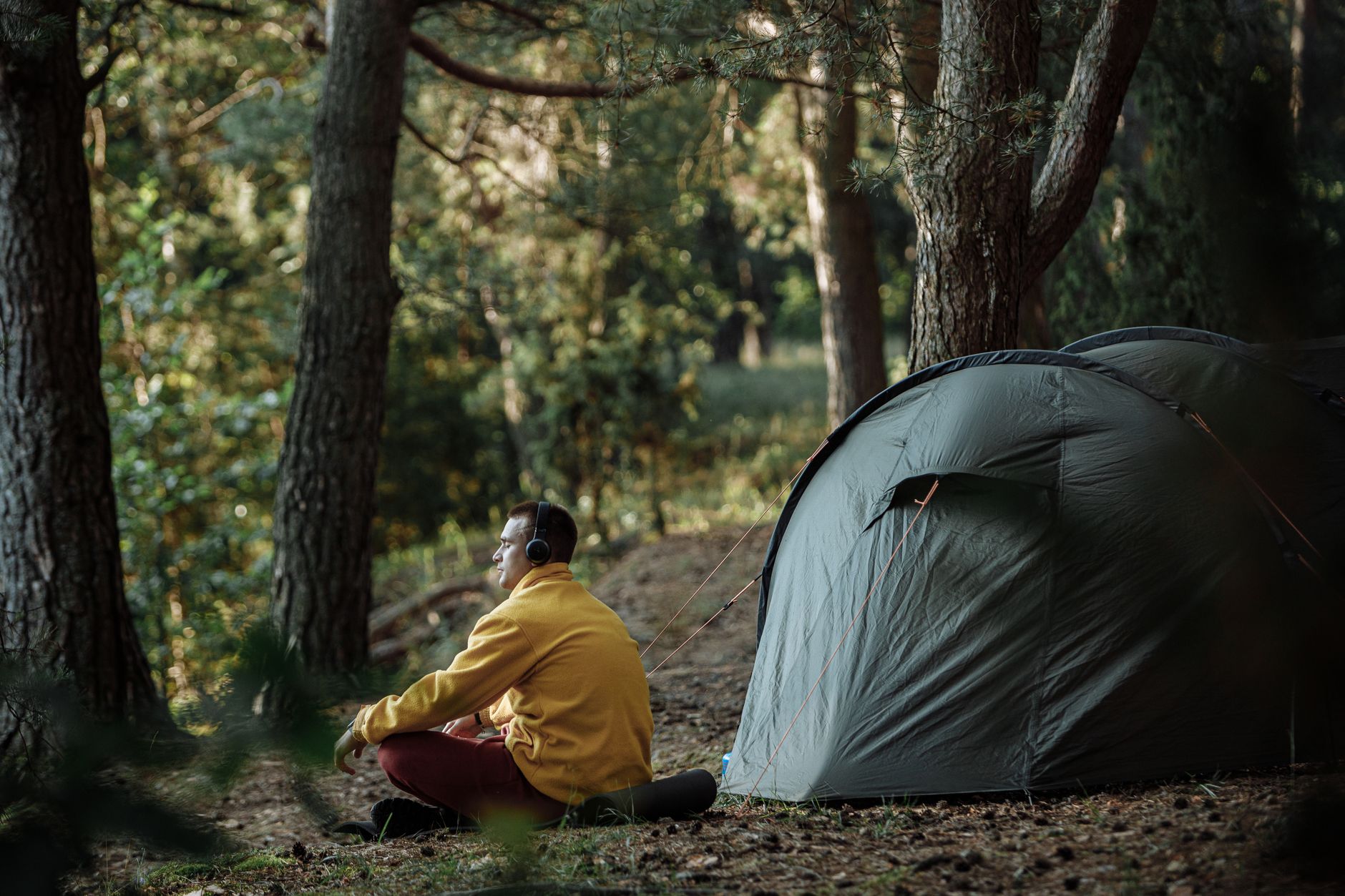
Let’s talk about what you can confidently leave off the list for trip one. Trekking poles are genuinely useful — especially on technical terrain — but they’re not mandatory for a flat, well-maintained overnight trail. A portable camp shower is dead weight. An ultralight titanium spork is a nice upgrade down the road, but a regular spoon from your kitchen works fine. Matching color-coordinated stuff sacks? Grocery bags exist. Camera gear bags, specialty camp lighting systems, and ultralight camp shoes are all things you can think about after you’ve done ten nights out and actually know what bothers you.
The gear that Instagram never shows you — the blister kit, the headlamp with fresh batteries, the extra pair of dry socks in a waterproof bag — that’s the gear that actually saves trips. Beginners routinely underprepare for foot care and weather changes because those items don’t photograph well. Pack a small first aid kit, moleskin for blisters, and a rain layer even if the forecast looks perfect. Conditions change fast in the backcountry.
Also worth noting: you almost certainly own gear that works fine already. That puffy jacket in your closet? It works. That old daypack? Maybe not ideal, but it can cover a flat overnight in a pinch. The goal is one successful trip that teaches you what you actually want to upgrade — not a perfect kit on day one.

Where to Spend and Where to Save on Your First Overnight Kit
There are two areas where budget gear can genuinely ruin your trip: your sleep system and your footwear. A cheap sleeping bag that doesn’t keep you warm at the rated temperature, or trail shoes that destroy your feet after five miles, will end your enjoyment fast. These are the places to spend appropriately — not necessarily on the most expensive option, but on something well-reviewed with a honest temperature rating.
Footwear is such an important part of the picture that it’s worth pairing your boot decision with a quality set of trekking poles if your trail involves any elevation gain or descent — your knees will thank you by the end of the second day. Trail runners are often better than heavy hiking boots for beginner overnighters on maintained trails: lighter, faster drying, and easier on ankles that aren’t used to load-bearing hiking yet.
Where you can save without much sacrifice: tent brands, cooking systems, and rain covers. A budget tent from a reputable brand like Naturehike or REI’s in-house line will keep you dry on a typical three-season night. A simple alcohol stove or entry-level canister stove — you can find excellent options in our best backpacking stove guide — does the job for oatmeal and ramen without requiring a titanium investment. Spend smart, not big.
Recommended Essential Overnight Backpacking Gear: Our Top Picks
Below are honest, beginner-friendly picks across the core categories. These aren’t the flashiest options — they’re the ones that work reliably without bankrupting you before your first trip is even booked.
1. REI Co-op Trailbreak 60 Pack ⭐⭐⭐⭐⭐
A 60-liter pack built specifically for newer backpackers who need a comfortable, adjustable carry without a steep learning curve. The harness system is genuinely forgiving on fit, which matters enormously when you’re new to carrying load. It’s not ultralight, but it’s well-organized, durable, and priced for a beginner budget.
Pros:
- ✓ Excellent adjustable fit system for first-time buyers
- ✓ Smart organization with easy-access hip belt pockets
- ✓ Durable ripstop fabric that takes beginner abuse
Cons:
- ✗ Heavier than ultralight options — fine for trip one, worth upgrading later
2. Naturehike Cloud-Up 2 Tent ⭐⭐⭐⭐⭐
This is one of the most recommended budget backpacking tents on the market for good reason. Under four pounds, double-walled, and genuinely capable of handling three-season weather, the Cloud-Up 2 outperforms tents at twice the price in basic functionality. It pitches fast and packs down small. No, it’s not a Nemo or Big Agnes. Yes, it will keep you dry and comfortable on your first overnight.
Pros:
- ✓ Exceptional value — outperforms its price point significantly
- ✓ Double-wall construction with solid waterproofing
- ✓ Compact packed size for a true backpacking tent
Cons:
- ✗ Vestibule space is tight for two large adults with gear
3. Sawyer Squeeze Water Filter ⭐⭐⭐⭐⭐
If there’s one piece of essential overnight backpacking gear where you should never cut corners, it’s your water filtration. The Sawyer Squeeze has been a backcountry staple for years because it works, it’s light (just 3 oz), and it’s affordable. It filters directly into a bottle or hydration reservoir, removes 99.99999% of bacteria and protozoa, and lasts a lifetime with basic backflushing maintenance.
Pros:
- ✓ Only 3 oz — nearly weightless in your pack
- ✓ No batteries, no pumping, no replacement cartridges needed regularly
- ✓ Works inline with most hydration bladders
Cons:
- ✗ Flow rate slows over time if not backflushed consistently
4. Therm-a-Rest Z Lite Sol Sleeping Pad ⭐⭐⭐⭐⭐
Inflatable sleeping pads are comfortable, but they puncture. For your first trip, the Z Lite Sol is the smart choice: foam, indestructible, and folds accordion-style to strap outside your pack. It’s not the most luxurious sleep surface, but it provides solid insulation from the ground (R-value of 2.0), never fails, and costs a fraction of inflatable alternatives. Learn on this, then upgrade when you know what R-value and sleeping position preference you actually need.
Pros:
- ✓ Zero puncture risk — the most reliable pad you can own
- ✓ Budget-friendly with genuine durability
- ✓ Can double as a sit pad at camp
Cons:
- ✗ Bulky strapped to the outside of your pack — not the most streamlined look
5. Black Diamond Spot 400 Headlamp ⭐⭐⭐⭐⭐
A reliable headlamp is non-negotiable — and it’s one of those items where cheap options will genuinely let you down at the worst possible moment. The Spot 400 throws 400 lumens, has a red night-vision mode that won’t destroy your dark adaptation, and the battery life is strong on standard AAA batteries. It’s water-resistant, lightweight, and has been a backcountry standard for years. Fresh batteries before every trip. Always.
Pros:
- ✓ 400 lumens is more than enough for camp navigation and night hiking
- ✓ Red mode preserves night vision — underrated feature
- ✓ Runs on standard AAA batteries you can find anywhere
Cons:
- ✗ Slightly heavier than rechargeable competitors at similar brightness
Building Good Habits Before You Buy More Gear
Here’s what experienced backpackers know that beginners don’t: gear is the last variable, not the first. Before you spend another dollar, do a shakedown hike. Load your pack with everything you’ve assembled and do a 5–8 mile day hike. Find out what rubs, what you forgot, and what you carried and never touched. That feedback is worth more than any gear review — including this one.
Practice setting up your tent in the backyard before you’re standing in a dimming forest at 7pm. Cook your camp meals at home once so you know how the stove works and how much fuel you’ll use. These seem obvious, but the majority of beginner struggles on first overnighters come from unfamiliar gear in the field. Make it familiar before you go.
Finally, go with someone who’s done it before if you can. Not because you can’t figure it out alone — you can — but because the feedback loop is so much faster when there’s someone next to you who knows why your hip belt isn’t sitting right or how to dig a proper cat hole. One experienced mentor trip is worth three solo fumbles. After that first successful overnight, you’ll know exactly what to upgrade, and you’ll make every gear decision with real information instead of Instagram inspiration.
The bottom line: essential overnight backpacking gear doesn’t need to be expensive, matching, or impressive to anyone but the trail. It needs to work. Start there, get your nights in, and let your experience guide your upgrades. That’s how every expert backpacker you’ve ever admired online actually built their kit — one trip at a time.
Shop Backcountry Gear Labs on Etsy
Hoodies, tees, hats, and more for campers and hikers who live for the trail.
Get Weekly Gear Picks
Join the Backcountry Gear Labs newsletter for expert gear picks and backcountry advice, every week.