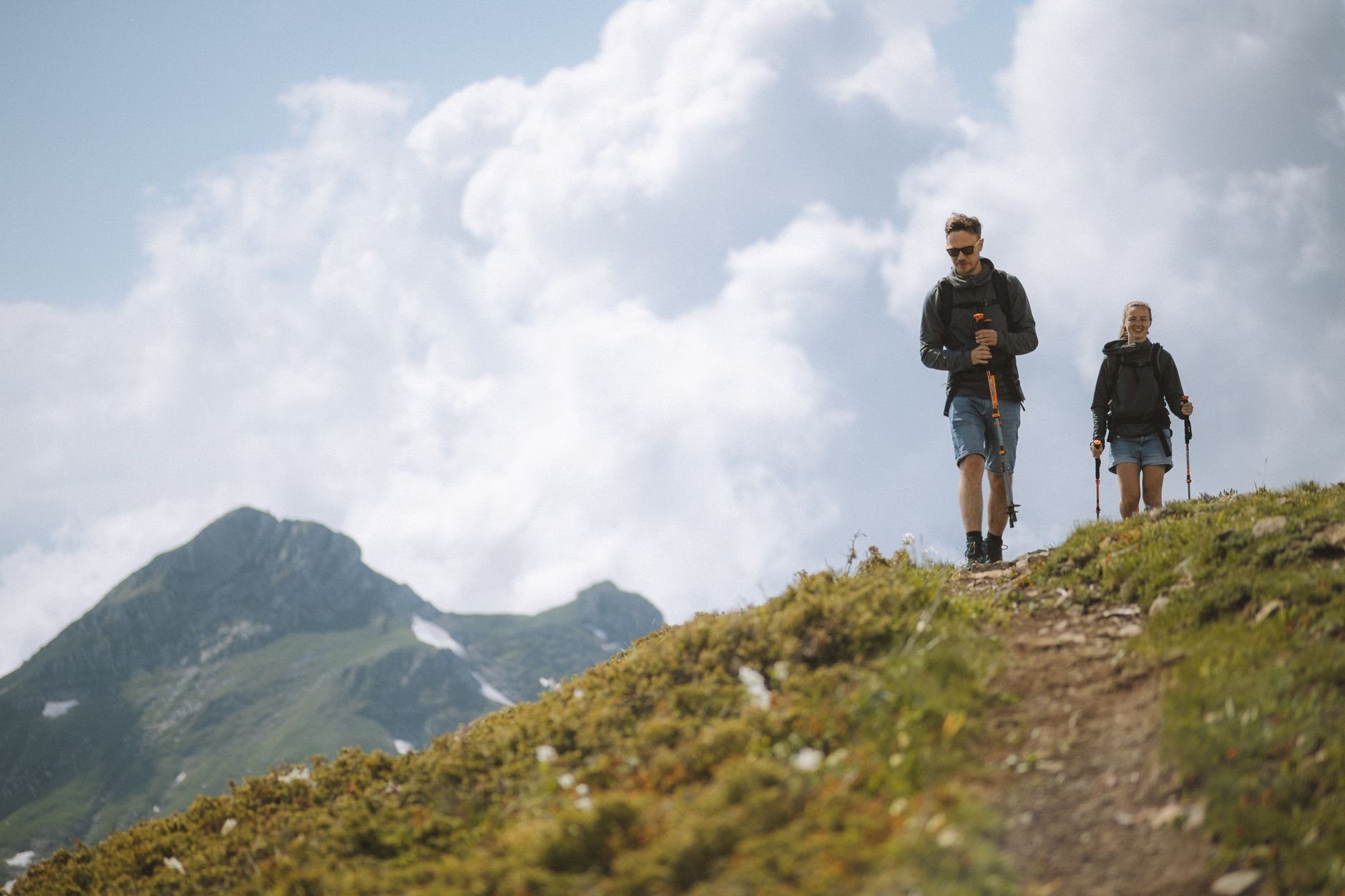
If you’ve ever watched a seasoned thru-hiker glide down a steep descent while you’re white-knuckling every loose rock, you already know the difference a quality pair of trekking poles can make. After years of covering everything from weekend scrambles in the Cascades to multi-week wilderness routes, I’ve come to treat poles less as optional accessories and more as essential hiking infrastructure. They redistribute load off your knees, improve balance on technical terrain, and when the day goes sideways, they double as tent poles, splints, and snake prods.
The trekking pole market has matured significantly over the past few years. Carbon fiber construction has trickled down from expedition-grade pricing, grip ergonomics have improved dramatically, and locking mechanisms have gotten more reliable under real-world abuse. But that growth has also flooded shelves with mediocre options that look great on spec sheets and fail you at mile eighteen. In this guide, I’m cutting through the noise with hands-on assessments and field-tested picks across multiple terrain types and budgets.
Whether you’re logging your first fifty-miler or fine-tuning a fastpacking kit that already borders on obsessive, there’s a pole on this list for you. Let’s get into it.
Why Trekking Poles Are Worth Every Ounce
The biomechanical case for trekking poles is rock solid. Research consistently shows that poles reduce compressive forces on the knee joint by up to 25 percent on descents — which is exactly when knees take the hardest beating over long miles. For anyone carrying a loaded pack on multi-day trips, that reduction compounds across thousands of steps and can mean the difference between walking into camp comfortably and limping in with swollen joints.
Beyond joint protection, poles add two additional points of contact with the ground, which meaningfully improves stability on wet rocks, rooted trails, and stream crossings. Experienced hikers use them almost subconsciously to probe uncertain footing, balance across logs, and manage momentum on loose scree. That neural feedback — pole tip touching terrain a split second before your boot — gives your brain more time to react and adjust.
The secondary benefits stack up too. Poles help you maintain a more upright posture, which opens your breathing and reduces upper body fatigue. On uphill grinds, a proper pole plant can take a surprising amount of effort out of the push-off. If you’re tarp camping or using ultralight shelters, a good pair of poles often eliminates the need for dedicated tent poles entirely, saving significant weight from your overall kit.

Aluminum vs. Carbon Fiber: Choosing the Right Material
This is the first decision tree every pole buyer faces, and it matters more than most gear sites let on. Aluminum poles — typically 6061 or 7075 aluminum alloy — are durable, affordable, and they bend rather than snap when you land on them hard. That characteristic failure mode is important. A bent pole is annoying but walkable. A snapped carbon pole in the backcountry with no cell service is a different problem entirely.
Carbon fiber poles shed weight aggressively. A premium carbon set can come in under 400 grams for the pair, compared to 500 to 600 grams for comparable aluminum. On ultralight builds where you’re counting grams religiously, that’s a meaningful savings. Carbon also has better vibration damping, which reduces hand fatigue on rocky trail surfaces. The trade-off is fragility on lateral impacts — side-loading a carbon pole, like catching yourself on a fall or wedging a tip between rocks, can cause catastrophic failure.
My practical recommendation: if you’re hiking maintained trails, staying on trail, or prioritizing a light fastpack setup, carbon is a smart investment. If you’re doing off-trail routes, heavy scrambling, or you’re hard on gear in general, aluminum is the smarter play. Several manufacturers now offer hybrid designs with carbon shafts and aluminum sections at stress points — these are worth a look if you’re on the fence.

Lock Systems, Grip Materials, and the Details That Actually Matter
Locking mechanisms are where budget poles most often disappoint. There are two dominant systems: external lever locks (flick locks) and internal twist locks. External lever locks have become the industry standard for good reason — they’re fast to adjust, easy to operate with gloves on, and the adjustment is visible so you know when something is loose. Twist locks are lighter and cleaner looking, but they can slip under load and are harder to diagnose when something goes wrong.
Grip material deserves more attention than it usually gets. Cork grips absorb moisture and conform to your hand shape over time — they’re the best option for high-mileage use and warm weather where your hands sweat heavily. Foam grips are softer and immediately comfortable out of the box, making them popular for cooler conditions and shorter trips. Rubber grips insulate well and handle moisture fine, but they can cause friction blisters in warmer temps with extended use. Whatever material you choose, make sure the grip shape matches your natural hand position — an anatomically wrong grip will fatigue your hand even if the material is excellent.
Pay attention to grip extensions — that section of padded material below the main grip. When you’re traversing a hillside and choking up on the downhill pole, a long extended grip lets you do this without stopping to readjust pole length. It seems like a small thing until you’re on a sustained traverse and you understand exactly how useful it is. Most quality poles include this feature now; don’t settle for ones that don’t.

Top Trekking Poles Tested and Recommended
1. Black Diamond Trail Ergo Cork Trekking Poles ⭐⭐⭐⭐⭐
Black Diamond has been making reliable mountain hardware for decades, and the Trail Ergo Cork is the company’s most refined all-around hiking pole. The cork grip is ergonomically angled to reduce wrist fatigue, and the FlickLock Pro system is among the most secure and intuitive lever locks in the category. At just over 500 grams for the pair, these are honest workhorses built for high-mileage use on everything from maintained trails to off-trail mountain routes. The extended foam grip section is generous and well-positioned for technical traverses.
Pros:
- ✓ Excellent cork grip conforms to hand shape over time
- ✓ FlickLock Pro is bomber reliable in wet and cold conditions
- ✓ Angled grip design meaningfully reduces wrist strain on long days
Cons:
- ✗ Aluminum construction means they’re not the lightest option at this price point
2. Leki Micro Vario Carbon Trekking Poles ⭐⭐⭐⭐⭐
Leki’s engineering pedigree shows clearly in the Micro Vario Carbon. These poles pack down into a genuinely compact bundle — small enough to stuff into a daypack lid or strap to a travel bag — without compromising performance on the trail. The Speedlock 2 system is fast, bombproof, and adjusts smoothly even with cold fingers. Carbon construction keeps the pair under 430 grams, and the anti-shock system, while optional in use, is appreciated on long rocky descents. The ergonomic foam grip with a long sweat zone extension makes these particularly comfortable in varied terrain.
Pros:
- ✓ Folds to an impressively compact size for travel and storage
- ✓ Carbon construction delivers excellent vibration damping
- ✓ Speedlock 2 is one of the fastest and most secure systems available
Cons:
- ✗ Premium price reflects the quality but may not suit budget-conscious buyers
3. REI Co-op Trailmade Trekking Poles ⭐⭐⭐⭐
For hikers who want solid performance without paying expedition-grade prices, REI’s in-house Trailmade poles offer exceptional value. The aluminum construction is tough and the flick lock system — while not as refined as Black Diamond’s — is dependable across full days on trail. The foam grip is comfortable immediately and handles sweat well. These are the poles I recommend to hikers who are still developing their footprint, unsure if they’ll use poles regularly, or who want a durable spare set for guests at the trailhead. They’re not the lightest or most precise, but they do the job well for years.
Pros:
- ✓ Outstanding price-to-performance ratio for everyday hikers
- ✓ Durable aluminum handles rough use without complaint
- ✓ Comfortable foam grip with adequate extended zone
Cons:
- ✗ Heavier than premium options and less refined locking mechanism
4. Gossamer Gear LT5 Carbon Trekking Poles ⭐⭐⭐⭐⭐
Gossamer Gear built their reputation in the ultralight community, and the LT5 represents the best of that philosophy applied to poles. Coming in at under 350 grams for the pair, these are among the lightest fixed-length carbon poles on the market. The fixed-length design is a weight saving compromise — you pick your size at purchase — but for fastpackers and ultralight thru-hikers who have their pole length dialed in, this is a non-issue. The cork grip is excellent, and the construction quality exceeds what you’d expect at this weight. These are serious tools for serious hikers who treat every gram as a vote.
Pros:
- ✓ Exceptional weight savings — under 350g for the pair
- ✓ Premium cork grip is comfortable on full-day efforts
- ✓ Carbon construction offers superior vibration damping
Cons:
- ✗ Fixed length requires knowing your ideal pole sizing before ordering
5. Mountainsmith Pinnacle FX Trekking Poles ⭐⭐⭐⭐
The Pinnacle FX sits in a comfortable middle ground: more capable than entry-level options, less expensive than top-tier carbon. The aluminum shaft takes abuse well, the grip design accommodates a wide range of hand sizes, and the photo-safe cork and foam combination grip works across temperatures without becoming slippery. For hikers who cover 500 to 1,000 trail miles per year on mixed terrain without wanting to obsess over gram counts, the Pinnacle FX represents genuinely honest value. The included carbide tips are hard enough to last multiple seasons on rocky terrain.
Pros:
- ✓ Solid mid-range option with reliable construction
- ✓ Cork/foam combination grip works well across seasons and temperatures
- ✓ Carbide tips hold up well on abrasive rocky trail surfaces
Cons:
- ✗ Locking mechanism less refined than Black Diamond or Leki at similar price

How to Set Pole Length and Use Proper Technique
Even the best poles underperform in the hands of someone using them at the wrong length or with poor technique. The baseline rule for flat terrain: your elbow should form roughly a 90-degree angle when the pole tip touches the ground beside your foot. From there, shorten the poles by two to four centimeters for sustained climbs to get more drive out of each plant, and lengthen them by the same amount on descents to catch your weight effectively and reduce knee loading.
Pole planting rhythm matters too. The natural pattern mirrors your walking cadence — opposite arm and leg move forward together. Left foot forward, right pole plants. Keep the plant close to your body rather than reaching far out in front; over-reaching strains your shoulder and disrupts your stride. On flat ground, many hikers prefer a double-plant cadence where both poles plant every few steps rather than every step — experiment with what feels natural for your pace.
Wrist strap use is worth mentioning because it’s commonly misunderstood. You don’t grip the strap tightly — instead, thread your hand up through the strap from below so the strap runs across your palm and the grip is light. This allows you to let go quickly if you fall, and it means your hand can relax around the grip rather than squeezing constantly, which causes forearm fatigue over long miles. Most experienced hikers adjust strap length seasonally to account for glove thickness.
Caring for Your Poles Between Seasons
Trekking poles require minimal maintenance but benefit enormously from basic care. After any wet outing, extend the pole sections fully and let them air dry before collapsing for storage. Moisture trapped inside a twist-lock or lever-lock mechanism will accelerate corrosion on aluminum poles and degrade the rubber gaskets inside locking systems. A collapsed wet pole stored in a bag is how most locking failures begin.
Inspect carbide tips regularly — a worn tip dramatically reduces traction on hard surfaces and increases the impact shock transmitted up the shaft. Replacement tips are inexpensive and usually pole-brand compatible across different models. Replace them when the carbide shows visible wear or when you notice reduced bite on rock and roots. Finally, check your baskets seasonally. The small disc above the tip keeps poles from punching too deep into soft ground; cracked or missing baskets should be replaced before your next trip rather than during it.
The Bottom Line on Picking Your Next Pair
After testing more poles than I care to count across all kinds of terrain, my honest take is this: the best trekking pole is the one you actually bring on every hike. If a heavy aluminum set means you leave poles home because they’re a hassle, they’re the wrong poles for you. If ultralight carbon means you’re nervous about every sketchy step, go aluminum. Fit the pole to the hiking you actually do, not the hiking you imagine doing.
Start by identifying your primary use case — casual day hiking, loaded backpacking, ultralight fastpacking, or technical off-trail — and let that filter your material and feature choices. Then get your hands on the grip material before you commit. Cork, foam, and rubber all feel distinctly different, and what works for a friend may not work for your anatomy. The investment is worth making thoughtfully because a quality pair of poles will outlast multiple pairs of boots and fundamentally change how you experience long trail days.
Have questions about any of the poles on this list or want a recommendation for a specific trail type or terrain? Drop a comment below, and I’ll give you a straight answer. And if you want more no-fluff gear breakdowns delivered straight to your inbox, subscribe to the Backcountry Gear Labs newsletter below. We send one roundup per week — curated trail-tested content, no sponsored filler.
Join the Backcountry Gear Labs Newsletter
Get weekly gear reviews, trail reports, and buying guides from Camp Mavrik — tested in real conditions, written without the fluff. No spam. Unsubscribe any time.
Shop Backcountry Gear Labs on Etsy
Hoodies, tees, hats, and more for campers and hikers who live for the trail.
Get Weekly Gear Picks
Join the Backcountry Gear Labs newsletter for expert gear picks and backcountry advice, every week.