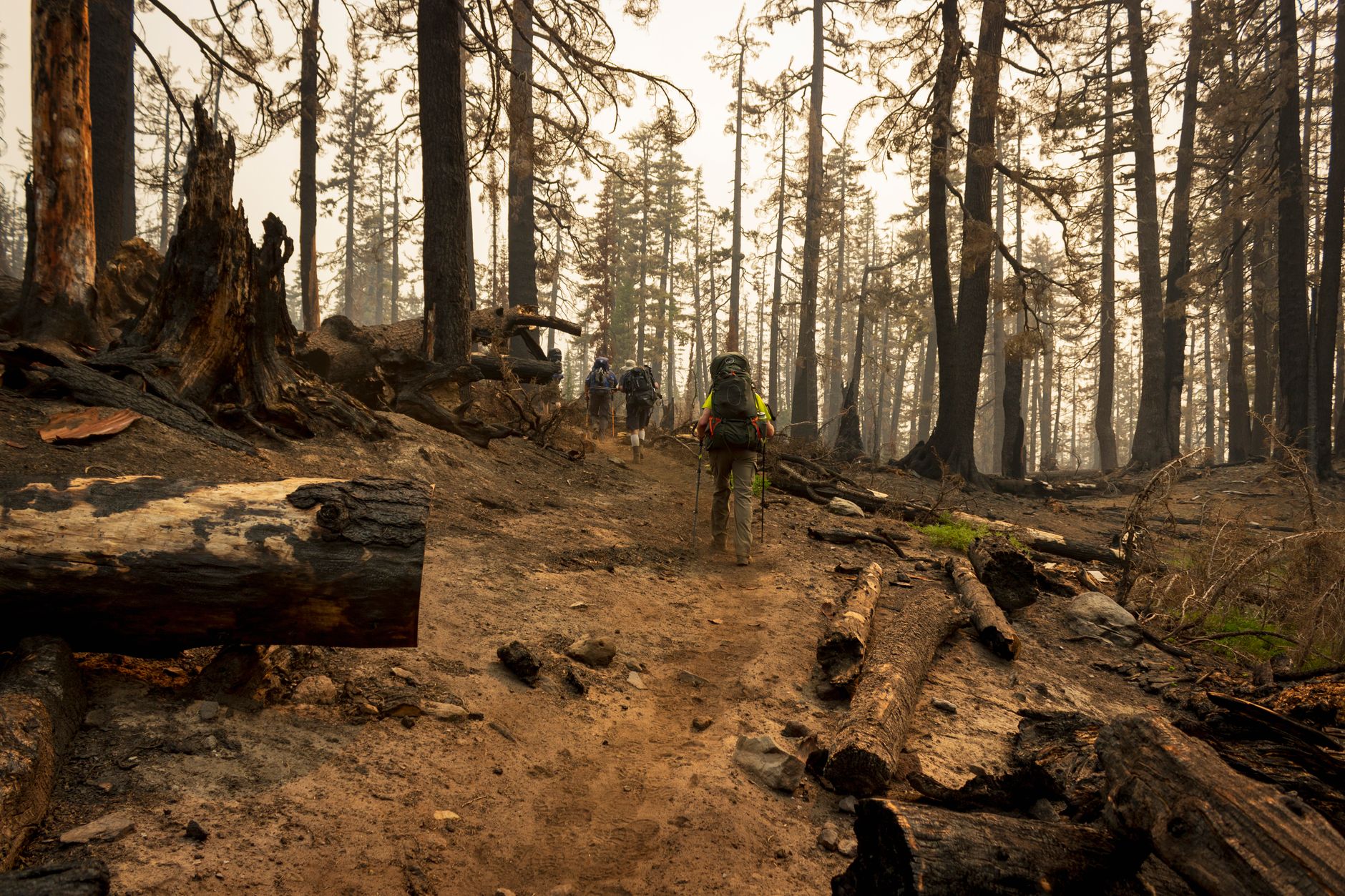
Finding the best respirator mask for hiking in wildfire smoke is no longer a niche concern — it’s a core piece of summer and fall trail kit for millions of hikers across the American West, Pacific Northwest, and increasingly the Northeast and Southeast. Wildfire seasons have grown longer, smoke events more unpredictable, and the days when you could simply “wait it out” are becoming rarer. The right mask can be the difference between a miserable, lung-burning slog and a safe, confident summit.
We spent a full season testing N95 and P100 respirators on actual trail — not in a lab, not on a treadmill. That means dusty switchbacks, humid canyon slots, river crossings that soak your face, and sustained aerobic effort that turns even a decent mask into a sweaty, fogged-up mess. We evaluated each mask on five criteria: filtration rating, breathability under exertion, packability, seal quality when your face is wet, and overall comfort during multi-hour use. Seven masks made the final cut.
Before we get into the picks, we’ll also cover something most gear reviews skip entirely: AQI guidance for when no mask is good enough and canceling the hike is simply the right call. Knowing when to turn around matters more than any piece of gear.
What to Look for in a Wildfire Smoke Mask for Hiking
Not every N95 is created equal for trail use. Masks designed for construction workers standing still don’t have the same breathability demands as a mask on someone cranking 500 vertical feet per hour with a 35-pound pack. Look for masks with an exhalation valve — they reduce heat buildup and CO2 buildup significantly during sustained effort. Note that valved masks do not protect others from your own respiratory droplets, but for solo hiking through smoke, they are the practical choice.
Fit and seal quality matter enormously on trail. Sweat degrades the foam nose seal on many disposable masks within 45 minutes of hard effort, creating gaps that funnel unfiltered air straight to your respiratory system. Elastomeric half-facepiece respirators with silicone face seals hold up far better against sweat, and their replaceable filters make them more economical and sustainable over a long season.
Packability is the other underrated factor. A mask you leave in the car because it’s too bulky to stow in your hip belt pocket is a mask that doesn’t protect you. The best trail masks pack flat, are crush-resistant, and live happily in a ziplock bag in the lid of your pack until the smoke rolls in. If you’re building a complete emergency-ready kit, check out our guide to self-rescue gear essentials — masks belong in the same conversation as your signaling and emergency shelter gear.

Best Respirator Masks for Hiking in Wildfire Smoke — Our Top 7 Picks
1. 3M 7502 Half Facepiece Reusable Respirator (with 2097 P100 Filters) 🏆
This is the gold standard for serious trail use in heavy smoke. The silicone face seal holds a solid grip even through two hours of uphill sweating, and the P100 filters block 99.97% of airborne particulates — that includes the ultrafine PM2.5 particles that cause the most pulmonary damage from wildfire smoke. The 7502 is a medium-sized frame; the 7501 and 7503 cover small and large face shapes. The 2097 filter cartridges also include an organic vapor layer, which handles the acrolein and other toxic compounds in smoke that a plain N95 simply doesn’t address.
Pros:
- ✅ P100 + OV combo filter blocks particulates AND toxic gases in smoke
- ✅ Silicone seal maintains integrity through heavy sweat and movement
- ✅ Replaceable filters reduce long-term cost and waste
Cons:
- ❌ Bulkiest option here — not ideal for ultra-minimalist kits
- ❌ Breaks eyewear seal on some face shapes
2. 3M Aura 9211+ N95 Disposable Respirator 🥈
The Aura is the best disposable N95 for hiking because of its three-panel molded design — it creates a standoff from your mouth that significantly reduces heat and moisture buildup compared to flat-fold N95s. The exhalation valve helps enormously on uphills. It packs nearly flat, and a two-pack lives permanently in our trail first-aid pouch. The foam nose piece begins to degrade after roughly 60–90 minutes of sustained sweat, so have a second one handy on a full-day smoke day.
Pros:
- ✅ Best-in-class breathability for a disposable N95
- ✅ Three-panel design reduces facial contact and heat
- ✅ Packs flat in a hip belt pocket
Cons:
- ❌ Foam nose seal weakens significantly with heavy sweat after 1–2 hours
- ❌ Single-use generates more waste than elastomeric options
3. Moldex 2300 N95 Disposable Particulate Respirator 🥉
Moldex consistently outperforms 3M on face geometry for narrower facial structures. The 2300’s neoprene nose bridge and dual headbands distribute pressure more evenly, which matters enormously on a six-hour ridge hike. Breathability is slightly below the Aura but still very workable at moderate exertion levels. The crush-resistant cup design bounces back reliably even after being stuffed into a pack. No exhalation valve on this model, which limits it to moderate smoke conditions.
Pros:
- ✅ Superior fit for narrow or angular face shapes
- ✅ Crush-resistant — survives pack abuse well
- ✅ Neoprene nose bridge outperforms foam in sweaty conditions
Cons:
- ❌ No exhalation valve — harder to breathe hard in heavy smoke
- ❌ Slightly more volume than flat-fold N95s
4. Kimberly-Clark WillowFlex N95 Respirator
The WillowFlex is a relative newcomer that’s earned a permanent spot in our smoke-season kit. Its flexible rib structure conforms to a wider range of face shapes than rigid-cup designs, and the low-profile fit means it works better with sunglasses and hat brims than most competitors. Breathability is excellent — comparable to the Aura — and the dual-layer nose piece holds up better to sweat than standard foam designs. Ideal for hikers who wear prescription eyewear or wrap-around sunglasses.
Pros:
- ✅ Flexible ribs conform to a wider range of face geometries
- ✅ Low-profile design works well with glasses and sunglasses
- ✅ Dual-layer nose piece improves sweat resistance
Cons:
- ❌ Harder to find than 3M and Moldex at outdoor retailers
- ❌ Slightly higher price per unit than the Aura
5. GVS Elipse P100 Half Mask Respirator
If the 3M 7502 is the workhorse, the GVS Elipse is the sports car — it’s dramatically more compact for an elastomeric half-mask, collapsing into a slim profile that fits inside a medium-sized stuff sack. The P100 filters deliver the same 99.97% filtration rating as the 3M 2097 cartridges, and the silicone seal performs beautifully in humid conditions. We tested this in coastal California during a marine layer smoke event and it held a clean seal throughout a 9-mile round trip. Best choice for hikers who want elastomeric performance without the bulk.
Pros:
- ✅ Most packable elastomeric P100 option tested
- ✅ Silicone seal excels in humid and sweaty conditions
- ✅ Slim collapsed profile fits inside a small dry bag
Cons:
- ❌ GVS filters only — no cross-compatibility with 3M cartridges
- ❌ Filter availability can be spotty at smaller retailers
6. Honeywell Dual-Cartridge Half Mask Respirator (with P100 Filters)
Honeywell’s elastomeric half-mask occupies the middle ground between the 3M 7502’s bomber reliability and the GVS Elipse’s slim profile. The low-profile dual cartridge design sits closer to the face than the 3M, reducing interference with pack shoulder straps and hydration tube routing. Strap tension is highly adjustable, which proved critical on long downhill sections where mask pressure tends to shift. A solid choice for hikers who’ve found the 3M 7502 too bulky but want full elastomeric durability.
Pros:
- ✅ Low-profile cartridges reduce pack strap interference
- ✅ Excellent strap adjustability for varied head shapes
- ✅ Wide filter compatibility with standard Honeywell and some 3M cartridges
Cons:
- ❌ Slightly heavier than GVS Elipse
- ❌ Face seal less supple than GVS silicone in cold temperatures
7. Envo Mask N95 Respirator with Silicone Seal
The Envo Mask is the most innovative design in this roundup — a hybrid that uses a soft silicone gasket fused to an N95-rated filter pad, giving you closer-to-elastomeric seal quality in a disposable-style format. The adjustable headband system is genuinely excellent, and it’s one of the few N95-class masks that works acceptably well on beards and facial hair, where every other mask in this list will leak substantially. If you’re a bearded hiker who’s been resigned to neck gaiters or bandanas, the Envo deserves serious attention.
Pros:
- ✅ Silicone gasket offers best-in-class seal for N95-rated mask
- ✅ Most viable option tested for hikers with facial hair
- ✅ Adjustable headband system suits a wide range of head sizes
Cons:
- ❌ Pricier per unit than standard disposable N95s
- ❌ Silicone frame adds bulk compared to flat-fold N95s

Breathability Under Exertion: Why This Matters More Than Anything
Filtration ratings are table stakes — every mask in this list meets or exceeds N95 standards. What separates a genuinely trail-worthy mask from a mediocre one is how it performs when your heart rate is elevated, your breathing rate has doubled, and you’re generating significant facial heat and moisture. A mask that creates too much breathing resistance at effort will cause you to either subconsciously loosen the seal or pull the mask down entirely, defeating its entire purpose.
In our field testing, valved elastomeric masks (the 3M 7502, GVS Elipse, and Honeywell) were meaningfully easier to breathe through during sustained aerobic effort than any disposable N95. The pressure drop across P100 filter media is higher than through N95 media, but the exhalation valve eliminates the resistance on the exhale side, making net breathing effort comparable. For moderate-effort hiking at AQI 100–150, the 3M Aura 9211+ valved N95 is sufficient and far easier to stow and replace.
AQI Guidance: When to Cancel the Hike Entirely
This is the section that matters most and gets discussed the least. No mask eliminates 100% of risk in smoke, and at extreme AQI levels, even a P100 elastomeric mask cannot protect you adequately when your lungs are working at trail intensity. Understanding the EPA’s AQI scale and applying it honestly to your hiking plans is critical health practice for anyone in wildfire-affected regions.
Here is the practical framework we use: AQI 0–50 (Good) — hike normally, no mask needed. AQI 51–100 (Moderate) — sensitive individuals, especially those with asthma or cardiovascular conditions, should pack an N95. AQI 101–150 (Unhealthy for Sensitive Groups) — everyone should be masking for any sustained aerobic activity outdoors. AQI 151–200 (Unhealthy) — mask up with a P100 elastomeric for any trail use; consider shorter, lower-intensity routes. AQI 201–300 (Very Unhealthy) — this is our personal threshold for canceling any hike that isn’t a brief, low-exertion outing close to a vehicle exit. AQI above 300 (Hazardous) — no hike is worth it. Cancel, reschedule, and wait. Even the best respirator mask for hiking in wildfire smoke cannot compensate for hazardous-level air at sustained trail effort.
The other variable that doesn’t show up in AQI readings: proximity to the fire. AQI sensors are spaced far apart, and the smoke composition close to an active fire front contains a far more toxic mix of compounds than aged, traveled smoke registering the same AQI number miles away. If you can smell the fire strongly or see ash fall, treat conditions as at least one category worse than your nearest sensor reading. If you’re combining smoke safety with broader summer heat preparation, our guide to heat-proofing your pack for dangerous summer conditions covers the full environmental picture for warm-season hiking risk.
Seal Quality With Sweat and How to Test It on Trail
The user seal check is your single most important masking skill. Before a long smoke day, perform a positive-pressure check: cup both hands over the mask, exhale sharply, and feel for air escaping around the edges. Then do a negative-pressure check: inhale sharply and feel the mask pull toward your face. Neither test is perfect, but together they catch major seal failures before you’re a mile from the trailhead.
For elastomeric masks, clean the silicone face seal before use and check that your hair, earrings, or bandana aren’t breaking the seal at the temples or jawline. For disposable N95s, mold the nose wire firmly to your nose bridge and wear the straps behind your head — not your ears — for better tension and geometry. Retest the seal every 60–90 minutes when hiking in heavy smoke, especially after steep climbs that generate significant sweat. If your foam nose seal is visibly wet or the mask is no longer pulling inward on the negative pressure check, it’s time for a fresh one.
Conclusion
The best respirator mask for hiking in wildfire smoke is ultimately the one you actually wear — and wear correctly — when smoke shows up. For most hikers, we recommend keeping both a pair of 3M Aura 9211+ disposables in your trail kit for light-to-moderate smoke days and investing in a GVS Elipse or 3M 7502 with P100 filters for serious smoke events and higher-intensity terrain. Know your AQI thresholds, do your seal checks, and don’t let a beautiful forecast override what the air quality data is telling you. The trail will be there when the smoke clears.
Shop Backcountry Gear Labs on Etsy
Hoodies, tees, hats, and more for campers and hikers who live for the trail.
Get Weekly Gear Picks
Join the Backcountry Gear Labs newsletter for expert gear picks and backcountry advice, every week.