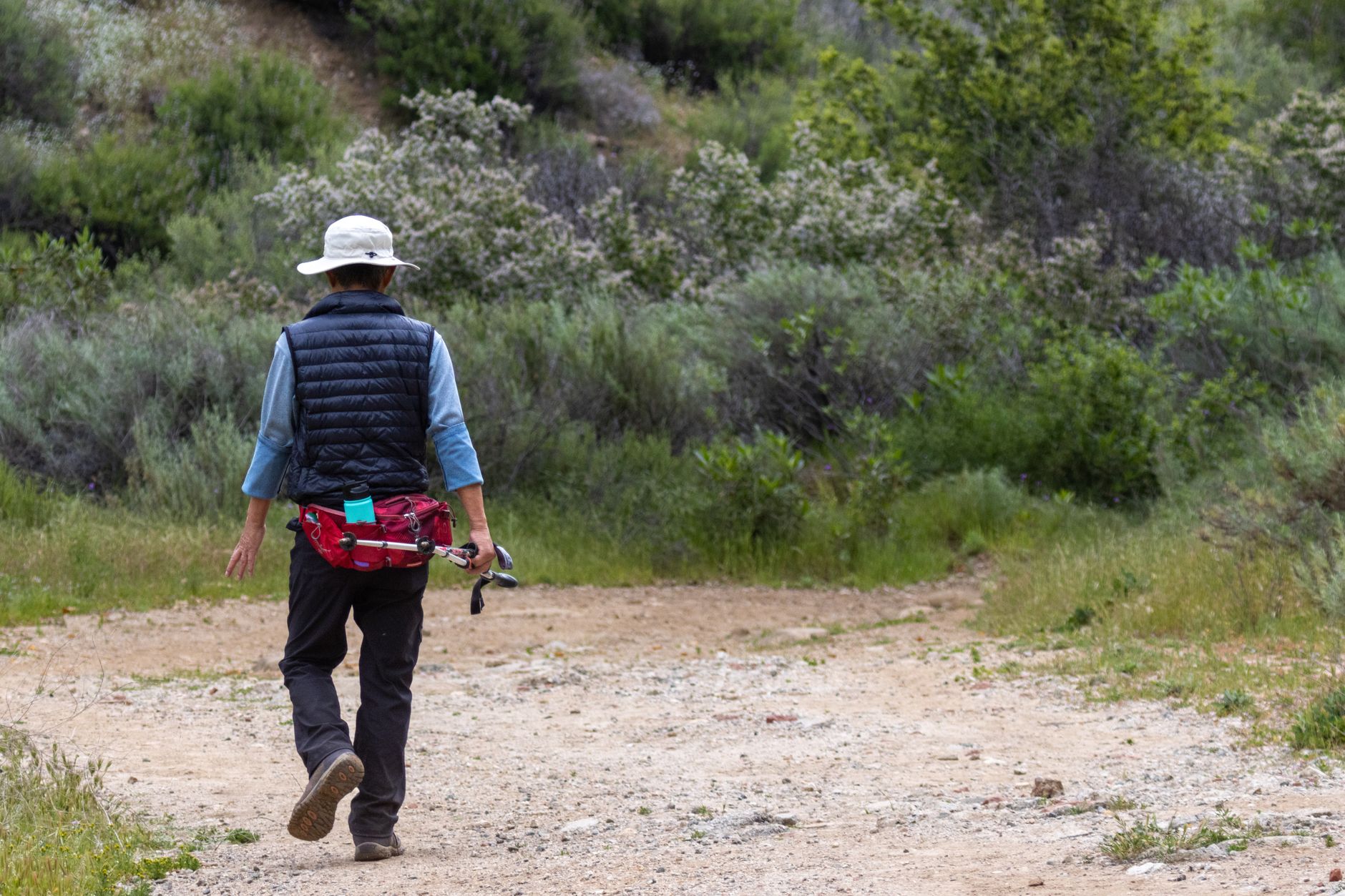
When a hiker in Utah punctured his thigh with a trekking pole tip mid-trail, he faced a brutal choice: wait and hope someone came, or self-rescue across 10 miles of exposed terrain. He walked out. What made the difference wasn’t luck — it was the self-rescue gear he was carrying. That story should be the mental model every backcountry traveler uses when building their kit, because the wilderness doesn’t care how experienced you are. It cares whether you’re prepared.
Self-rescue gear isn’t a single item — it’s a layered system covering communication, wound management, shelter, and navigation. Most hikers carry one or two of these categories and completely ignore the others. That gap is where people die, or at minimum, suffer preventable suffering for hours in bad weather waiting for a rescue that could have been avoided entirely. This guide covers the 10 pieces of gear that fill those gaps, with specific product recommendations at multiple price points so there’s no excuse not to carry them.
This isn’t a list of gear that’s nice to have. Every item here serves a survival-critical function, backed by the kind of scenarios — like a trekking pole impalement — where improvising simply doesn’t cut it. Pack accordingly.
Wound Care Kits: When You’re the First Responder
The trekking pole impalement scenario isn’t as rare as it sounds. Puncture wounds, deep lacerations from falls on rock, and compound injuries from slipping on wet terrain are among the most common serious backcountry incidents. A standard drugstore first aid kit won’t cut it out there. You need hemostatic gauze, trauma dressings, and the knowledge to use them. The difference between a manageable wound and a life-threatening one often comes down to whether you stopped the bleeding in the first 10 minutes.
The Israeli Bandage (also called the Emergency Bandage) has become a standard in tactical medicine for a reason — it applies pressure, closes wounds, and is designed for one-handed application when your partner is unconscious or you’re alone. Pair that with QuikClot Sport hemostatic gauze and you have the core of a trauma kit. Add nitrile gloves, wound closure strips, a SAM splint, and blister care supplies, and you have a kit that covers the full spectrum of trail injuries from minor to critical.
1. Adventure Medical Kits Ultralight/Watertight .9 🏥
One of the most thoughtfully assembled backcountry first aid kits available, the Ultralight/Watertight .9 packs trauma essentials including QuikClot gauze, wound closure strips, SAM splint, and a comprehensive medication selection into a waterproof roll that weighs under 10 ounces. It’s the kit that fills the gap between a drugstore blister pack and a full trauma bag.
Pros:
- ✅ Genuinely waterproof dry bag included
- ✅ Covers trauma, blister, and medication needs in one kit
- ✅ Includes a useful reference guide for field treatment
Cons:
- ❌ No tourniquet included — add a CAT tourniquet separately
2. North American Rescue CAT Tourniquet Gen 7 🩹
The Combat Application Tourniquet is the gold standard in tourniquet design, used by military medics worldwide. For backcountry use, it’s indispensable if you’re covering serious terrain — a deep puncture wound to the thigh can become life-threatening without rapid arterial control. The Gen 7 is one-handed applicable and holds tension reliably over time. Budget around $30 and consider it non-negotiable.
Pros:
- ✅ One-handed application tested in austere conditions
- ✅ Windlass rod locks tension securely
- ✅ Widely taught in Wilderness First Aid courses
Cons:
- ❌ Counterfeit versions are common — buy from reputable sources only

Satellite Communicators: The Self-Rescue Gear That Reaches Help When You Can’t Walk Out
Satellite communicators have fundamentally changed backcountry safety calculus. A decade ago, your options were an emergency-only SPOT beacon or a very expensive satellite phone. Today, devices like the Garmin inReach Mini 2 let you send and receive text messages from anywhere on the planet, share your GPS track with family, and trigger an SOS that connects you directly to a rescue coordination center — all from something that clips to a shoulder strap.
The critical distinction is between PLBs (Personal Locator Beacons) and two-way communicators. A PLB is a one-way SOS device — powerful, no subscription required, but it only does one thing. A two-way communicator lets rescue teams know your exact condition, whether you’re mobile, and whether the situation is worsening. For a puncture wound scenario where you may be able to self-evacuate slowly, that two-way communication is the difference between a helicopter scrambling unnecessarily and a coordinated, appropriate response.
3. Garmin inReach Mini 2 📡
The inReach Mini 2 is the benchmark two-way satellite communicator for backcountry travelers. At 3.5 ounces, it pairs with your smartphone via Bluetooth, gives you global Iridium satellite coverage, weather forecasts, and two-way messaging. The SOS function connects you to GEOS International Emergency Response, staffed 24/7. Subscription plans start around $15/month — a trivial expense relative to the protection it provides.
Pros:
- ✅ True two-way messaging from anywhere on Earth
- ✅ Pairs with Garmin’s navigation app ecosystem
- ✅ Long battery life with up to 14 days in tracking mode
Cons:
- ❌ Monthly subscription required for all features
4. ACR ResQLink View PLB 🆘
If you won’t pay a subscription but want credible SOS capability, the ACR ResQLink View PLB transmits on the 406 MHz emergency frequency monitored by COSPAS-SARSAT satellites worldwide — no subscription, no monthly fee, no dead service areas. It’s less flexible than the inReach (no two-way messaging) but delivers the strongest distress signal available to civilians. Register it with NOAA after purchase at no cost.
Pros:
- ✅ No subscription — one-time purchase covers you for life
- ✅ Internationally recognized 406 MHz emergency frequency
- ✅ 5-year battery life with no charging required
Cons:
- ❌ SOS only — no two-way communication or tracking features

Emergency Shelters: Buying Time When You’re Injured and Immobile
The hiker who walks 10 miles out on a punctured thigh has one massive advantage: he’s mobile. If you can’t walk, the mission changes entirely — your job becomes staying warm and visible until help arrives. Hypothermia can set in surprisingly fast, even in summer conditions, especially when blood loss or shock reduces your body’s ability to thermoregulate. An emergency bivy or space blanket is the cheapest insurance policy in your pack and frequently weighs under three ounces.
There’s a meaningful difference between a mylar emergency blanket and a proper emergency bivy. The blanket reflects radiant heat but offers almost no wind or moisture protection. A bivy like the SOL Escape or the Survive Outdoors Longer Heatsheets bivy adds a vapor barrier that traps warm air around your body even in driving rain. For anyone covering technical or remote terrain, the bivy is the better choice — it can be pulled on single-handed and stays in place without a partner to hold it. Paired with the right ultralight sleeping system for overnight trips, a bivy gives you genuine warmth insurance if you’re forced to bivouac unplanned.
5. SOL Escape Bivvy 🧡
The SOL Escape is a step above a standard emergency bivy — it’s made from a soft, breathable composite rather than crinkly mylar, which means you can actually sleep in it and won’t be cooking in condensation. It reflects 70% of radiant body heat, packs to fist size, and at 8.5 ounces is light enough to carry on every trip. Orange exterior aids visual rescue signaling passively.
Pros:
- ✅ Breathable fabric prevents condensation trap
- ✅ Reusable across multiple trips
- ✅ Orange exterior improves aerial visibility
Cons:
- ❌ Heavier than mylar options — not the ultralight choice

Signaling Devices and Navigation Tools: Being Found Is Half the Battle
A rescue team’s job is first to locate you. Your job is to make that as easy as possible. Whistles, signal mirrors, and bright-colored panels work across distance and don’t depend on batteries. The Fox 40 Classic whistle produces 115 decibels — audible over a half-mile in calm conditions, well beyond shouting range even for a healthy person. It weighs almost nothing and should be clipped to every pack’s sternum strap as a permanent fixture.
Signal mirrors are underestimated. A quality mirror like the Ultimate Survival Technologies StarFlash can flash sunlight visible to aircraft at 10 miles or more under good conditions. They require no batteries, no subscription, and no cell service. The combination of a satellite communicator telling rescue teams your GPS coordinates and a signal mirror guiding them to your exact position once they’re in range is a complete signaling system. Add a headlamp with red SOS flash mode — the Black Diamond Spot 400 has this built in — and you’re covered for night scenarios. For longer expeditions where navigation failure compounds any injury scenario, the resources in our guide on essential overnight backpacking gear cover the navigation fundamentals worth pairing with these tools.
6. Ultimate Survival Technologies StarFlash Signal Mirror 🪞
The StarFlash is a retroreflective signal mirror — meaning it works in lower-light conditions better than traditional glass mirrors by using a retroreflector aiming system. It’s virtually indestructible, floats in water, and produces a flash strong enough to be seen from aircraft at altitudes where you otherwise look like a speck of terrain. At under $15, there’s no reason not to carry one.
Pros:
- ✅ No batteries or subscription required — ever
- ✅ Retroreflector aiming system works in partial sun
- ✅ Lightweight and nearly indestructible
Cons:
- ❌ Requires sunlight — useless in heavy overcast or at night
7. Black Diamond Spot 400 Headlamp 🔦
At 400 lumens with a dedicated red SOS strobe mode, the Spot 400 is the headlamp to have when darkness complicates an already serious situation. The strobe mode draws minimal battery and is visible at distance — crucial for both signaling rescuers and conserving battery if you’re sheltered in place. IPX8 waterproof rated, and the dimming memory means it won’t blast you on full beam in the middle of the night.
Pros:
- ✅ Dedicated SOS strobe mode for emergency signaling
- ✅ 400 lumens for genuine visibility on technical terrain
- ✅ IPX8 waterproof — functions in rain and submersion
Cons:
- ❌ Uses AAA batteries — bring spares on multi-day trips
8. Fox 40 Classic Whistle 📣
The Fox 40 Classic is a pealess whistle — meaning no moving parts to freeze, jam, or malfunction. 115 decibels of output carries across canyons, through dense timber, and over wind noise that makes shouting pointless. At under $10 and weighing about half an ounce, it’s the easiest item on this entire list to justify. Clip one to every pack you own, permanently.
Pros:
- ✅ Pealess — works frozen, wet, and dirty
- ✅ 115 dB output audible at significant distances
- ✅ Under $10 — zero excuse not to carry one
Cons:
- ❌ Requires lung capacity — less effective if injured or exhausted
9. Sawyer Squeeze Water Filter 💧
A self-rescue situation that extends into hours or overnight changes your water math immediately. The Sawyer Squeeze filters 0.1 micron — removes bacteria and protozoa reliably — and at 3 ounces is the lightest credible filter available. If you’re sheltering in place waiting for rescue near any water source, this keeps you hydrated without illness risk. Filters up to 100,000 gallons before replacement.
Pros:
- ✅ 0.1 micron filtration covers bacteria and protozoa
- ✅ Extremely lightweight at 3 ounces
- ✅ Backflushable for extended use without replacement
Cons:
- ❌ Does not filter viruses — relevant in international travel scenarios
10. BIC Classic Lighter + UST StrikeForce Fire Starter 🔥
Fire is warmth, psychological comfort, and a rescue signal — three of the most critical needs in a prolonged emergency. A BIC lighter is your primary ignition; the UST StrikeForce ferro rod is your backup when the lighter runs dry or gets wet. Carry both. A fire built under a tree line after a night of immobility can be the signal that directs searchers to your position. Never rely on a single ignition source.
Pros:
- ✅ Redundant ignition covers wet, cold, and low-fuel scenarios
- ✅ Ferro rod works indefinitely — no fuel source to exhaust
- ✅ Combined weight under 2 ounces
Cons:
- ❌ Useless without tinder preparation — practice fire building before you need it
Building Your Complete Self-Rescue System
The hiker who walked 10 miles out on a punctured thigh didn’t succeed because of one piece of gear. He succeeded because he could stop the bleeding, communicate his situation, stay warm enough to keep moving, and navigate to the trailhead. That’s a system, not a single item. The 10 pieces in this guide are designed to work together — wound care buys you time, the satellite communicator alerts rescue, the bivy preserves your core temperature if you stall, and the signaling tools guide help to your exact location.
Total weight for this entire kit, assembled thoughtfully, comes in around two pounds. That’s a reasonable load for the coverage it provides across trips ranging from day hikes to multi-week expeditions. Start with the items in the categories you’re currently missing — most hikers lack trauma wound care and satellite communication while carrying adequate shelter. Audit your pack honestly, fill the gaps, and practice using each item before you need it under stress. The gear is only as good as the hands holding it.
—Camp Mavrik | Backcountry Gear Labs
Shop Backcountry Gear Labs on Etsy
Hoodies, tees, hats, and more for campers and hikers who live for the trail.
Get Weekly Gear Picks
Join the Backcountry Gear Labs newsletter for expert gear picks and backcountry advice, every week.
Pingback: 7 Best Respirator Masks for Hiking in Wildfire Smoke — Tested on Trail - Backcountry Gear Labs
Pingback: Best Backcountry Navigation Tools: 5 Reliable Picks That Won't Leave You Stranded - Backcountry Gear Labs