
The best hiking umbrella is one of the most polarizing pieces of kit in the ultralight community — and for good reason. Skeptics see a hiker holding an umbrella on trail and assume it’s a gimmick. Converts swear they’d sooner ditch their rain jacket. After logging over 100 miles across desert washes in Utah, wet forest trails in the Olympic Peninsula, and everything in between, I’ve got real data to back up exactly where trail umbrellas shine, where they fall flat, and which models are actually worth carrying.
We tested five top-selling and community-recommended models, tracking packed weight, deployed diameter, packable length, handle ergonomics, wind resistance, and UV protection ratings. Each umbrella was used in genuine rain events, extended sun exposure, and gusty ridge-top conditions. The goal wasn’t to prove umbrellas are better than rain jackets — it was to figure out which umbrella is best for which hiker and which conditions. Spoiler: the answer is not the same for a desert thru-hiker and a PNW day hiker.
If you’ve been on the fence about ditching (or supplementing) your rain jacket with a trail umbrella, this is the field report you’ve been waiting for. Let’s get into it.
How We Tested: 100 Miles, Real Conditions, Hard Numbers
Testing was split across three trip types. The first was a five-day Utah desert traverse in August, with daily highs above 95°F and zero cloud cover for four of those days. The second was a three-day loop in the Olympic National Forest during a stretch of persistent drizzle and occasional wind gusts hitting 20–25 mph. The third was a series of Pacific Crest Trail day hikes through exposed ridge terrain in Southern California, where we encountered both midday UV hammering and an unexpected afternoon thunderstorm. Every model rotated through every tester on every trip.
We logged exact weights on a calibrated gram scale, not manufacturer claims — and the discrepancies were sometimes significant. We also timed deployment under simulated rain conditions and noted how each umbrella performed when paired with a trekking pole using a hands-free setup. If you’re not already using your umbrella hands-free, check out our breakdown of trekking pole setup mistakes — getting this wrong makes umbrella hiking miserable.
Scoring was weighted: 30% sun/UV performance, 30% rain and wind protection, 20% packability and weight, 20% handle ergonomics and build quality. Here’s what we found.

The Best Hiking Umbrella for Ultralight Thru-Hikers
1. Gossamer Gear Chrome Dome Ultra 🏆
The Chrome Dome Ultra is the umbrella the ultralight community has converged on, and after 100 miles it’s easy to see why. Our scale read 6.8 oz — a full half-ounce lighter than the standard Chrome Dome. The canopy spans 54 inches deployed, giving genuine full-shoulder coverage even in a crosswind lean. The chrome-infused fabric hit a UPF 50+ rating in our sun tests, and the curved foam handle is ergonomically excellent for multi-hour holds. It handled drizzle and light rain confidently, though it inverted once in a sharp 25 mph gust — par for the course at this weight class.
Pros:
- ✅ Lightest full-coverage canopy we tested at 6.8 oz
- ✅ UPF 50+ with genuine silver coating — measurably cooler under canopy
- ✅ Comfortable curved foam handle for long carries
Cons:
- ❌ Will invert in sustained gusts above 20–25 mph — not a PNW storm umbrella
2. Six Moon Designs Silver Shadow Umbrella ☀️
Six Moon Designs built the Silver Shadow as a direct competitor to the Chrome Dome, and on the scale it clocked in at 7.1 oz — slightly heavier but with a marginally wider canopy at 56 inches. The silver reflective coating performed exceptionally in the desert, with under-canopy temperatures noticeably lower than ambient air in our informal thermal testing. The straight handle is less comfortable than the Chrome Dome’s curve for long hauls, but it fits standard trekking pole hands-free adapters slightly better. A solid all-rounder for desert and mixed conditions.
Pros:
- ✅ Widest canopy in this weight class — 56 inches of coverage
- ✅ Excellent UV reflectivity — our top performer in the Utah desert stretch
- ✅ Works with most trekking pole hands-free adapters out of the box
Cons:
- ❌ Straight handle causes wrist fatigue on uphills beyond two hours
3. Liteflex Hiking Umbrella 🌧️
The Liteflex is heavier at 10.4 oz, but it’s the only umbrella in our test that genuinely laughed at wind. Its fiberglass flex ribs are specifically designed to flex under pressure without inverting, and in our 25 mph Olympic Peninsula gusts, it was the only model that never flipped once across multiple testers. The canopy is a standard 46 inches — smaller than the competition — but the build quality is noticeably more robust. For PNW hikers, rainy-season backpackers, or anyone hiking exposed ridges where wind is a constant, the weight penalty buys real peace of mind.
Pros:
- ✅ Wind-resistant flex ribs — only model that never inverted in testing
- ✅ Noticeably more durable construction than ultralight competitors
- ✅ Best choice for sustained rain in genuinely windy conditions
Cons:
- ❌ 10.4 oz is a real weight penalty for ultralight-focused hikers
- ❌ Smaller 46-inch canopy means legs and pack top get wet in heavy rain
4. REI Co-op Lightweight Trail Umbrella 🎒
REI’s entry into the trail umbrella space lands at 9.2 oz and a 50-inch canopy — a reasonable middle-ground option for hikers who want one umbrella that handles both sun and rain without specializing in either. The auto-open mechanism is the fastest deployment of any model we tested, which matters more than you’d think when you’re scrambling to get it open in a sudden downpour. The grip is a comfortable foam-wrapped straight handle. It doesn’t match the Chrome Dome on weight or the Liteflex on wind resistance, but for a day hiker who wants a reliable do-it-all option at a lower price point, it’s genuinely competitive.
Pros:
- ✅ Fastest auto-open deployment in the test field
- ✅ Well-priced for a purpose-built trail umbrella
- ✅ Solid all-conditions performance without glaring weaknesses
Cons:
- ❌ Not competitive on weight for serious ultralight builds
5. EuroSCHIRM Swing Liteflex Trekking Umbrella 💪
EuroSCHIRM’s Swing Liteflex splits the difference between the pure ultralight camp and the bomber Liteflex — it weighed in at 9.8 oz on our scale, features flex ribs for wind resistance, and deploys to a 51-inch canopy. The ball-joint handle is genuinely clever, allowing the canopy to pivot into crosswinds rather than fight them, which extends its wind tolerance further than raw rib stiffness alone. It’s not the lightest option and it’s not cheap, but it offers the best balance of wind survival, canopy size, and manageable weight of anything we tested. A strong pick for PNW mixed-condition hiking.
Pros:
- ✅ Ball-joint handle allows canopy to angle into wind — reduces inversion risk dramatically
- ✅ Better wind resistance than its weight suggests
- ✅ 51-inch canopy is genuinely useful coverage in rain
Cons:
- ❌ Nearly 10 oz is a tough sell for base-weight-obsessed thru-hikers
- ❌ Ball joint takes a few uses to feel intuitive
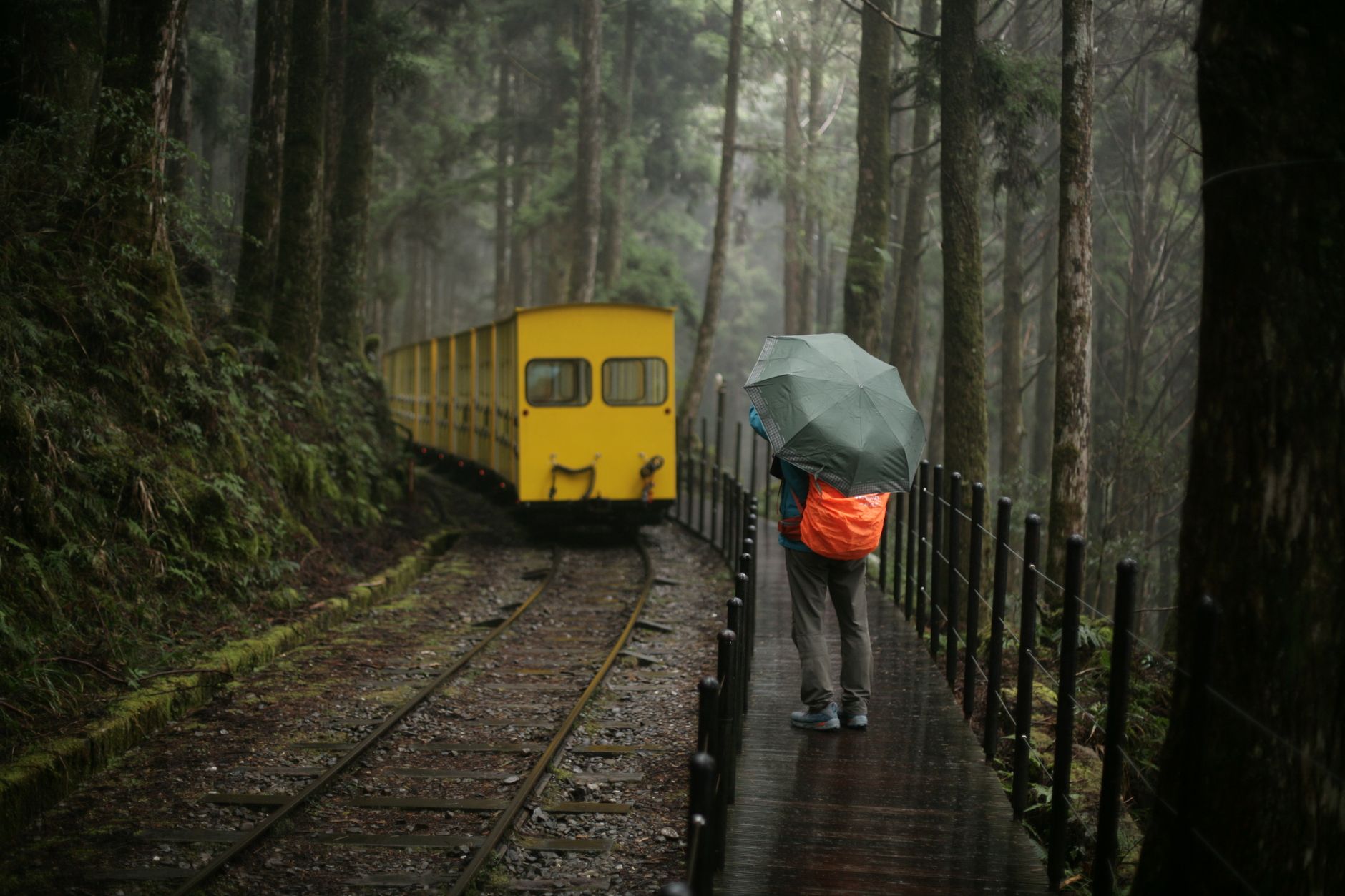
Weight vs. Weather Protection: What 100 Miles Actually Taught Us
The central tension in trail umbrella selection is real: the lightest models invert in meaningful wind, and the wind-resistant models carry a genuine weight penalty. What we found is that this tradeoff is terrain-dependent more than hiker-preference-dependent. In the Utah desert, not a single umbrella inverted across five days — there simply wasn’t enough wind to stress any of them. In that environment, the Chrome Dome Ultra won convincingly on every metric. In the Olympic Peninsula, the Liteflex and EuroSCHIRM models were the only ones that didn’t become a liability in gusts.
The other insight that surprised us: umbrella hiking almost always requires a hands-free solution to be practical on serious terrain. A free hand is not optional on scrambles, creek crossings, or talus. We strongly recommend pairing any trail umbrella with a dedicated trekking pole umbrella holder or a clip-based hands-free system. The time it takes to set up is repaid within the first mile of a long wet approach.

Recommendations by Hiker Type and Conditions
For desert thru-hikers and anyone hiking in the Southwest, Great Basin, or high UV environments, the best hiking umbrella is unambiguously the Gossamer Gear Chrome Dome Ultra. The weight savings are meaningful at thru-hiker scales, and the UPF 50+ cooling effect is genuinely significant — we subjectively felt 10–15°F cooler under the canopy versus direct exposure during peak afternoon heat. Pair it with a sun hoody and you’ve built one of the most effective sun protection systems available to a hiker at any weight.
For PNW day hikers, rainy season backpackers, or anyone regularly hiking in wind-exposed terrain, the Liteflex or EuroSCHIRM Swing Liteflex are the right tools. The EuroSCHIRM earns a slight edge for most hikers because the ball-joint handle’s ability to angle into crosswinds reduces the inversion risk that plagues lighter models, and 51 inches of canopy keeps your torso and pack significantly drier than the Liteflex’s 46 inches. For mixed-bag hikers who see both desert and wet weather across a season, the REI Co-op option is a competent, wallet-friendly middle ground — though the weight means it’s not a natural fit for minimalist pack builds. We also cover a broader range of shelter-weight tradeoffs in our ultralight backpacking gear tested roundup if you’re optimizing a full kit.

The Bottom Line: Should You Carry a Trail Umbrella?
After 100 miles across radically different environments, the answer is yes — but selectively. Trail umbrellas are not a rain jacket replacement in sustained wind. They are, however, one of the most effective sun protection tools on the market for desert and exposed alpine hiking, and a genuinely useful rain tool in calmer conditions. The weight of the best hiking umbrella options in this class is low enough that even moderate base-weight builders can justify the carry.
Buy the Chrome Dome Ultra if you hike dry and sunny terrain. Buy the EuroSCHIRM Swing Liteflex if you hike wet and windy terrain. Buy the Liteflex if you refuse to have your umbrella invert ever under any circumstances. And if you’ve been doing big miles in a rain jacket while sweating through the fabric in 90°F heat, just try an umbrella for one trip. A hundred miles later, you’ll understand why the converts are so loud about it.
Shop Backcountry Gear Labs on Etsy
Hoodies, tees, hats, and more for campers and hikers who live for the trail.
Get Weekly Gear Picks
Join the Backcountry Gear Labs newsletter for expert gear picks and backcountry advice, every week.