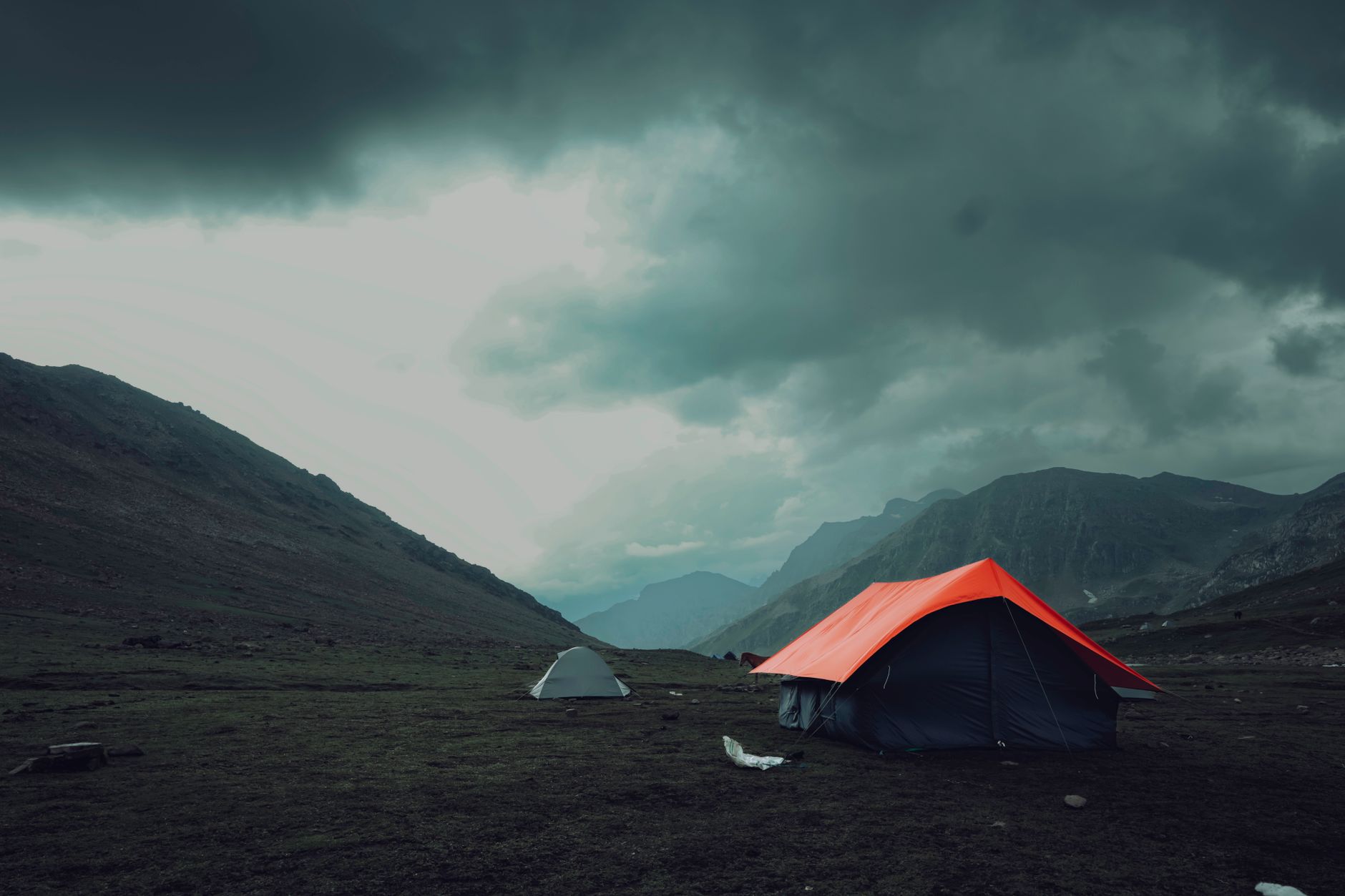
A PCT tent collapse rescue near the Sierra Nevada high route became a stark reminder of what happens when ultralight shelter design meets a true four-season storm. The hiker — a solo thru-attempter moving through a late-season low-pressure system — watched their shelter buckle under sustained 60 mph gusts and wet snow accumulation before triggering an emergency beacon. Rescuers reached them hypothermic but uninjured. The tent was a crumpled heap of bent poles and torn fabric. It never should have been out there.
Storm-proof tent design is one of the most poorly understood categories in backpacking gear. Marketing photos show tents pitched on scenic ridgelines in golden-hour light. Wind rating specs — when brands even publish them — are inconsistently tested. And the ultralight revolution has pushed pack weights down at the cost of structural margins that real alpine conditions demand. This article tears into exactly where tents fail, what the rescue evidence tells us about design weaknesses, and which specific shelters are engineered to survive the conditions that collapse cheaper alternatives.
We reached out to the hiker involved in this incident for comment. While they declined to be named publicly, they shared this: “I bought the tent because it was under two pounds. I read zero reviews that mentioned structural failure in real storms. I won’t make that decision the same way again.” That quote is the foundation of everything we’re about to cover.
Where PCT Tent Failures Actually Start: A Structural Breakdown
The most common failure point in storm conditions isn’t the fabric — it’s the pole architecture. Single-wall and semi-freestanding designs that rely on trekking poles or a minimal hub system have limited ability to redistribute dynamic wind load. When a gust hits a tent broadside, the poles deflect outward. In a well-engineered design, that deflection is elastic — the pole bends and returns. In an underspecced design, it crosses a yield threshold and stays bent, or snaps. Once one pole section fails, the whole geometry collapses inward, pinning the occupant and exposing them to precipitation.
Pole diameter and alloy grade matter enormously here. The industry standard for serious alpine use is DAC Featherlite NSL or Easton Syclone aluminum pole sections in the 8.5 to 9 mm diameter range. Budget shelters frequently use 7075 aluminum or unnamed alloy poles in the 7.5 to 8 mm range — fine for summer backpacking, genuinely dangerous above treeline in a storm. Look for published pole diameter specs. If a brand won’t publish them, assume the worst.
The second failure point is stake attachment and guy line geometry. Most three-season tents ship with a minimal stake kit and few or no pre-installed guy lines. In the PCT collapse incident, the tent had only four corner stakes deployed. A four-season storm setup should have eight or more stake points plus tensioned guylines at the vestibule ridgeline and mid-body. The geometry matters too — lines angled at 45 degrees provide dramatically more lateral resistance than lines run nearly vertical from short stakes.
Snow Load Engineering: The Spec Nobody Talks About
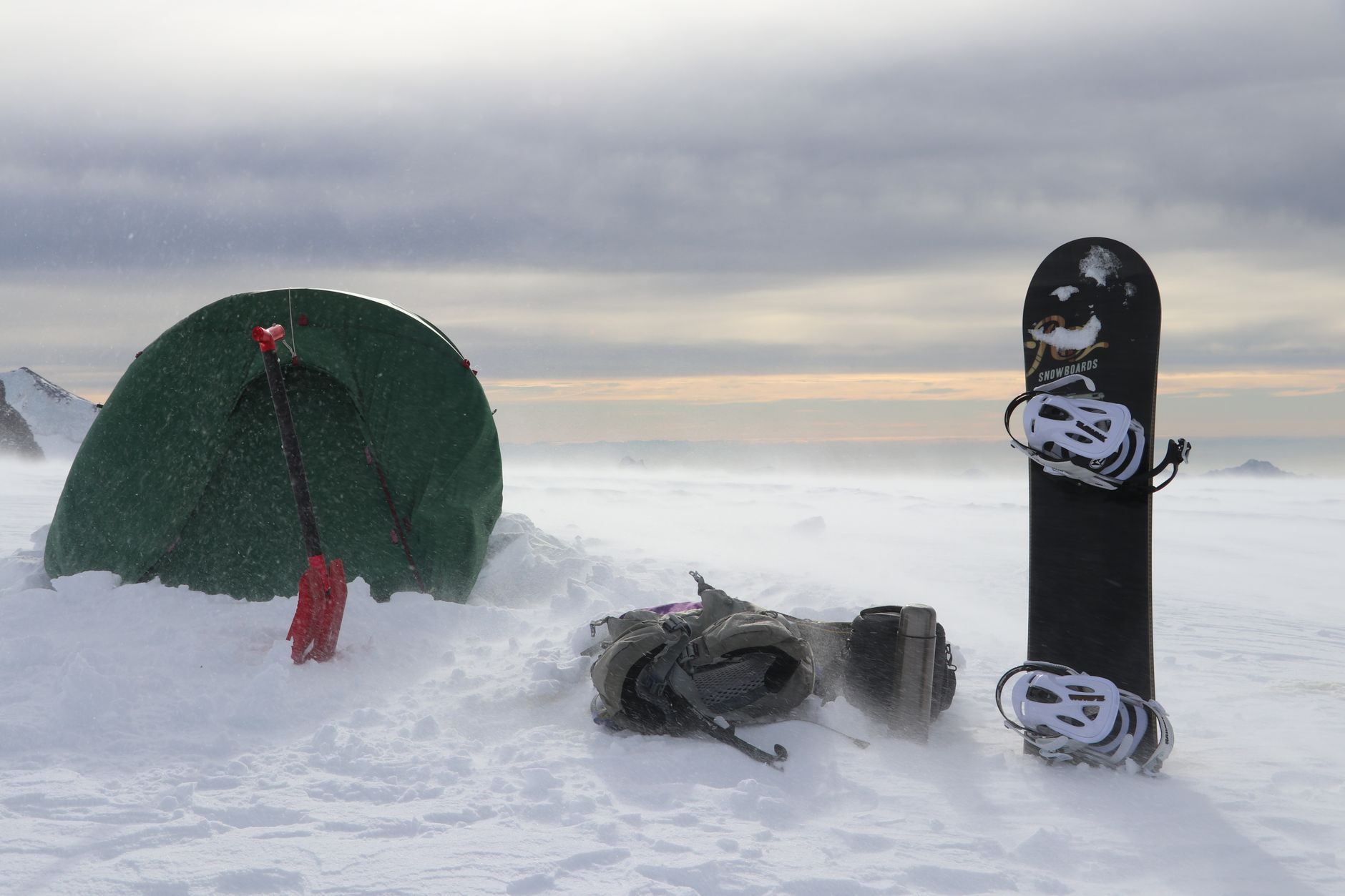
Wind ratings get occasional attention in gear reviews. Snow load ratings are almost never mentioned, and that gap is dangerous. Wet Sierra snow can weigh 20 pounds per cubic foot. A tent fly that sags under that accumulation will funnel pooled meltwater directly onto seams and zippers, accelerating failure. More critically, a fly that touches the inner tent body transfers cold and moisture directly to your sleeping bag — a rapid path to hypothermia even without full structural failure.
The design features that resist snow load are specific: steep fly angles that shed accumulation rather than hold it, strong center ridgeline pole geometry, and reinforced corner tension points sewn from heavier denier fabric. The Hilleberg standard — where the outer fly attaches all the way to the ground without a gap — creates a sealed vestibule that resists both wind infiltration and snow drift ingress. It’s a design choice that adds weight but performs categorically better in real alpine winter conditions.
Geodesic and modified geodesic pole configurations are the structural solution to both wind and snow load. By crossing multiple poles over a dome, the load from any direction is distributed through the entire pole network rather than concentrated on one or two pole sections. Black Diamond and Mountain Hardwear both use this architecture in their serious four-season offerings. It’s heavier than a single-hoop or A-frame design, but the structural math is unambiguous — it survives conditions that collapse simpler architectures.
Storm-Proof Tent Design: What “4-Season” Actually Means on the Label
The term “4-season tent” is not standardized. Brands apply it to shelters ranging from a lightly reinforced three-season design to a true mountaineering tent engineered for Himalayan use. The meaningful engineering thresholds are roughly these: a genuine four-season shelter should handle sustained winds above 50 mph without deformation, shed wet snow accumulation without sagging contact with the inner body, and maintain interior livability — meaning you can sit up, manage gear, and cook in the vestibule — during a multi-day storm layover.
If you’re a PCT or CDT hiker moving through high passes in shoulder seasons, you don’t necessarily need a full mountaineering tent. What you need is what the industry sometimes calls a “3.5-season” or “alpine” shelter — a design that splits the difference between ultralight geometry and structural redundancy. The Nemo Kunai and MSR Access 2 fit this niche well. They use crossing pole architectures, include robust guy line kits, and are rated for conditions that will destroy a standard three-season shelter.
For those pushing even lighter, the shelter-plus-skills equation matters as much as the shelter itself. Pitching angle relative to prevailing wind, site selection to use terrain as a windbreak, and proactive guy line tensioning before conditions deteriorate can dramatically extend the safe operating envelope of a lighter shelter. But there are conditions — sustained winds above 70 mph, heavy wet snow overnight — where no amount of good technique salvages a fundamentally underbuilt shelter. Know where that line is before you’re in the field. If you’re heading into serious alpine terrain, our breakdown of 5 essential emergency bivy shelter options is worth reading alongside this guide — a bivy backup has saved lives when primary shelters failed.
Recommended Storm-Proof Tents: Tested in Real Conditions
1. MSR Hubba Hubba Bikepack 2 (MSR) ⭐⭐⭐⭐
Price range: $350-400 | Budget pick
The Hubba Hubba platform is one of the most field-proven tent architectures on the PCT, with a crossing-pole geometry that handles wind significantly better than single-hoop alternatives. It’s not a mountaineering tent, but its symmetrical design and included six-stake kit make it a strong entry point for hikers stepping up from pure three-season shelters. The 20D ripstop nylon fly with a 1500mm hydrostatic head rating manages rain competently; its limitation is heavy wet snow accumulation over extended periods.
Built to last: 20D ripstop nylon fly and 15D nylon inner with DAC Featherlite NSL poles — the same pole system found in shelters costing twice as much.
Pros:
- ✓ Crossing-pole architecture distributes wind load
- ✓ Freestanding with no trekking pole dependency
- ✓ Proven track record across hundreds of PCT completions
Cons:
- ✗ 20D fly not rated for sustained heavy snow load
- ✗ Limited vestibule space for storm cooking
2. Nemo Kunai 2P (Nemo Equipment) ⭐⭐⭐⭐⭐
Price range: $500-580 | Mid-range pick
The Kunai is Nemo’s most structurally serious alpine tent and is genuinely positioned in the 3.5-season category. Its polestructure uses a cross-pole configuration with a reinforced ridgeline that resists both lateral wind and overhead snow accumulation. The fly pitches close to the ground on all sides, limiting wind infiltration and drift ingress — the same design principle Hilleberg popularized. At around 4 lbs 6 oz it’s not ultralight, but for shoulder-season PCT sections through the Sierra, it’s a genuine step up in storm safety margin.
Built to last: 40D polyester fly with 3000mm HH rating and DAC NFL poles with press-fit connectors that maintain geometry under deflection loads — notably more robust than clip systems.
Pros:
- ✓ Fly-to-ground design blocks wind infiltration and snow drift
- ✓ 40D polyester fly resists abrasion against rocky alpine sites
- ✓ Reinforced guy line attachment points at eight locations
Cons:
- ✗ Heavier than three-season alternatives at similar price
- ✗ Condensation management in single-wall sections can be challenging
3. MSR Access 2 (MSR) ⭐⭐⭐⭐⭐
Price range: $600-680 | Mid-range to premium pick
The Access 2 is MSR’s answer to the gap between true mountaineering tents and PCT-weight shelters. At around 3 lbs 8 oz it outperforms its weight class structurally through a continuous-clip pole system and asymmetric crossing geometry that resists torsional wind loads. MSR rates it for serious four-season use including spring Sierra conditions — not hyperbole for once. The included eight-stake kit with two pre-installed guylines is closer to what should be standard on any alpine shelter.
Built to last: 30D ripstop nylon fly and 15D nylon canopy with reinforced corner diamonds and MSR’s proprietary Easton carbon-composite poles — lighter than aluminum while maintaining comparable yield strength for this application.
Pros:
- ✓ True four-season rating with proven Sierra field record
- ✓ Competitive weight for structural class
- ✓ Guylines pre-installed — critical for dark/storm deployment
Cons:
- ✗ Premium price point
- ✗ Narrow interior limits comfort on multi-day storm layovers
4. Hilleberg Allak 2 (Hilleberg) ⭐⭐⭐⭐⭐
Price range: $750-850 | Premium pick
Hilleberg’s Allak is the benchmark for what a serious four-season alpine shelter can be without reaching full expedition tent weight. The tunnel design with integrated inner-outer attachment means the inner tent is never exposed during setup — you pitch the outer first and the inner clips in while you remain sheltered. For solo PCT hikers or partners moving through deteriorating conditions, that setup sequence is a genuine safety feature, not a marketing point. Wind resistance in tunnel orientation is exceptional; the tradeoff is that it requires careful alignment into the wind to maximize performance.
Built to last: Hilleberg’s proprietary Kerlon 1200 outer fabric — a woven nylon base laminated to a polyurethane coating — is field-proven over decades of Scandinavian and alpine use. Seams are factory tape-sealed. The 9 mm aluminum pole sections are among the thickest in the non-expedition category.
Pros:
- ✓ Inner-outer attachment system protects occupant during setup
- ✓ Kerlon fabric is meaningfully more abrasion-resistant than budget 20D nylon
- ✓ Factory tape-sealed seams — no field seam sealing required
Cons:
- ✗ Tunnel design must be oriented correctly into wind for peak performance
- ✗ Significant investment; high resale value partially offsets this
5. Black Diamond Eldorado (Black Diamond) ⭐⭐⭐⭐⭐
Price range: $800-950 | Premium expedition pick
The Eldorado is a genuine mountaineering shelter in a sub-5-pound package. Its modified geodesic pole structure uses three crossing poles to create one of the most wind-stable freestanding geometries available below full expedition weight. The single-wall construction with strategic vent placement manages condensation far better than older single-wall designs. This is the shelter for hikers who know they will encounter sustained high winds, significant snow accumulation, and multi-day storm layovers. It is not casual gear — it rewards experienced pitching technique and correct site selection.
Built to last: 40D ripstop nylon single-wall construction with seam-taped critical panels, Black Diamond’s proprietary pole clips with reinforced stress plates at crossing points, and stainless steel zipper hardware rated for low-temperature operation without seizing.
Pros:
- ✓ Modified geodesic geometry — strongest freestanding architecture at this weight
- ✓ Performs in conditions that destroy lesser four-season designs
- ✓ Low-temp zipper hardware is a detail that matters at altitude
Cons:
- ✗ Single-wall condensation management requires active ventilation discipline
- ✗ Serious price and weight commitment; not the right tool for summer PCT sections
What to Do Before the Storm Hits: Field Protocol That Saves Shelters
The best storm-proof tent design fails if you skip field protocol. Before any weather arrives, run through this: stake all available stake points, not just corner anchors; tension and clip every provided guyline; check that pole sections are fully seated in their ferrules (a partially seated section can fold under load at a fraction of its rated strength); and orient your tent entrance away from the prevailing wind direction. These steps take four minutes. They are not optional in alpine terrain.
Site selection compounds or undermines every structural advantage your tent has. A geodesic tent pitched on an exposed ridgeline in a col faces conditions that a simpler shelter pitched in a protected hollow behind a boulder may never encounter. Read terrain for natural wind deflection. Avoid depressions that collect cold air drainage. In snow, stamp or dig a platform that lets the tent floor lie flat — a tent pitched on an angled, lumpy snow surface sheds stake angles and loses significant structural integrity. This pairs directly with broader alpine preparedness thinking; our alpine day climb checklist covers terrain assessment and gear redundancy principles that apply equally to overnight alpine shelter decisions.
Finally, carry a repair kit matched to your shelter. At minimum: two spare pole sections or a splint sleeve, a roll of Tenacious Tape, and two additional shepherd’s hook stakes. The PCT rescue hiker noted that after their poles bent, they had no splint and no tape. A bent but temporarily splinted pole can hold a tent survivable for a night. A bent unbacked pole cannot. The repair kit weighs under three ounces. Pack it.
Conclusion: The Right Shelter for the Conditions You’ll Actually Face
The PCT tent collapse rescue wasn’t an act of bad luck. It was the predictable outcome of a genuinely underbuilt shelter meeting conditions it was never designed to survive. The hiker’s mistake was one that thousands of PCT aspirants make every year: choosing a tent based on pack weight without honestly assessing the conditions their route section demands. Storm-proof tent design exists on a spectrum — from a well-pitched crossing-pole three-season shelter with full guylines deployed, up through true geodesic mountaineering architecture. Your job is to match your shelter to your actual itinerary, not to your aspirational pack weight.
If you’re covering Sierra high passes in late season or early spring, the MSR Access 2 or Nemo Kunai 2P represent the minimum structural tier worth deploying. For sustained high-altitude objectives or known storm exposure, the Hilleberg Allak and Black Diamond Eldorado are not overkill — they are correctly spec’d tools. The extra weight is an insurance premium. Ask the hiker who paid the other kind of cost whether they’d carry it now.
Shop Backcountry Gear Labs on Etsy
Hoodies, tees, hats, and more for campers and hikers who live for the trail.
Get Weekly Gear Picks
Join the Backcountry Gear Labs newsletter for expert gear picks and backcountry advice, every week.