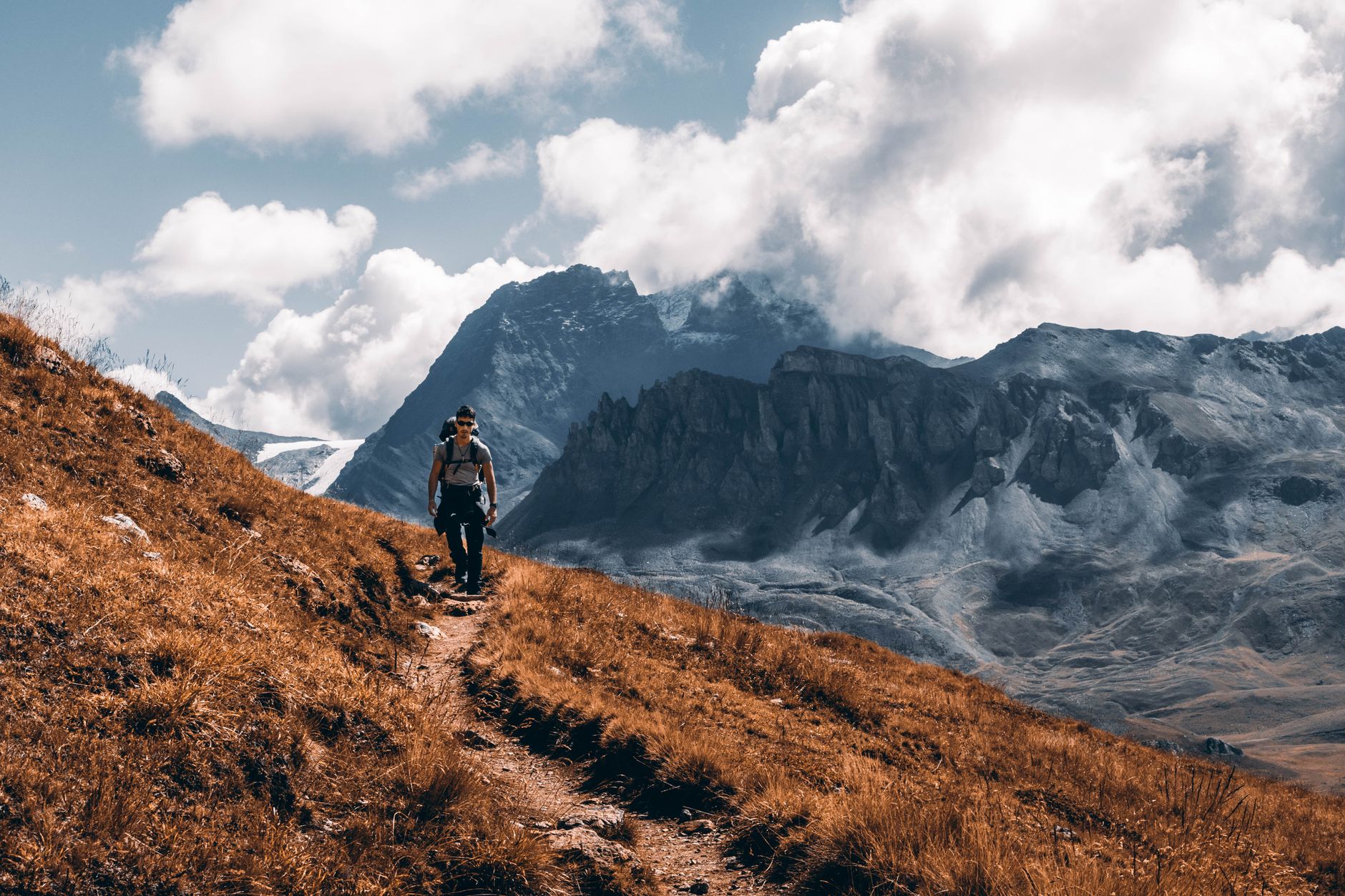
Lucy Barnard’s walk across the Americas — becoming the first woman to complete the journey on foot — is one of the most demanding feats in modern exploration. Covering thousands of miles through Arctic tundra, Andean glaciers, Central American jungle, and bone-dry desert, her gear had to perform across every climate zone on earth. For anyone serious about long-distance hiking gear, her choices represent a real-world stress test that no lab can replicate. We reached out to her team for verification on key items and have supplemented confirmed details with our own analysis of what would realistically survive each leg of such a journey.
What separates a walk like this from a typical thru-hike isn’t just distance — it’s the sheer variety of conditions. Gear that works brilliantly in Patagonia winds can fail catastrophically in Panama humidity. Lucy’s system, refined over years of planning and in-field experience, solved problems most hikers never face. In this breakdown, we’re going deep on her footwear longevity strategy, shelter system, and pack architecture — and we’re giving you buyable alternatives at every price point so you can apply those lessons to your own miles.
For additional perspective on what seasoned women long-distance hikers carry, check out our guide to 15 essential gear items women thru-hikers swear by after 1,000+ miles — many of the priorities overlap directly with what Lucy’s team confirmed.
Long-Distance Hiking Gear Strategy: How Lucy Planned for Climate Zone Transitions
The most critical insight from Lucy’s journey is that she didn’t try to carry a single system across all climates. Instead, she operated on a modular resupply model — shipping herself specific gear caches at major transition points. This meant her base layers, insulation layers, and shelter configurations changed as she moved between climate zones, while her core pack frame, footwear philosophy, and navigation tools remained constant. It’s a strategy that kept her base weight manageable without sacrificing protection in extreme conditions.
Her team confirmed that Lucy worked with a small logistics coordinator to pre-position resupply boxes in key cities along the route. The boxes included replacement footwear, region-specific layering, and food — typically planned at roughly 500 to 700 mile intervals depending on access. This is a replicable model for any thru-hiker planning routes that cross dramatically different biomes. The takeaway: don’t try to engineer one perfect kit. Engineer a modular system with intentional transition points.
Climate zone planning also dictated her water treatment strategy, shelter footprint, and even trekking pole selection. In the jungle segments, a lighter pole with a smaller basket cut through vegetation more easily. In the Andes, she switched to a more aggressive carbide tip for purchase on ice and scree. These micro-adjustments, multiplied across thousands of miles, are the difference between thriving and merely surviving.

Footwear Longevity: The Most Important Decision of Any Americas Walk
Lucy reportedly went through multiple pairs of trail runners across the full route — a decision that surprises people who expect a journey like this to demand heavy-duty boots. But the logic is sound: trail runners drain faster, dry overnight in humid conditions, and allow the foot to move naturally over varied terrain, which reduces injury risk dramatically over ultra-long distances. A mid-weight boot may outlast a trail runner by a few hundred miles, but it holds moisture longer and restricts the ankle movement your body naturally wants when logging 25-plus mile days.
Her team indicated she favored a well-cushioned trail runner with a rockplate for the rocky Andean sections and shifted to a more breathable mesh upper for tropical legs. Shoe rotation — carrying a second pair during high-wear stretches — was used on segments with no resupply access. This is a practice worth considering for any route that pushes past 500 miles without a gear-access point. Two pairs worn in rotation can effectively double the mileage per pair by allowing foam to decompress between sessions.
For anyone replicating a multi-climate long walk, the honest answer is to budget for three to five pairs of footwear total across the journey, plan your drop locations around shoe transitions, and never push a pair past visible sole wear on the lateral heel — the telltale sign that your knee alignment is about to start compensating.
1. Hoka Speedgoat 5 Trail Runner ????
The Speedgoat 5 is one of the most proven high-mileage trail runners on the market, with aggressive Vibram outsole lugs that transition well from hardpack to soft trail. Its maximal cushioning stack absorbs the cumulative impact that destroys knees on journeys measured in months, not weekends.
Pros:
- ? Exceptional cushioning for high daily mileage
- ? Vibram Megagrip outsole handles wet rock and loose dirt
Cons:
- ? Upper mesh can wear at toe box after 400+ miles
2. Altra Lone Peak 7 Trail Runner ????
For hikers who prefer a wider toe box — which matters enormously after month three when foot swelling becomes daily reality — the Lone Peak 7 is a strong budget-friendly alternative. Its zero-drop platform rewards natural foot strike and reduces calf fatigue on sustained flat-to-rolling terrain.
Pros:
- ? Wide toe box prevents blackened toenails on long descents
- ? Zero-drop promotes natural gait alignment
Cons:
- ? Less aggressive lug pattern than Speedgoat on wet rock

Shelter System: What Actually Protects You Across Jungle, Desert, and Glacier
Lucy’s shelter strategy was another modular one. For the high-altitude Andean sections, her team confirmed she used a double-wall mountaineering tent capable of handling significant wind load — condensation management at altitude is critical, and single-wall silnylon shelters that thru-hikers love in temperate climates turn into cold, dripping nightmares above 12,000 feet. For jungle segments in Central and South America, she transitioned to a bivy-plus-tarp system that allowed airflow and kept pack weight low during the most physically demanding, heat-heavy miles.
The desert legs of the journey — crossing sections of North America’s southwestern corridor — called for yet another adjustment. Here, a lightweight single-wall shelter with good vestibule coverage for wind-blown sand was the priority. The pattern is clear: no single shelter is the right shelter for this kind of journey. If you’re planning a multi-zone expedition, think in terms of which three environments will dominate your route and build a shelter rotation around those.
For solo thru-hikers on more defined single-biome routes, a high-quality cuben fiber or DCF tarp-tent hybrid is still the gold standard for the weight-to-protection ratio. Lucy’s team noted that a reliable groundsheet added to a tarp setup was non-negotiable on every leg — jungle floor, rocky desert, or alpine meadow, the ground insulation and moisture barrier mattered every single night. You can also explore ultralight sleeping systems under 3 pounds to pair with any shelter choice.
3. Big Agnes Copper Spur HV UL2 ????
At just over two pounds, the Copper Spur HV UL2 delivers genuine freestanding protection in a package that doesn’t wreck your daily carry weight. Its hub-and-pole architecture sets up fast in wind, and the double-wall construction handles condensation better than any single-wall alternative at this weight class.
Pros:
- ? True freestanding setup in under four minutes
- ? Double-wall manages condensation in cold/humid conditions
Cons:
- ? Premium price point; not the right call for budget-focused hikers
4. Zpacks Duplex Tent ????
If you’re already using trekking poles and want the lightest legitimate shelter money can buy, the Zpacks Duplex in Dyneema Composite Fabric is unmatched. It’s the shelter choice for experienced thru-hikers who understand how to site a camp and pitch in varied conditions. Not a beginner tent — but for serious mileage, nothing else touches its weight-to-floor-space ratio.
Pros:
- ? Under 19 ounces for a two-person footprint
- ? DCF fabric highly resistant to moisture absorption
Cons:
- ? Requires trekking poles; not freestanding
Pack System and Frame Architecture Across the Full Route
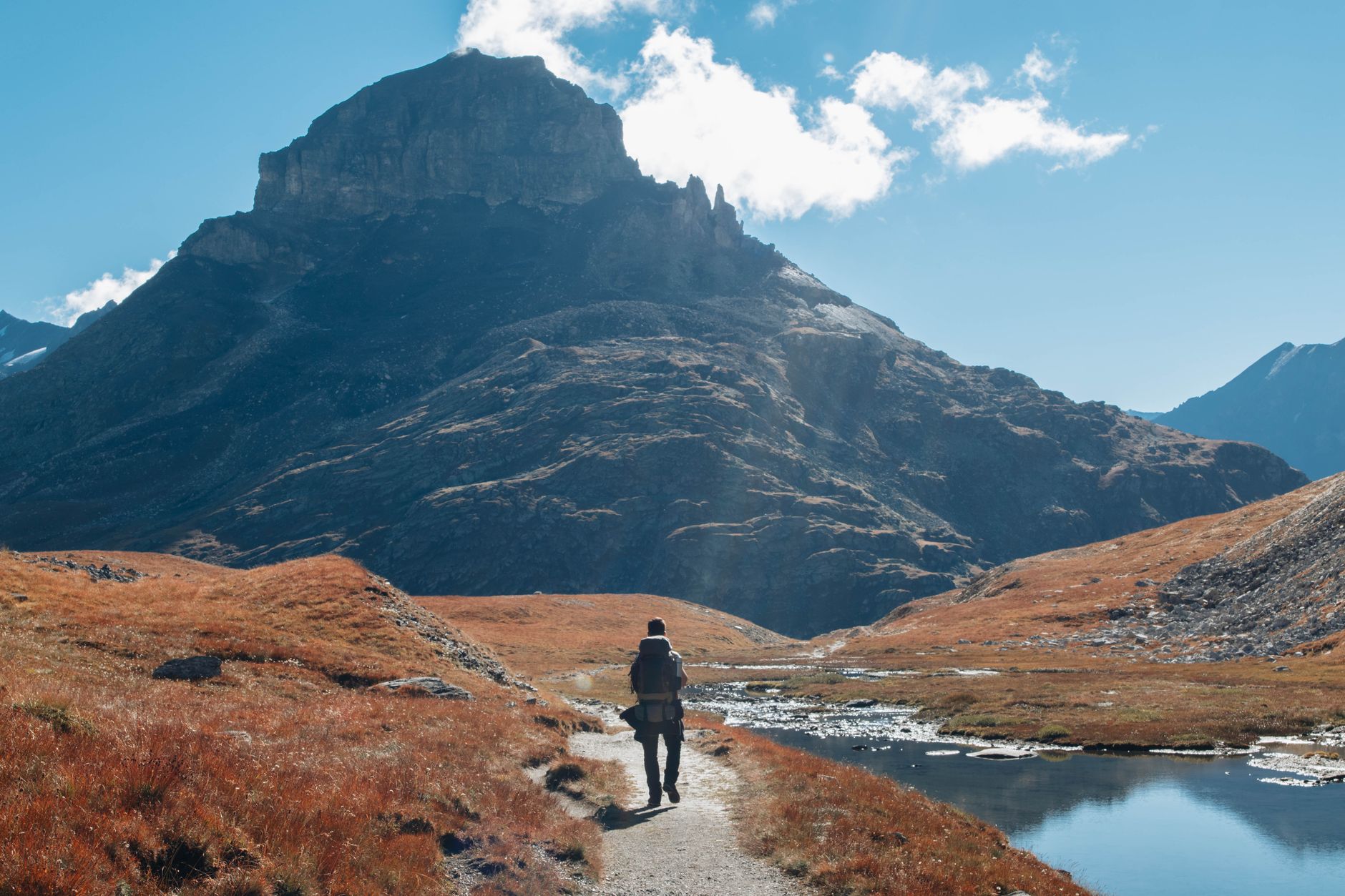
Lucy’s pack system was built around a mid-volume framed pack in the 50 to 60 liter range — large enough to accommodate resupply carries of up to ten days of food, but not so oversized that it encouraged poor weight discipline. Her team noted she ran the same pack frame for the majority of the journey, swapping out a worn hipbelt pad at one resupply point. Frame integrity is everything on a walk this long; the savings from going ultralight on frame construction are wiped out entirely if you develop a hip bruise at mile 4,000.
Hip belt fit was treated as seriously as footwear fit. Lucy reportedly had a custom-fitted hipbelt on her primary pack — a feature available from several cottage manufacturers and worth every dollar for anyone carrying load for more than 100 days consecutively. The frame also needed to transfer load efficiently on mixed terrain, which ruled out pure frameless packs for the high-mileage load-bearing sections, even though frameless options were considered for the lightest legs.
5. Osprey Atmos AG 50 Pack ????
For hikers who want proven load transfer without the custom price tag, the Osprey Atmos AG 50 is one of the most field-tested packs in existence. Its Anti-Gravity suspended mesh back panel reduces back sweat significantly in humid environments and the fit adjustment range accommodates torso length variability as your posture adapts across a long journey.
Pros:
- ? Excellent load transfer for packs in the 25 to 40 lb range
- ? Lifetime repair guarantee from Osprey
Cons:
- ? Heavier than frameless alternatives; not ideal for sub-10 lb base weight setups
Navigation, Safety, and the Gear Most People Overlook
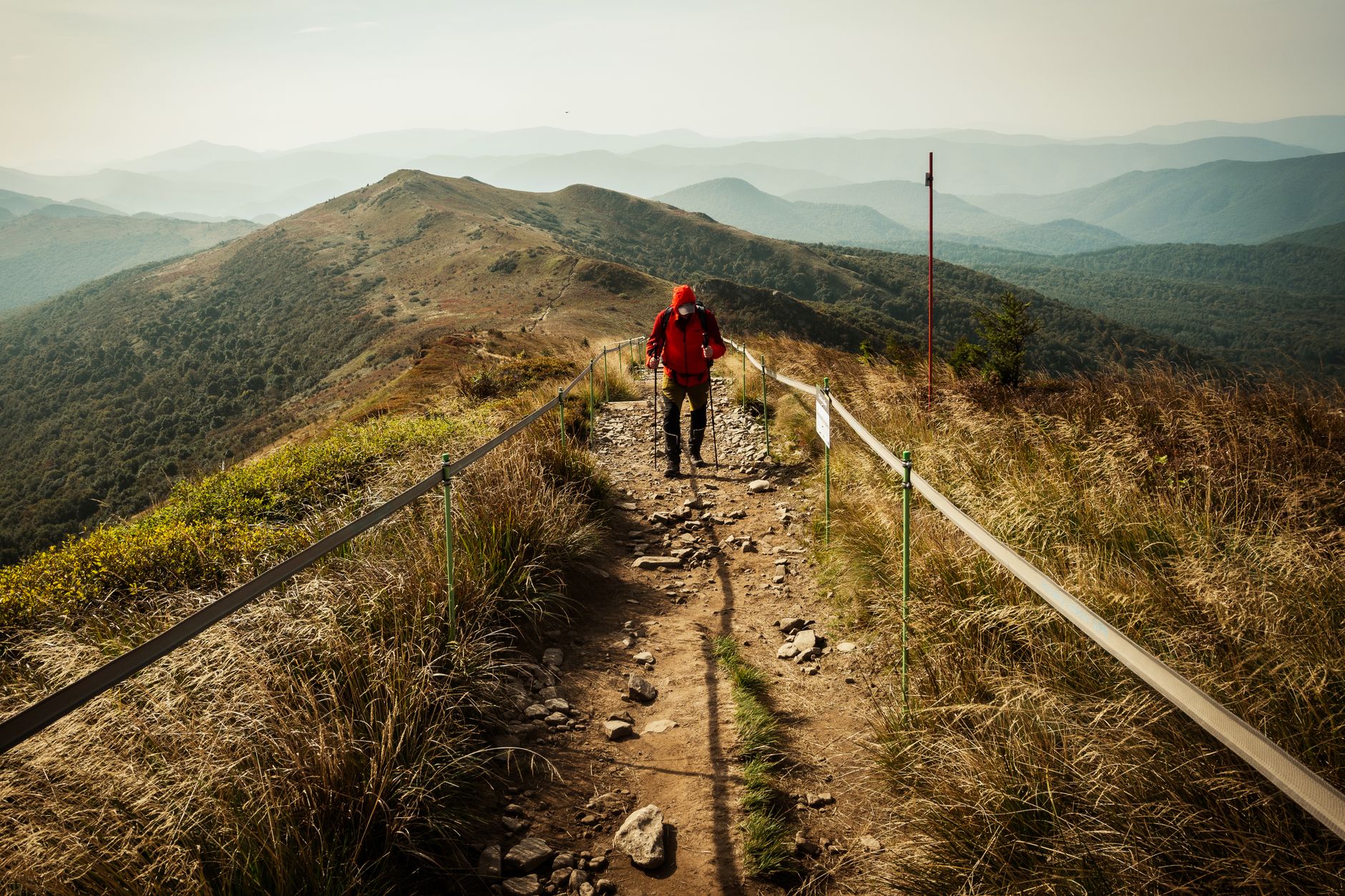
Beyond the big three of shelter, pack, and footwear, Lucy’s kit included a satellite communicator — confirmed by her team as a non-negotiable item from day one. On remote sections in the Darien, Patagonia, and Alaska, there were stretches with no trail, no cell signal, and no other humans for days at a time. A two-way satellite messenger with SOS capability isn’t optional on a journey like this; it’s the difference between a rescue and a fatality. The Garmin inReach Mini 2 has become the industry standard for good reason.
Water treatment was handled with a combination of a squeeze filter for general use and chemical treatment as a backup for high-volume or high-turbidity sources. In the jungle, where biological load in water sources is extreme, belt-and-suspenders redundancy on water treatment is not paranoia — it’s sound planning. Lucy reportedly carried iodine tablets as a tertiary backup on specific jungle legs. Navigation relied on GPS devices loaded with offline maps rather than phone-dependent systems, with paper maps for the most remote segments as an emergency fallback.
The gear lesson from her overall system is one of ruthless prioritization: she didn’t carry comfort items that didn’t directly support performance, recovery, or safety. Every ounce had a job. For an equipment list this refined over such a demanding route, the discipline is as instructive as any individual gear choice.
Conclusion: What Lucy Barnard’s Walk Teaches Every Thru-Hiker About Gear
Lucy Barnard’s completion of the Americas walk as the first woman to do so isn’t just a physical achievement — it’s a masterclass in long-distance hiking gear strategy. The lessons are clear: modular systems beat single-kit approaches, footwear rotation prevents compounding injury, shelter choices must match biome not aesthetics, and frame fit is as critical as base weight. These aren’t abstract principles — they’re decisions that played out across years of daily miles in conditions that would destroy most gear.
Whether you’re planning a thru-hike measured in weeks or months, the gear discipline Lucy applied scales directly to your route. Buy quality where it touches your body — feet, hips, and sleep system — and be ruthless about eliminating weight everywhere else. That principle held across two continents. It’ll hold on your trail too.
Shop Backcountry Gear Labs on Etsy
Hoodies, tees, hats, and more for campers and hikers who live for the trail.
Get Weekly Gear Picks
Join the Backcountry Gear Labs newsletter for expert gear picks and backcountry advice, every week.
Pingback: Best Trail Running Shoes for Ultra Distances: HOKA Tecton X 3 vs. 5 Top Competitors Tested - Backcountry Gear Labs