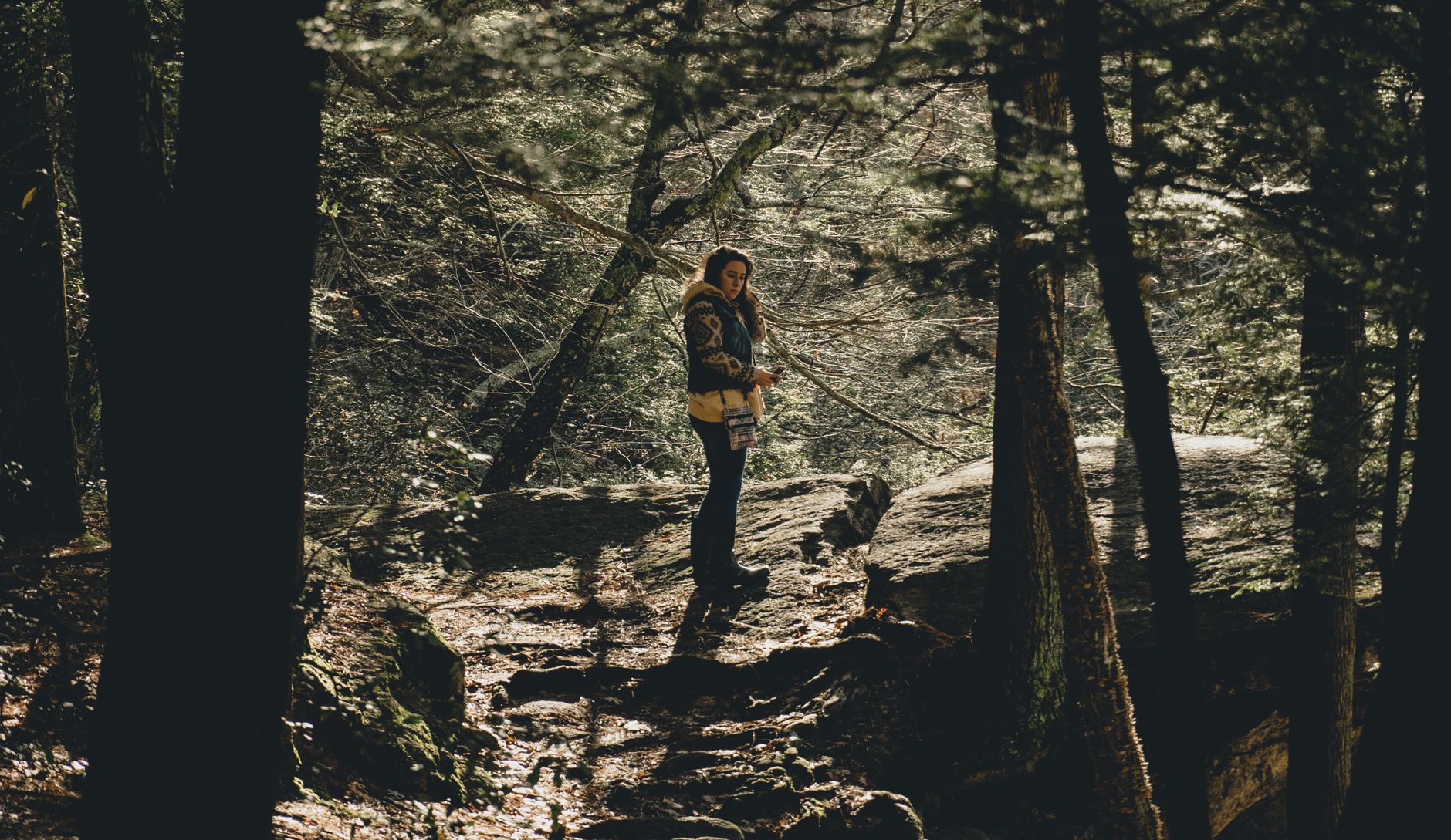
Searching for the best solo female hiker safety gear isn’t just about ticking boxes on a list — it’s about making real decisions that could determine whether a scary situation stays manageable or escalates into a genuine emergency. Whether you’re planning a solo overnighter in the Sierra Nevada or a week-long route through Montana’s Bob Marshall Wilderness, the gear you carry shapes every outcome.
I’ve spent considerable time testing personal locator beacons, satellite messengers, and personal safety tools across remote terrain — and I’ve also talked at length with solo female hikers who’ve faced everything from aggressive wildlife to threatening encounters with other trail users. This checklist reflects what actually works when things go wrong, not just what looks good on a gear list.
The 12 items below are organized around real incident types: wildlife encounters, medical emergencies, communication failures, and personal safety threats. Each one earns its weight because it solves a specific problem that solo hikers — especially women hiking alone — face in the backcountry.
Why Solo Female Hiker Safety Gear Has to Work the First Time
Solo hiking removes every safety net that group travel provides. There’s no one to run for help, no second pair of hands for a splint, and no backup voice to raise an alarm. Women hiking alone also face a threat that male hikers rarely need to plan for: targeted harassment or assault on remote trails. In a documented incident on the Appalachian Trail in Virginia, a female solo hiker successfully deterred an aggressive follower using a combination of a personal alarm, a satellite messenger check-in, and bear spray — all of which she had clipped and accessible, not buried in her pack.
That detail matters more than any spec sheet: accessibility. Every item on this list needs to be reachable within seconds, not minutes. Chest-mounted PLBs, hip-belt alarm clips, and trekking-pole-length bear spray holsters all exist for exactly this reason. Test your setup before you leave the trailhead, and practice the motions of deploying each item under stress.
It’s also worth noting that the weight argument against carrying safety gear falls apart quickly. Many of the most critical items — a personal alarm, a PLB, a compact satellite messenger — weigh under 100 grams each. If you’re already working on keeping your overall pack lighter, check out these proven ultralight swaps that could save your feet without compromising your safety loadout.

Personal Locator Beacons and Satellite Messengers: Your First Line of Defense
In a true backcountry emergency — a broken ankle three miles from the trailhead, a bear encounter that leaves you injured, or a flash flood that cuts off your return route — a personal locator beacon (PLB) or satellite messenger is the single most important item in your pack. PLBs trigger a one-way distress signal to COSPAS-SARSAT, the international rescue satellite network. Satellite messengers like the Garmin inReach Mini 2 go further, allowing two-way text communication with rescue coordination centers and your emergency contacts.
We’ve done hands-on testing across multiple devices in varying terrain. If you want a deep technical breakdown of how specific devices perform in the field, our satellite messenger showdown across 3 national forests covers real response time data you won’t find on a spec sheet. For most solo female hikers, the recommendation is straightforward: carry a satellite messenger if budget allows, and pair it with a registered PLB as a true no-subscription emergency fallback.
A scenario worth considering: a solo hiker in a remote canyon in Utah twisted her knee badly enough to make walking impossible. Cell service was nonexistent. Her inReach Mini 2 let her message her husband, confirm her exact GPS coordinates, and communicate directly with Garmin’s emergency response center — all before search and rescue crews were even mobilized. The two-way communication element dramatically reduced rescue time because responders knew exactly what her injury was, what her condition was, and where she was sitting. A one-way PLB would have triggered the response, but the messenger turned a potential overnight wait into a same-day extraction.
Wildlife Encounter Tools: Bear Spray, Noise, and Deterrence
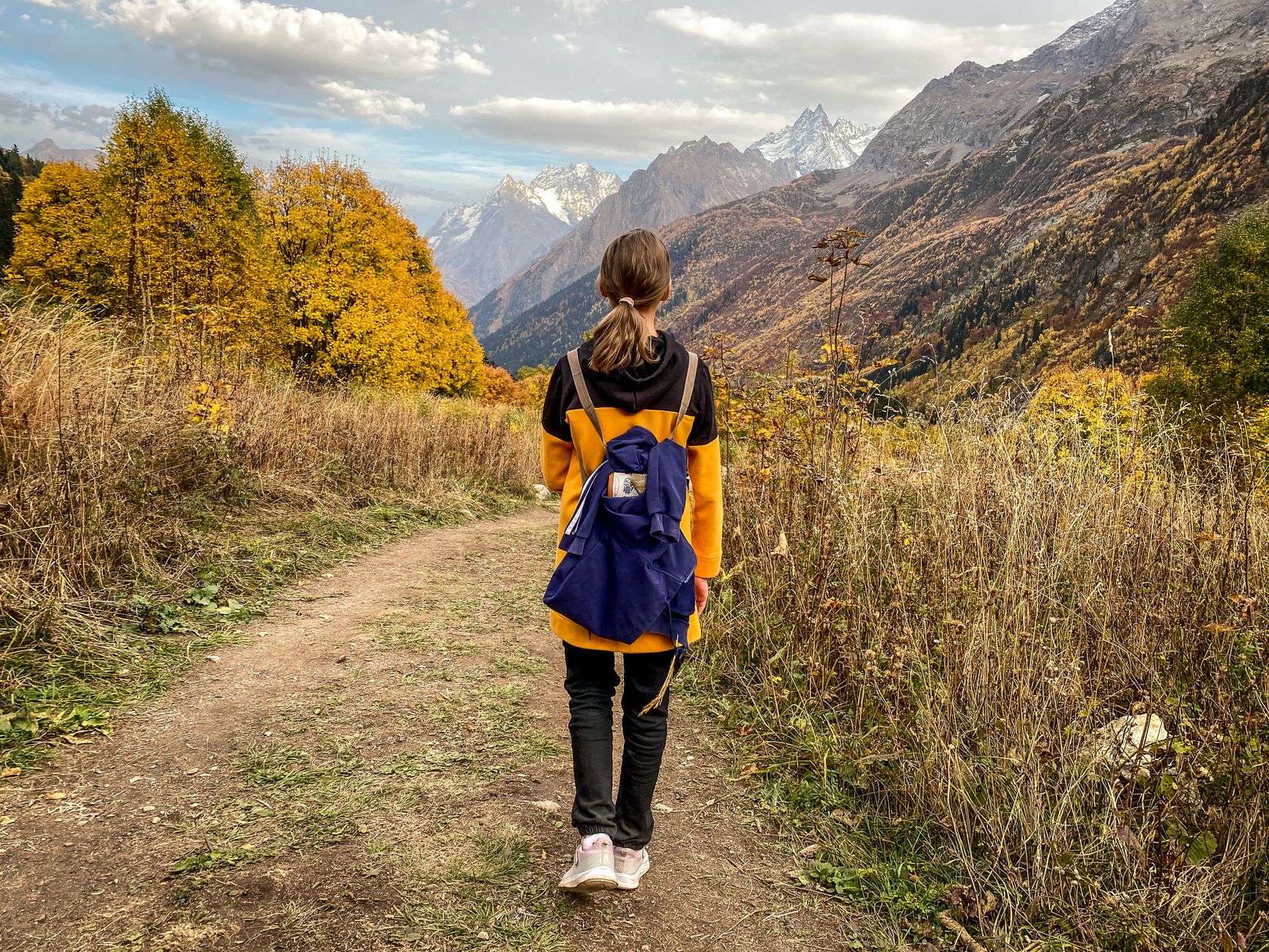
Bear spray remains the most statistically effective tool for deterring a charging bear — more effective than firearms in documented encounters according to research published by the Interagency Grizzly Bear Committee. For solo female hikers in bear country, this is non-negotiable. Carry it in a hip holster where you can draw it in under three seconds. A bear encounter in the Tetons or in Glacier’s backcountry can go from casual to defensive charge in moments, and fumbling with a pack strap is not an option.
Beyond bear spray, a quality bear canister serves double duty: it protects your food supply and reduces the chance of a camp visit altogether. Combine that with an air horn or a trail bell for general noise-making on dense vegetated sections where surprise encounters are most likely. Mountain lion encounters, which tend to involve a stalking element rather than a surprise charge, are where personal alarms earn their place on the wildlife deterrence list — a 120dB blast at close range disrupts a predator’s behavior effectively.
1. Garmin inReach Mini 2 ⭐⭐⭐⭐⭐
Price range: $350-400 | Premium pick
The Garmin inReach Mini 2 is the gold standard for solo backcountry communication. It uses the Iridium satellite network for global two-way messaging, SOS with live tracking, and weather forecasts. At roughly 100 grams, it’s light enough to forget it’s there — until you need it most. Subscription plans are required but offer month-to-month flexibility for seasonal hikers.
Built to last: Polycarbonate housing with an IPX7 waterproof rating and Corning Gorilla Glass lens; the construction handles drops, rain, and compression inside a loaded pack without issue.
Pros:
- ✓ Two-way messaging with rescue coordination centers
- ✓ Live GPS tracking shareable with contacts
- ✓ Global Iridium coverage including polar regions
Cons:
- ✗ Requires ongoing subscription — costs add up annually
2. ACR ResQLink 400 PLB ⭐⭐⭐⭐⭐
Price range: $280-320 | Mid-range pick
The ACR ResQLink 400 is a registered PLB that operates on the 406 MHz COSPAS-SARSAT system with no subscription fees — ever. It’s the best no-subscription backup for solo hikers who want absolute certainty that an SOS will go through regardless of any service plan status. The integrated GPS locks your position quickly and transmits it with your distress signal to rescue coordination centers worldwide.
Built to last: Impact-resistant ABS housing rated to MIL-STD-810G standards with a 5-year battery life and buoyant design; built to survive drops, submersion, and the inside of a wet pack.
Pros:
- ✓ Zero subscription fees — one-time cost
- ✓ COSPAS-SARSAT distress signal reaches rescue satellites globally
- ✓ 5-year battery with simple replacement cycle
Cons:
- ✗ One-way only — no two-way messaging capability
3. Counter Assault Bear Spray (10.2 oz) ⭐⭐⭐⭐⭐
Price range: $45-55 | Mid-range pick
Counter Assault is widely regarded as one of the most effective bear spray formulations on the market, with a 2% capsaicin and related capsaicinoids concentration and a spray range of up to 32 feet. The 10.2 oz canister provides approximately 9 seconds of spray — enough for a full defensive deployment with room for a second burst. The holster fits standard hip belt loops for immediate-draw access.
Built to last: Heavy-gauge aluminum canister with a safety clip designed to release under pressure but not accidentally; the valve mechanism is rated for cold weather performance down to -4°F.
Pros:
- ✓ 32-foot spray range gives safe standoff distance
- ✓ EPA-registered formula with proven field effectiveness
- ✓ Cold-weather valve reliable in alpine conditions
Cons:
- ✗ Not TSA-approved — must be purchased at destination when flying
Personal Safety Tools Against Human Threats on Remote Trails
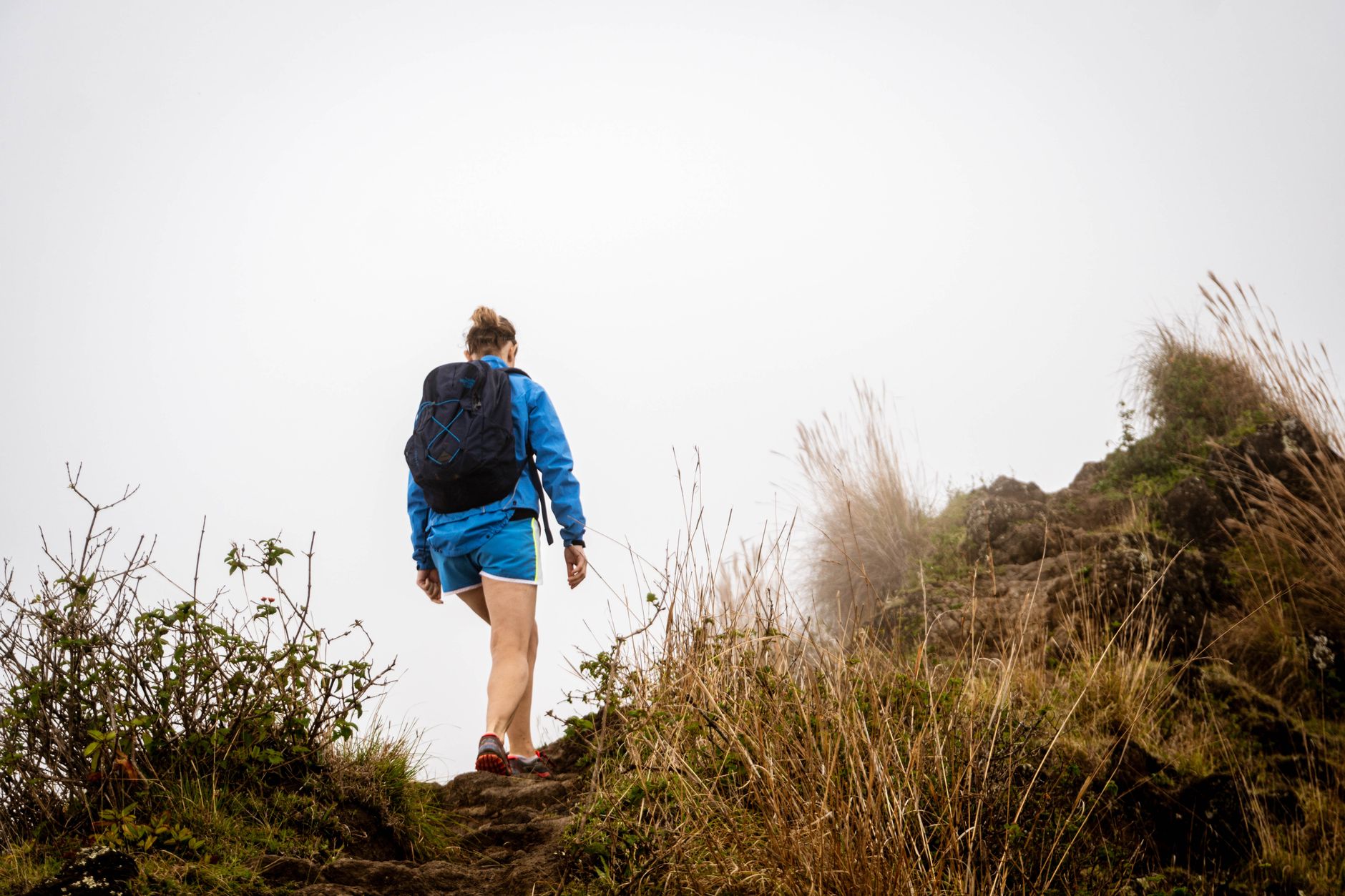
This is the part of the solo female hiker safety gear conversation that doesn’t get enough direct coverage. Threatening encounters with other trail users are more common than most hiking content acknowledges. A 120dB personal alarm is the most universally accessible deterrent — it disrupts aggressive behavior, attracts attention, and creates an immediate psychological disadvantage for anyone intending harm. The SABRE personal alarm with a belt clip keeps it on your body, not buried in a hip belt pocket.
A fixed-blade or locking folding knife has obvious utility for camp tasks, but many solo female hikers also carry one explicitly as a last-resort personal safety tool. The Cold Steel Finn Bear — a compact fixed blade under 100 grams — gives you a versatile tool that functions for food prep, first aid supply cutting, and emergency shelter construction while also serving as visible deterrence. Visibility matters: a knife worn on a chest strap or hip belt signals situational awareness and preparation to anyone who might be assessing you as a target.
Tactical considerations also include your communication window. Always file a detailed trip plan with someone at home — not a vague “I’m going to Yosemite” but a specific itinerary with trailhead locations, campsites, and a hard check-in schedule with a pre-arranged rescue trigger time. Your satellite messenger’s tracking feature should be active throughout your trip so that your emergency contact has real-time location data, not just a last-known waypoint.
Emergency Medical and Survival Tools That Complete the Solo Female Hiker Safety Gear Setup
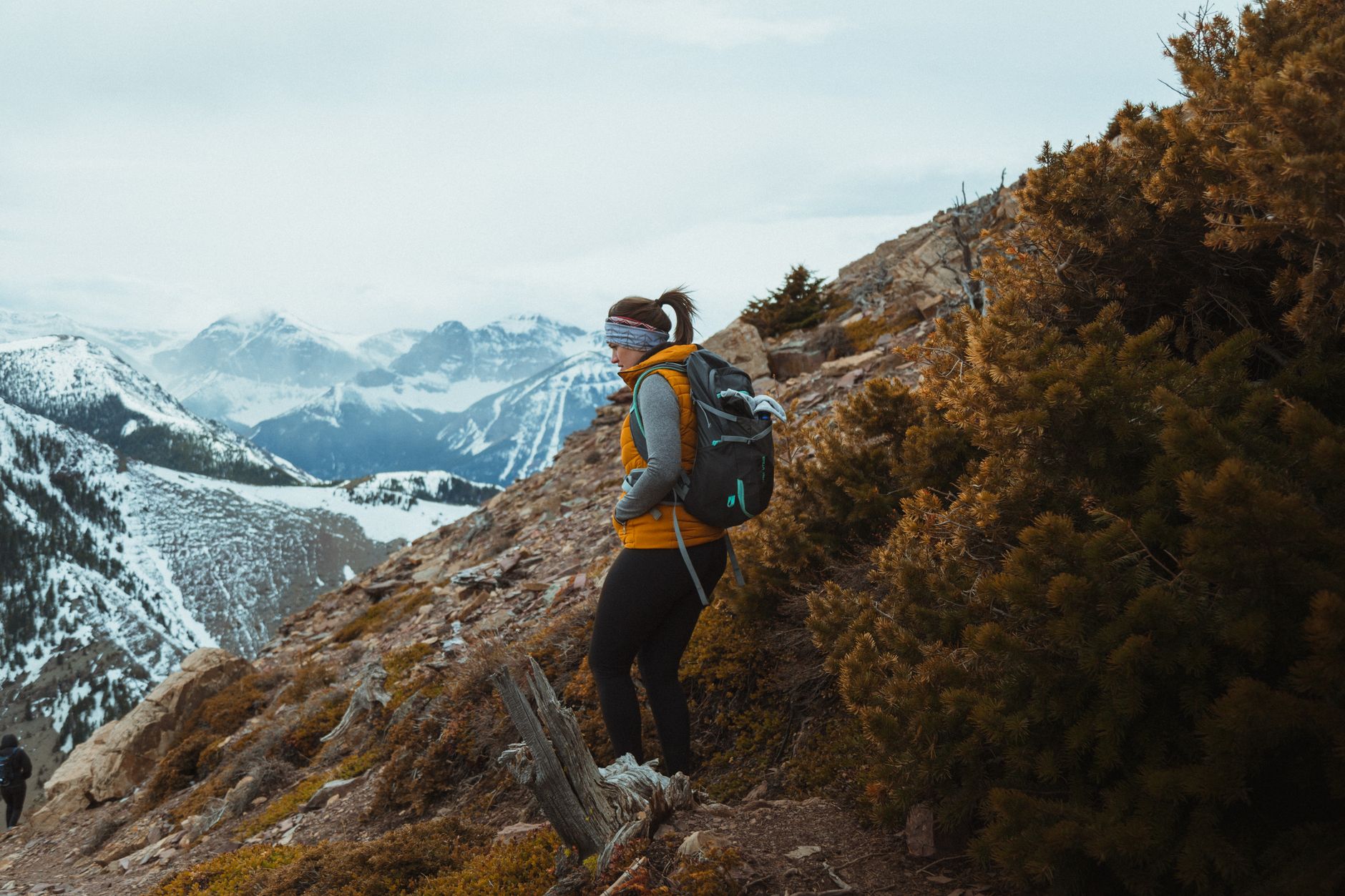
The full solo female hiker safety gear checklist extends beyond communication and deterrence into emergency survival and medical response. A tourniquet — specifically the CAT (Combat Application Tourniquet) Gen 7 — belongs in every solo hiker’s kit. A significant wound on a remote trail can cause fatal blood loss before rescue arrives if you can’t manage bleeding yourself. This is not a dramatic edge case; trail accidents involving trekking pole punctures, rock scramble lacerations, and falls regularly produce wounds requiring immediate bleeding control.
An emergency bivy like the SOL Escape Bivvy gives you a lifesaving thermal layer if you’re injured and immobilized overnight, or if weather deteriorates faster than expected. For a more detailed breakdown of emergency shelter options, the analysis of essential emergency bivy shelter options covers real incident scenarios and how shelter choice affected outcomes. Round out the medical side of your kit with a SAM splint, a blister kit, electrolyte tabs, and a quality headlamp with a minimum 300-lumen output — trail emergencies don’t schedule themselves before dark.
4. SABRE Personal Alarm with Belt Clip ⭐⭐⭐⭐⭐
Price range: $12-18 | Budget pick
The SABRE personal alarm delivers a 120dB alarm triggered by pulling a pin — simple enough to activate under stress with shaking hands, loud enough to be heard from a significant distance in open terrain. It clips directly to a hip belt loop or shoulder strap. At roughly 30 grams, it costs almost nothing in weight. Every solo female hiker should have one regardless of what else they carry — it’s the lowest-cost, highest-impact safety item on this entire list.
Built to last: ABS plastic housing with a stainless steel pin ring; the battery is replaceable and the pin mechanism is resistant to accidental activation from pack compression.
Pros:
- ✓ Extremely affordable — no reason not to own one
- ✓ Pin-pull activation works under stress
- ✓ 120dB output audible at long range in open terrain
Cons:
- ✗ Less effective in heavy wind or dense forest where sound disperses quickly
5. SOL Escape Bivvy ⭐⭐⭐⭐⭐
Price range: $40-50 | Budget pick
The SOL Escape Bivvy is a breathable, waterproof emergency bivy made from a proprietary aluminized polyethylene blend that reflects 70% of body heat while allowing moisture vapor to escape — a critical improvement over classic mylar emergency blankets that create a sweat trap. For an injured solo hiker waiting overnight for rescue, the difference between a standard emergency blanket and the SOL Escape Bivvy is the difference between manageable cold and dangerous hypothermia. It packs to the size of a water bottle and weighs under 300 grams.
Built to last: Multi-layer aluminized polyethylene with heat-welded seams and a reusable design; unlike single-use mylar blankets, the SOL Escape Bivvy can be packed and redeployed multiple times without tearing.
Pros:
- ✓ Breathable construction prevents dangerous moisture buildup
- ✓ Reusable and packable — not a single-use emergency item
- ✓ Bright orange exterior aids aerial rescue visibility
Cons:
- ✗ Not a replacement for a real sleeping bag in planned cold-weather overnights
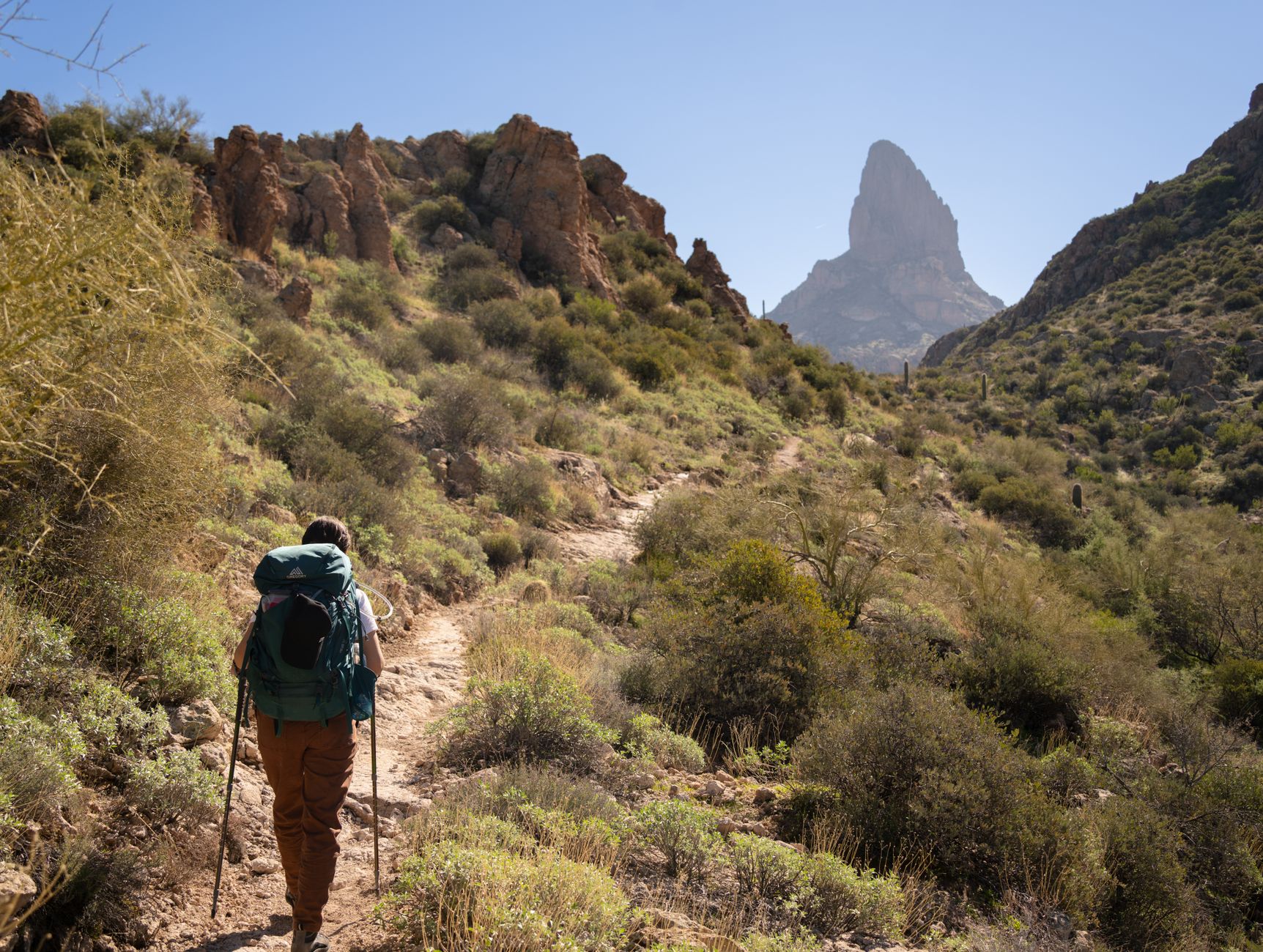
Conclusion: Build Your Kit Around Real Scenarios, Not Hypotheticals
The most common mistake in assembling solo female hiker safety gear is buying items that address theoretical emergencies while skipping the ones most likely to matter. Bear spray is more important than a satellite messenger in grizzly country where you can walk out — but a satellite messenger is more important than bear spray on a technical route where a fall could leave you immobile. Build your kit around the specific terrain, wildlife profile, and threat environment of each trip.
Run through the deployment of every item before you leave home. Know where your bear spray is without looking. Know which button on your inReach triggers an SOS. Know how to operate your personal alarm with one hand in the dark. The gear only works if you’ve practiced using it. Your confidence in the backcountry comes directly from knowing that the tools on your body are ready before the situation is.
Shop Backcountry Gear Labs on Etsy
Hoodies, tees, hats, and more for campers and hikers who live for the trail.
Get Weekly Gear Picks
Join the Backcountry Gear Labs newsletter for expert gear picks and backcountry advice, every week.