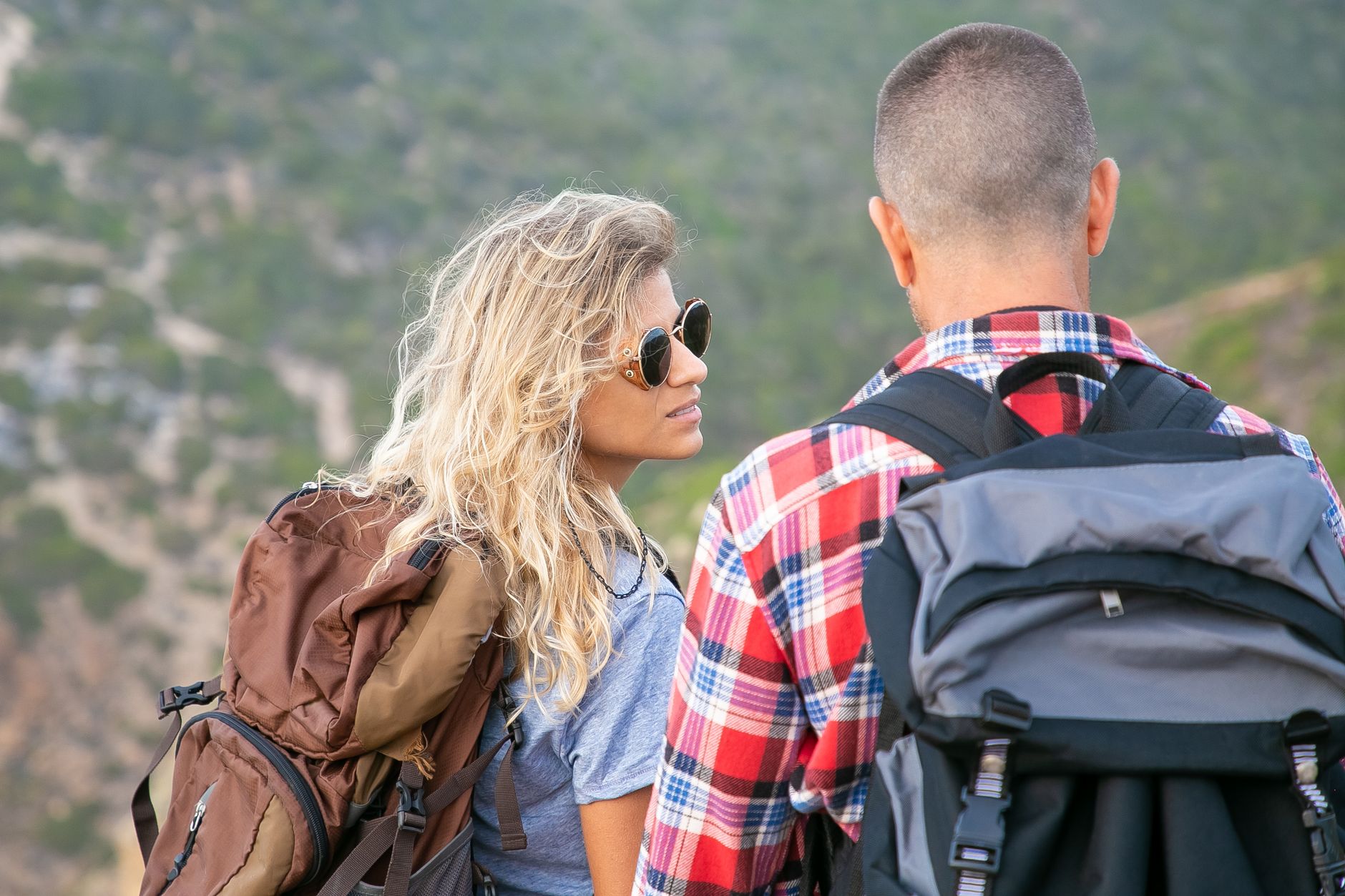
If you’ve ever limped into camp after a long day on trail, you already know that pack weight and foot health are inseparable. What you might not know is just how dramatically the pounds on your back multiply the forces traveling through your feet with every single step. New biomechanical research is making it harder than ever to ignore the numbers — and the long-term consequences for hikers who keep hauling heavy loads are serious.
We dug into the latest load-bearing studies, consulted with sports podiatrists and physical therapists who treat trail-wrecked feet for a living, and put together a practical roadmap for shedding 5 or more pounds from your base weight without sacrificing safety. What we found should change the way you pack — permanently.
This isn’t about going gram-obsessed for vanity. It’s about understanding the real physiological cost of every unnecessary pound and making smarter, more deliberate gear choices that keep you on trail for years — not just seasons.
What the Latest Biomechanical Research Actually Says About Load Limits
Biomechanical researchers have been measuring how backpack loads affect gait, joint stress, and cumulative tissue damage for decades, but the picture that’s emerged more recently is starker than most hikers expect. Studies published in journals like the Journal of Biomechanics and Applied Ergonomics consistently show that loads exceeding 20 percent of a hiker’s body weight produce significant gait alterations — shorter stride length, increased ground reaction forces, and measurable forward trunk lean — all of which redirect stress toward the plantar fascia, Achilles tendon, and metatarsal heads.
For a 160-pound hiker, that threshold sits at just 32 pounds. Add food and water to a 25-pound base weight and you’re there before you even hit the trailhead. More troubling is the cumulative effect: researchers at the University of Colorado’s Locomotion Lab have noted that repetitive overloading across multi-day trips creates micro-damage in plantar fascia tissue that doesn’t fully resolve between days. In plain English, your feet fall further behind than they can recover with each successive mile.
Perhaps most sobering is research on stress fractures among military personnel carrying heavy rucksacks, which has direct parallels for long-distance hikers. The data consistently points to load reduction — not footwear alone — as the primary intervention for reducing injury rates. Choosing the right trail footwear matters, as we’ve explored in our breakdown of trail running shoes versus gravel running shoes and how to choose the right footwear, but it’s only half the equation if you’re still shouldering a 35-pound pack.

A Podiatrist’s Take: Why Heavy Packs Create Foot Problems That Outlast Your Trip
Dr. Sarah Kimball, a sports podiatrist who works with ultramarathon runners and thru-hikers at a Denver-area clinic, puts it plainly: “I see two categories of patients — people who got hurt acutely on one bad trip, and people who gradually degraded over years of heavy carrying and are now dealing with chronic plantar fasciitis, posterior tibial tendon dysfunction, or early metatarsal stress reactions. The second group almost always ignored warning signs because the pain came on slowly.”
What makes pack weight and foot health such a clinically tricky combination is that symptoms often lag behind damage. Plantar fascia strain doesn’t announce itself dramatically at mile eight. It shows up the morning of day three when you take your first steps out of your sleeping bag. By that point, the tissue is already inflamed, and you’ve got another two days of hiking ahead of you. Forced rest in the backcountry isn’t really an option — so you push through, compound the injury, and end up in a podiatrist’s office six weeks later.
Dr. Kimball’s standard advice for recreational backpackers is to target a total pack weight — including food and water — of no more than 25 percent of body weight for single-day efforts and no more than 20 percent for multi-day trips. For most adult hikers, hitting the 20 percent mark means getting your base weight under 15 pounds. That’s achievable with intentional gear choices, but it requires confronting some items that hikers often treat as untouchable.

The 5-Pound Target: Where Ultralight Gear Swaps Make the Biggest Impact on Pack Weight and Foot Health
Five pounds sounds modest until you remember that every pound you carry multiplies across thousands of foot strikes per mile. Physical therapist Jake Torrez, who works with the hiking community in Flagstaff, Arizona, uses a simple analogy with his patients: “Carrying an extra five pounds for ten miles at 2,000 steps per mile means your feet have absorbed ten million additional pound-force impacts over the course of that hike. It’s not dramatic on any single step. It’s relentless accumulation.”
The categories where weight savings come fastest — without compromising on core safety — are shelter, sleep system, and pack itself. A hiker moving from a traditional three-season tent to a quality single-wall or ultralight double-wall option might shave 3 pounds immediately. Swapping a 3-pound synthetic sleeping bag for a well-designed 850-fill down quilt can recover another 1.5 to 2 pounds. Ditching an overbuilt 70-liter pack for a frameless or semi-frameless ultralight option removes another 1 to 2 pounds before you’ve touched a single consumable. You’re already past the 5-pound mark, and you haven’t eliminated anything you actually need.
The trick is being systematic. Audit every item in your current kit with a kitchen scale. You’ll almost certainly find that 30 to 40 percent of your base weight is sitting in just two or three gear categories. That’s where you direct your upgrade budget first.
Specific Ultralight Gear Swaps: 5 Real Products That Reduce Your Load
1. Big Agnes Copper Spur HV UL2 (Big Agnes) ⭐⭐⭐⭐⭐
Price range: $449-$550 | Premium pick
The Copper Spur HV UL2 weighs in around 2 pounds 10 ounces — roughly half the weight of a standard backpacking tent — making it one of the most impactful single upgrades for pack weight and foot health across multi-day trips. It packs down to the size of a large water bottle and still delivers enough interior volume for two hikers to sit up comfortably. The design uses a hubbed pole system that pitches fast and handles moderate weather confidently.
Built to last: Silicone-treated ripstop nylon canopy and floor, DAC Featherlight NFL poles with aluminum alloy, and reinforced stress points at guy-out corners combine for a shelter that consistently holds up through seasons of hard use.
Pros:
- ✓ Under 2 lbs 11 oz for a true freestanding two-person shelter
- ✓ Excellent livability-to-weight ratio
- ✓ Works in rain without a footprint if budget is tight
Cons:
- ✗ Premium price point is a significant investment
2. Enlightened Equipment Revelation Quilt (Enlightened Equipment) ⭐⭐⭐⭐⭐
Price range: $259-$380 | Mid-range pick
A down quilt eliminates the bottom insulation you compress and lose thermal benefit from anyway when sleeping on a pad, which is exactly why it’s one of the smartest weight-reduction tools in the ultralight toolkit. The Revelation in 20°F configuration weighs around 19 to 22 ounces depending on size and fill, compared to the 3-plus pounds of many comparable traditional sleeping bags. For hikers serious about pack weight and foot health over a multi-day trip, this is often the single highest-value swap available.
Built to last: 850-fill power ethically sourced down, 10-denier ultralight nylon shell, and reinforced footbox stitching deliver warmth-to-weight performance that holds up across hundreds of nights of use when stored and dried properly.
Pros:
- ✓ Saves 1.5 to 2 lbs over traditional sleeping bags in comparable temp ratings
- ✓ Custom sizing and fill options available direct from manufacturer
- ✓ Snaps closed to function as a mummy bag in cold conditions
Cons:
- ✗ Requires a sleep pad with adequate R-value — can’t be used alone in cold conditions
3. Hyperlite Mountain Gear Windrider 40 (Hyperlite Mountain Gear) ⭐⭐⭐⭐⭐
Price range: $375-$425 | Premium pick
Your pack itself is a hidden weight thief. The HMG Windrider 40 weighs approximately 26 ounces — compared to 4 to 5 pounds for a comparable-volume traditional framed pack — which represents a genuine 2 to 3 pound savings before you’ve loaded a single item. It’s a frameless design that works best at total pack weights under 30 pounds, making it ideal for the ultralight hiker who’s already made smart choices in shelter and sleep system.
Built to last: Dyneema Composite Fabric (formerly Cuben Fiber) shell is pound-for-pound stronger than steel and fully waterproof, with welded seams and roll-top closure that eliminate the weight and failure points of traditional zippers.
Pros:
- ✓ Ultralight at approximately 26 oz for a 40-liter pack
- ✓ Waterproof — eliminates need for a separate pack cover
- ✓ Extremely durable despite minimal weight
Cons:
- ✗ Frameless design transfers load less efficiently with heavier loads over 30 lbs
4. Sea to Summit Ether Light XT Insulated Mat (Sea to Summit) ⭐⭐⭐⭐⭐
Price range: $175-$220 | Mid-range pick
A sleep pad isn’t where most hikers expect to find meaningful weight savings, but swapping a foam pad or heavy inflatable for the Ether Light XT Insulated drops you to around 17 ounces while maintaining an R-value of 3.2 — adequate for three-season use in most environments. It’s the kind of swap that doesn’t require any sacrifice in sleep quality or warmth, just a modest investment.
Built to last: 30-denier outer shell with 75-denier anti-snag base fabric, ultralight TPU laminate construction, and Air Sprung Cell technology distributes weight without single-point puncture risk common to cheaper inflatables.
Pros:
- ✓ Excellent warmth-to-weight ratio for three-season use
- ✓ Packs smaller than a 1-liter water bottle
- ✓ More puncture-resistant than single-chamber designs
Cons:
- ✗ Requires inflation by breath or pump sack — no self-inflation
5. BRS-3000T Titanium Stove (BRS) ⭐⭐⭐⭐⭐
Price range: $15-$25 | Budget pick
The BRS-3000T is the rare budget buy that genuinely outperforms on weight — it tips the scale at a shocking 0.9 ounces, compared to 3 to 4 ounces for most canister stoves and 10 to 14 ounces for integrated systems like the Jetboil Flash. For hikers already cooking at home and simply rehydrating meals in camp, this is a fully capable stove at a fraction of the weight and cost. The cumulative savings across your cook kit can easily reach half a pound.
Built to last: Titanium alloy burner head and folding legs resist corrosion and high heat, and the simple push-ignite design has minimal moving parts to fail — a durability advantage over more complex integrated stove systems.
Pros:
- ✓ Under 1 oz — lightest canister stove available at any price
- ✓ Budget-friendly entry point for ultralight cooking
- ✓ Works with any standard isobutane canister
Cons:
- ✗ Wind performance is poor without a separate windscreen
Long-Term Hiker Health: What Happens If You Keep Ignoring Your Pack Weight
The hikers who end up in clinics with chronic foot problems almost universally share one trait: they kept hiking through early warning signs because the pain wasn’t yet bad enough to stop them. Plantar fasciitis that starts as morning stiffness becomes debilitating heel pain in months if the underlying load isn’t reduced. Posterior tibial tendon dysfunction — one of the leading causes of adult-acquired flatfoot deformity — develops gradually under exactly the kind of repetitive mechanical stress that heavy packs create across multiple hiking seasons.
The good news embedded in the research is that the intervention is straightforward. Reducing pack weight is one of the most controllable variables in trail foot health. You can’t easily change your biomechanics, your foot structure, or your age — but you can absolutely audit your gear list and make smarter choices. Physical therapist Jake Torrez’s advice is simple: “Get your base weight below 15 pounds and your total load under 25 percent of your body weight. Everything else — stretching, footwear choice, conditioning — is secondary to that fundamental number.” For a deeper look at how we’ve evaluated the weight claims of popular packs, our ultralight backpack weight test, where we weighed 25 packs to expose manufacturer claims, is essential reading before your next purchase.
Conclusion: Your Feet Are Keeping Score — Make Pack Weight Count
Pack weight and foot health are not separate conversations. The biomechanical evidence is clear, clinicians who treat hikers are unambiguous, and the gear to fix the problem has never been more accessible or affordable. Five pounds of base weight reduction is a realistic, achievable goal for almost every recreational backpacker using conventional gear — and the health dividend compounds across every trip you take for the rest of your hiking life.
Start with your shelter, your sleep system, and your pack. Those three categories typically hold the majority of recoverable weight. Add a titanium stove and an ultralight sleep pad and you’re looking at a leaner, more sustainable kit that will keep you moving comfortably for decades. Your feet will feel the difference — and so will every other joint in the chain above them.
Shop Backcountry Gear Labs on Etsy
Hoodies, tees, hats, and more for campers and hikers who live for the trail.
Get Weekly Gear Picks
Join the Backcountry Gear Labs newsletter for expert gear picks and backcountry advice, every week.