
Planning a Tour du Mont Blanc trek is one of the best decisions you can make as a hiker — and if you’re searching for a complete Tour du Mont Blanc gear guide right now, you’re already ahead of the curve. With mandatory hut reservations now firmly in place across the route, hikers who plan a year or more in advance are locking in their stages before spots disappear. That planning mindset should extend directly to your kit. Showing up unprepared on Europe’s most popular long-distance trail — 170 kilometers through France, Italy, and Switzerland, with over 10,000 meters of elevation gain — is a different kind of problem than arriving without a hut booking.
I’ve walked the TMB in both directions, in shoulder season and peak summer, in conditions ranging from scorching Aosta Valley heat to whiteout snowstorms on Col de la Croix du Bonhomme. What follows is the honest, unfiltered gear list I’d hand to any competent hiker planning to tackle it. No filler, no sponsored fluff — just what actually works across three countries and two weeks on trail.
This guide is organized by category. Use it as a working checklist as you build your kit over the coming months. Whether you’re going full ultralight or comfortable-and-capable, every section covers the decisions that actually matter.
Understanding the TMB Before You Pack: Route, Conditions, and What the Reservation System Changes
The Tour du Mont Blanc is not a wilderness backpacking trip in the North American sense. You’re moving through a network of staffed refuges, gîtes, and hotels — which means you’re rarely more than a half-day’s walk from a hot meal. But the new mandatory reservation system has shifted how you need to approach the whole trip. Refuges on the French side, particularly those managed through the CAF (Club Alpin Français), and SAC huts on the Swiss leg now require advance booking, often filling up 6–12 months out for July and August starts. If you’re reading this early, book your huts first, then build your gear list around your confirmed itinerary.
The reservation requirement actually changes one major packing decision: you’re sleeping in huts, not camping wild most nights. That means your shelter system shifts from a tent to a lightweight sleeping bag liner plus a compact down bag at most. Some hikers skip the sleeping bag entirely and rent blankets at huts — viable in peak season, risky in shoulder season when huts sometimes run cold. Know your dates and pack accordingly. Trekking poles are not optional here. The descents off the Grand Col Ferret and into Courmayeur alone will remind you of that after hour six.
Weather windows on the TMB can shift fast. A sunny morning on the Aiguille des Grands Montets side can turn to hail by 2 PM. Your layering system needs to handle genuine alpine variability, not just trail warmth. Plan for a 30-degree Celsius swing between valley floor and high passes — that range drives every clothing decision on this list.

The Complete Tour du Mont Blanc Gear List by Category
Below I’ve broken the list into the categories that matter most. Star items are what I’d call non-negotiable; everything else is judgment call based on your experience level, budget, and pain tolerance for carrying weight uphill.
The Big Three (Pack, Sleep, Rain Protection): Your pack should sit between 30–40 liters for a hut-to-hut itinerary. Anything larger and you’ll regret every switchback. A 700-fill or better down sleeping bag rated to around 5°C / 40°F covers you for most conditions; pair it with a silk liner for warmth and hygiene in shared dorms. Rain protection means a hardshell with legitimate waterproofing — not a softshell, not a poncho. You need pit zips or at minimum a two-way front zipper for ventilation on sustained climbs.
Footwear: This is where I see the most TMB mistakes. Hikers show up in low-cut trail runners and suffer on the rocky, wet descent sections. A mid-height waterproof trail runner or lightweight hiking boot with a proper Vibram or sticky rubber outsole is the sweet spot. If you’re already investigating footwear options, our breakdown of barefoot vs. cushioned trail shoes covers the performance tradeoffs across different foot types — worth reading before you commit to a pair for a 170km route. Whatever you choose, wear it for at least 60 miles before you leave home.
Navigation: Cell coverage on the TMB is surprisingly patchy — you’ll lose signal on several high passes and in remote valley sections. A downloaded offline map on your phone (Gaia GPS or Maps.me with the TMB route loaded) is minimum standard. A backup paper map and compass is not paranoid — it’s experienced. If you want a deeper look at offline nav tools, our offline navigation apps for hiking guide tests five real options under real no-service conditions.

Clothing System: Layers That Work From Val Ferret to Les Contamines
The TMB clothing system lives and dies on versatility. You’re not packing for a single climate — you’re packing for three countries, two weeks, and a 2,500-meter elevation range. The goal is a 5-piece layering system that never leaves you carrying dead weight.
Base layer: a merino or merino-blend short-sleeve tee that you can wear for 3–4 days between washes without becoming a biological hazard to your refuge dorm neighbors. A second base layer top is worth the 150 grams if you’re doing a 12-day circuit. Mid layer: a 100-weight fleece or lightweight insulated piece that fits under your hardshell without bunching. Outer layer: that legitimate hardshell I mentioned — minimum 20,000mm hydrostatic head rating, taped seams, hood that adjusts over a helmet if you’re doing any scrambling variants. Legs: one pair of convertible hiking pants or fast-drying trekking pants plus a lightweight insulated or softshell pant for evening hut temps. Socks: bring five pairs of merino hiking socks and rotate them religiously. Foot care on a 170km route is not a secondary concern.
Don’t overlook hand and head protection. Even in July, the high passes can drop below 5°C with wind chill. A lightweight merino beanie and thin liner gloves weigh almost nothing and have saved more than a few summit days I’ve witnessed turning ugly. Sun protection is the flip side — a wide-brim running hat or buff for neck coverage is essential on the exposed Italian and Swiss ridgeline sections where you’re walking in direct alpine sun for hours.
Foot Care and Blister Prevention: The Gear That Keeps You Moving
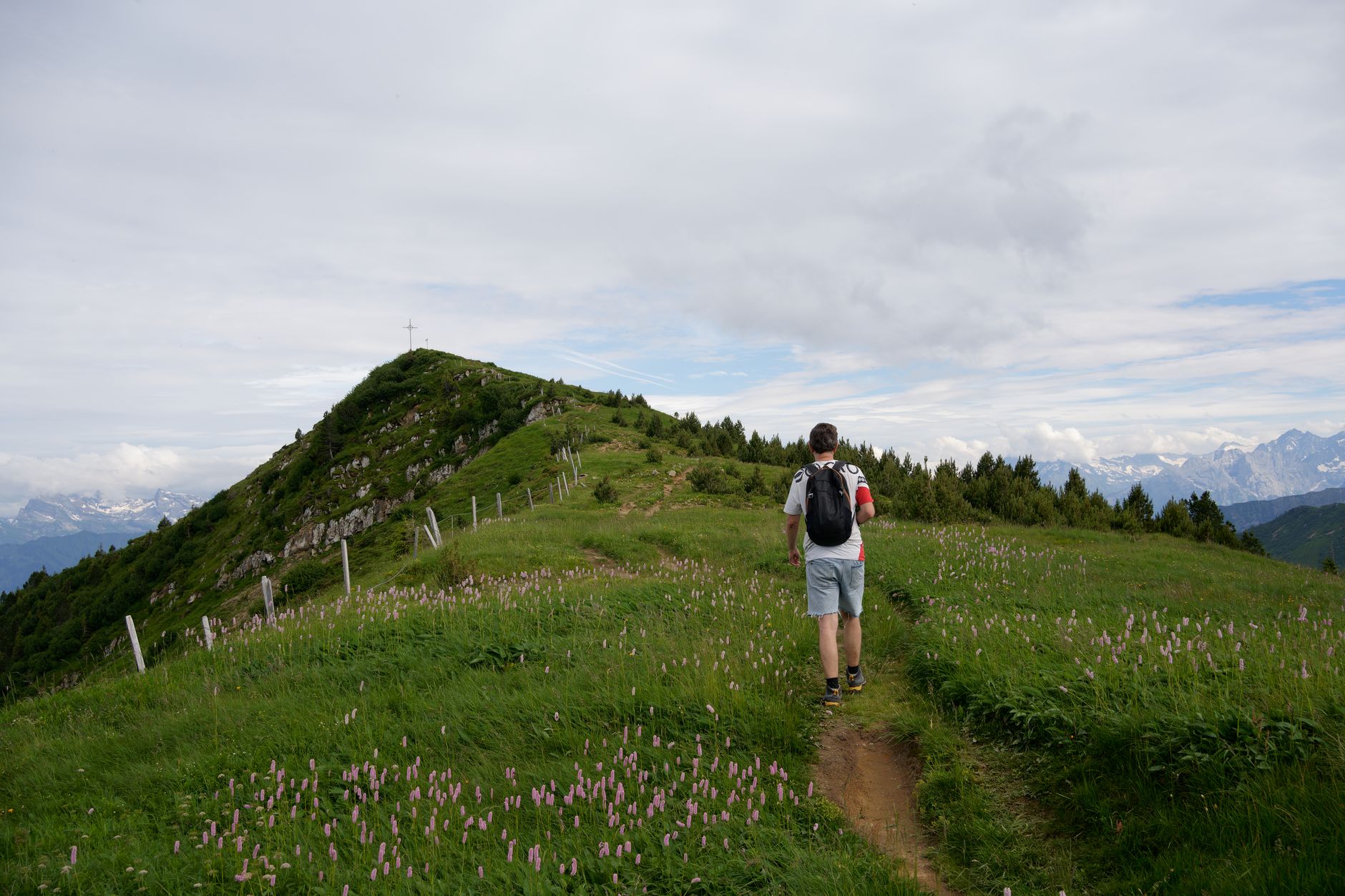
The single most common reason hikers scratch from the TMB mid-route isn’t weather, fitness, or route-finding — it’s feet. Ten-thousand meters of elevation gain concentrates a remarkable amount of stress on your toes, heels, and achilles. Build a dedicated foot care kit and treat it as seriously as your navigation gear.
Your kit should include: Leukotape P or Kinesio tape pre-cut into blister-prevention strips for your known hot spots, a travel-sized bottle of anti-chafe cream (2Toms Sport Shield or BodyGlide), a small needle and thread for draining blisters properly, moleskin or Compeed blister pads, and a lightweight pair of camp sandals for hut evenings. Wearing trail shoes through a refuge dinner is miserable — your feet will thank you for 200 grams of packable sandal.
Trekking pole selection also feeds directly into foot and knee health on the TMB. Carbon poles are worth it here. The descent mileage on this route is significant enough that the reduced vibration and weight savings on carbon versus aluminum translate to measurable knee fatigue reduction by the end of a long day. Get poles with a comfortable grip for hours of use and a simple locking mechanism you can adjust on the move — flick-lock or twist-lock both work, just test them before you go.
Pack Weight Targets and the Gear That Gets You There
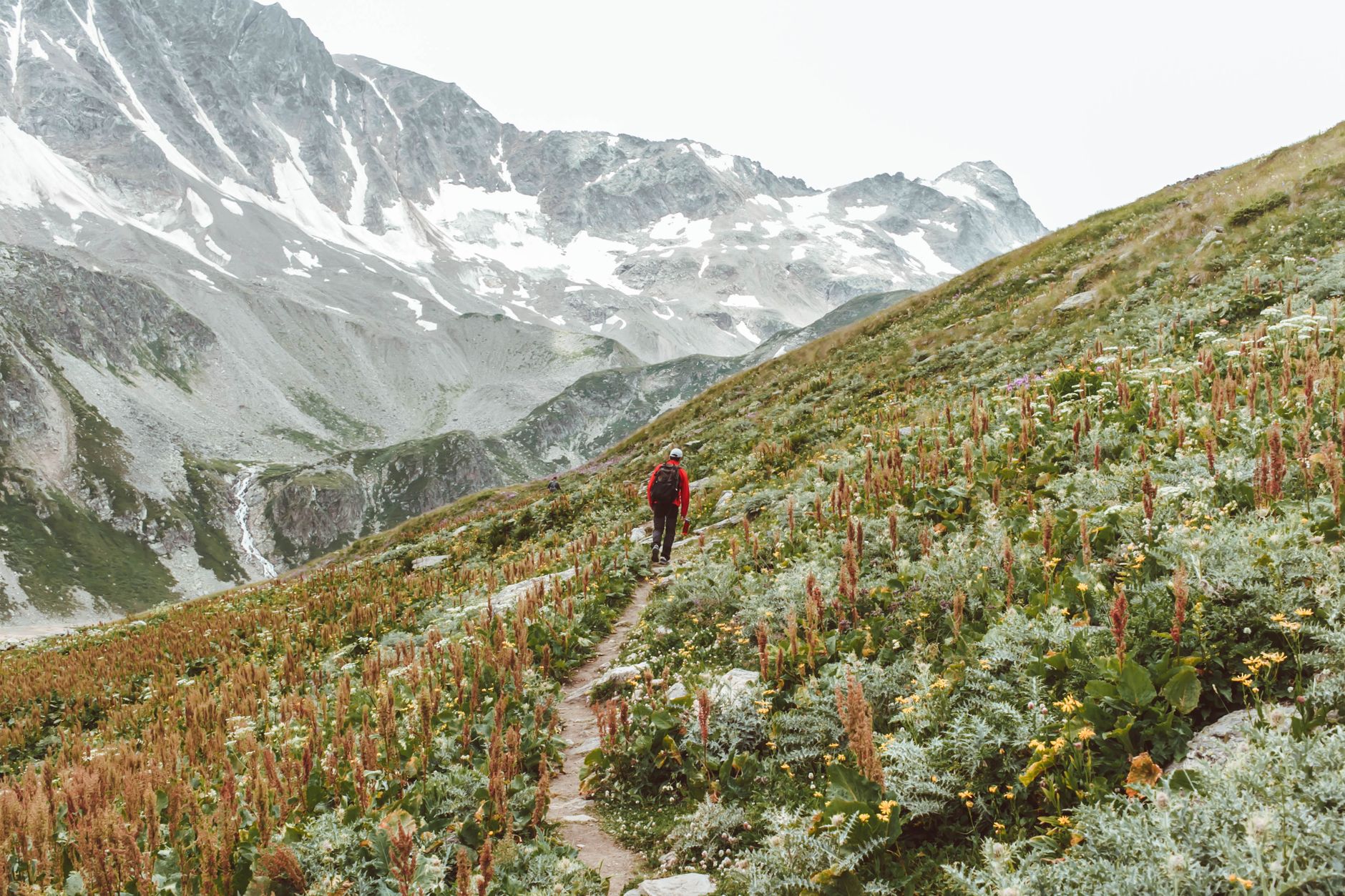
For a hut-to-hut TMB itinerary, a realistic base weight target is 5–8 kg. Add 1–1.5 kg for water, food for the day, and any shared group items and you’re looking at a comfortable 7–10 kg moving weight. Heavier than this and the cumulative fatigue on a 12–14 day route becomes genuinely limiting. Lighter than 5 kg base and you’re either a seasoned ultralight specialist or you’ve left out something you’ll regret at 2,400 meters in a rainstorm.
The items worth spending money on to reduce weight: sleeping bag (down over synthetic, always), rain jacket (a quality ultralight hardshell pays dividends every single day), and trekking poles (carbon versus aluminum). The items where budget options work fine: stuff sacks, dry bags, trekking pole tips, and most camp accessories. Your pack itself is a significant weight lever — a 30L ultralight frameless pack can weigh under 500g, while a burly framed 40L will run 1.5–2 kg before you put a single item inside. For hut-to-hut loads, a light frameless or semi-frameless pack is the move.
Recommended Gear: TMB Essentials Across Budget Tiers
1. Marmot PreCip Eco Jacket ⭐⭐⭐⭐⭐
Price range: $80-110 | Budget pick
The PreCip Eco has become the go-to budget hardshell recommendation for a reason — it delivers genuine waterproofing at a price point that leaves budget for other kit. For TMB hikers who want a reliable rain layer without spending on a premium Gore-Tex piece, this is the call. The 2.5-layer construction keeps it packable and the hood adjusts cleanly over most hats.
Built to last: 100% recycled nylon face fabric with NanoPro DWR coating; fully seam-taped construction holds up across multiple seasons of alpine use with periodic re-DWR treatment.
Pros:
- ✓ Genuine waterproofing at an accessible price
- ✓ Packs to fist-sized volume in its own chest pocket
- ✓ Pit zips for ventilation on climbs
Cons:
- ✗ Less breathable than Gore-Tex options on sustained uphill efforts
2. Black Diamond Trail Sport Trekking Poles ⭐⭐⭐⭐⭐
Price range: $70-90 | Budget pick
Reliable, adjustable, and tough enough for technical alpine terrain. The Trail Sport uses Black Diamond’s FlickLock Pro adjustment system — the most reliable locking mechanism on the market for poles that need frequent length changes between climbs and descents. Cork-blend grips manage sweat well on long days.
Built to last: 7075 aluminum shaft construction resists bending under load; hardened steel tips with replaceable rubber tip covers; FlickLock Pro lever mechanism stays secure under sustained pressure.
Pros:
- ✓ FlickLock Pro is bombproof and easy to adjust with gloves
- ✓ Cork-blend grips reduce hand fatigue over long days
- ✓ Collapsible to packable length for cable cars and scramble sections
Cons:
- ✗ Heavier than carbon options — noticeable on multi-week routes
3. Osprey Exos 38 Pack ⭐⭐⭐⭐⭐
Price range: $200-240 | Mid-range pick
The Exos 38 sits in the sweet spot for TMB hut-to-hut hiking: enough volume for a 12-day kit, light enough not to punish you on the climbs, and structured enough to carry comfortably with a day’s food and water. The suspended mesh back panel is a genuine ventilation advantage on hot Italian valley approaches.
Built to last: 100D nylon packcloth with 210D nylon high-wear zones; die-cut foam hipbelt; Airspeed tensioned mesh back panel — Osprey’s construction quality at this price tier is consistently reliable across multiple seasons.
Pros:
- ✓ Excellent ventilation via suspended mesh back
- ✓ 38L hits the TMB hut-to-hut volume sweet spot
- ✓ Osprey’s All Mighty Guarantee covers lifetime repair
Cons:
- ✗ Hipbelt is not load-bearing enough for packs over 12 kg
4. Sea to Summit Spark SpI Sleeping Bag ⭐⭐⭐⭐⭐
Price range: $190-230 | Mid-range pick
For hut-to-hut TMB hiking, a dedicated lightweight down bag in the 8°C / 45°F comfort range paired with a silk liner is the practical choice over a full three-season bag. The Spark SpI hits this niche precisely — small, light, genuinely warm for its weight, and compressible to a volume that won’t eat your pack. For refuges that supply blankets, a silk liner alone may suffice — but the Spark gives you a genuine backup option when hut blankets are thin.
Built to last: 750+ fill power RDS-certified down in an ultralight 15D nylon shell; YKK zippers; internal baffles prevent cold spots — the ultralight shell trades some abrasion resistance for significant weight savings appropriate for hut use.
Pros:
- ✓ Compresses to barely larger than a Nalgene
- ✓ Genuine warmth-to-weight ratio for hut environments
- ✓ Works as a standalone bag or liner pairing
Cons:
- ✗ Ultralight shell is not for rough handling — treat it accordingly
5. Arc’teryx Beta LT Jacket ⭐⭐⭐⭐⭐
Price range: $500-600 | Premium pick
If you want the best hardshell for a serious TMB push, the Beta LT is the answer. Gore-Tex Pro 3-layer construction delivers the breathability-waterproofing combination that makes it genuinely functional on hard uphill efforts in rain, not just comfortable while standing still. The cut is athletic without being restrictive, the hood is helmet-compatible, and the construction quality means this jacket will outlast multiple TMB trips.
Built to last: Gore-Tex Pro 3-layer laminate with N40p-X face fabric; fully taped seams; WaterTight zippers; N-fuse bonded baffles; Arc’teryx’s reputation for construction precision is backed by genuinely rigorous quality control.
Pros:
- ✓ Gore-Tex Pro delivers real breathability under exertion
- ✓ Helmet-compatible StormHood with single-hand adjustment
- ✓ Built to last a decade of hard alpine use
Cons:
- ✗ Premium price point — significant investment for one route
Final Checklist: Don’t Leave Home Without These
Beyond the major category items, there’s a collection of small-but-critical items that separate comfortable TMB hikers from miserable ones. Passport (required for the Italian border crossing), European health insurance card or travel insurance documentation, small amount of euros and Swiss francs (some huts don’t take cards), headlamp with fresh batteries or USB-charged, sunscreen rated SPF 50 minimum, lip balm with UV protection, a lightweight camp towel, earplugs for refuge dorms, and your hut reservation confirmations printed or saved offline. The offline part matters — you will be in areas with no cell service when you need to show your booking.
First aid should be minimal but specific: blister kit as described above, ibuprofen and paracetamol, a few strips of Steri-Strip wound closure, and a small SAM splint if you’re doing remote variants. The main TMB route has excellent mountain rescue access, but the variants — particularly the Fenêtre d’Arpette in Switzerland — put you in genuinely exposed terrain where self-rescue for a twisted ankle buys you time until help arrives.
The reward for getting your kit right is a two-week experience that is legitimately life-changing. The Tour du Mont Blanc gear guide comes down to one principle: carry what you need, nothing more, and make every item earn its grams. The mountain will do the rest.
Shop Backcountry Gear Labs on Etsy
Hoodies, tees, hats, and more for campers and hikers who live for the trail.
Get Weekly Gear Picks
Join the Backcountry Gear Labs newsletter for expert gear picks and backcountry advice, every week.