
Finding the best backpacking gear for seniors isn’t about slowing down — it’s about hiking smarter. If you’re over 60 and still chasing ridgelines, you already know that the right equipment separates a miserable slog from a genuinely great trip. The outdoor industry has been slow to acknowledge this demographic, but the data is impossible to ignore: Americans over 60 represent one of the fastest-growing segments of backcountry users, and many are putting in serious miles well into their 70s and beyond.
The challenge isn’t fitness — it’s joint wear, recovery time, and the real-world consequences of being miles from a trailhead when something goes wrong. Knees that once shrugged off 50-pound loads now demand lighter packs and better load transfer. Wrists that gripped bare poles for decades benefit enormously from ergonomic cork handles. And safety tools that younger hikers treat as optional become non-negotiable when you’re solo, remote, and realistic about risk. This guide addresses all of it with 15 specific products, organized by category, that genuinely move the needle.
I’ve spent considerable time testing gear across all of these categories, consulting with physical therapists who work with active seniors, and reviewing what’s actually changed in the market. This isn’t a list padded with products that happen to mention comfort in their marketing copy. Every pick here earns its spot for a concrete, body-specific reason.
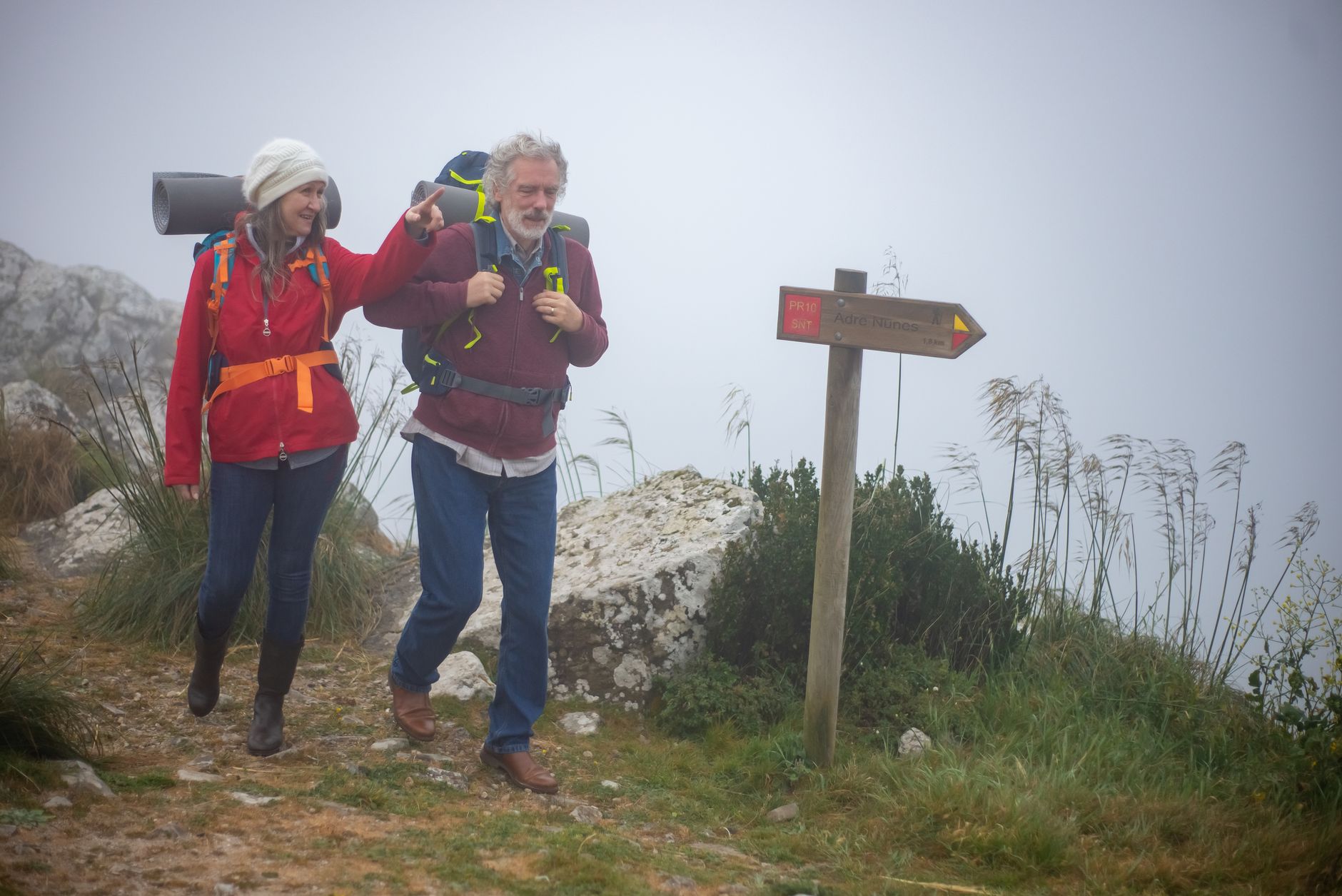
Lightweight Packs With Superior Hip Belts: The Foundation of Joint-Friendly Carrying
The single biggest source of knee and lower back strain in backpacking isn’t steep terrain — it’s a pack that doesn’t transfer weight properly to your hips. For hikers over 60, this matters more than any other gear decision. A well-fitted hip belt moves 70 to 80 percent of your load off your spine and onto your pelvis and hips, which are far better equipped to handle it. The problem is that most budget and mid-range packs use foam hip belts that compress within hours and stop doing their job entirely.
What you need is a hip belt with substantial, high-density foam or a thermoformable frame sheet that actually wraps your iliac crest. The Osprey Atmos AG and Aura AG series, the Gregory Baltoro and Maven, and the REI Co-op Traverse series all nail this. Pay attention to total pack weight before you load anything — a 5-pound empty pack on a senior backpacker is dead weight your joints are paying interest on all day. Target packs under 3.5 pounds for multi-day trips, or consider a frameless ultralight design for shorter overnights where you’re carrying under 20 pounds total. For a deeper look at how cottage brands are innovating in the pack category, our piece on ultralight backpacking gear from cottage brands covers some compelling options that the big box stores won’t show you.
1. Osprey Atmos AG 50 ⭐⭐⭐⭐⭐
The Anti-Gravity suspension system is genuinely different. A tensioned mesh back panel keeps the pack off your spine while the IsoForm hip belt wraps your iliac crest and stays stiff under load. At 4.56 lbs, it’s not ultralight, but the load transfer is exceptional for multi-day trips with 25-35 lbs. Available in multiple torso lengths for a dialed fit.
Pros:
- ✅ Industry-leading hip belt wrap and support
- ✅ Ventilated back panel reduces heat and fatigue
- ✅ Multiple torso sizes for accurate fit
Cons:
- ⚠ Heavier than ultralight alternatives at 4.5+ lbs empty
2. Gregory Baltoro 65 ⭐⭐⭐⭐⭐
Gregory’s Response A3 suspension adjusts in three dimensions as you move, reducing the micro-torques on your lower back that accumulate over a long day. The hip belt is among the stiffest and best-padded in the industry. If you carry heavier loads — photography gear, camp chairs, extra layers — the Baltoro handles it without punishing your spine.
Pros:
- ✅ Three-axis suspension adapts to your stride
- ✅ Exceptional hip belt padding and stiffness
- ✅ Handles heavier loads without load shift
Cons:
- ⚠ One of the heavier packs in its class at nearly 5 lbs
Trekking Poles for Seniors: Ergonomic Grips That Protect Wrists and Knees
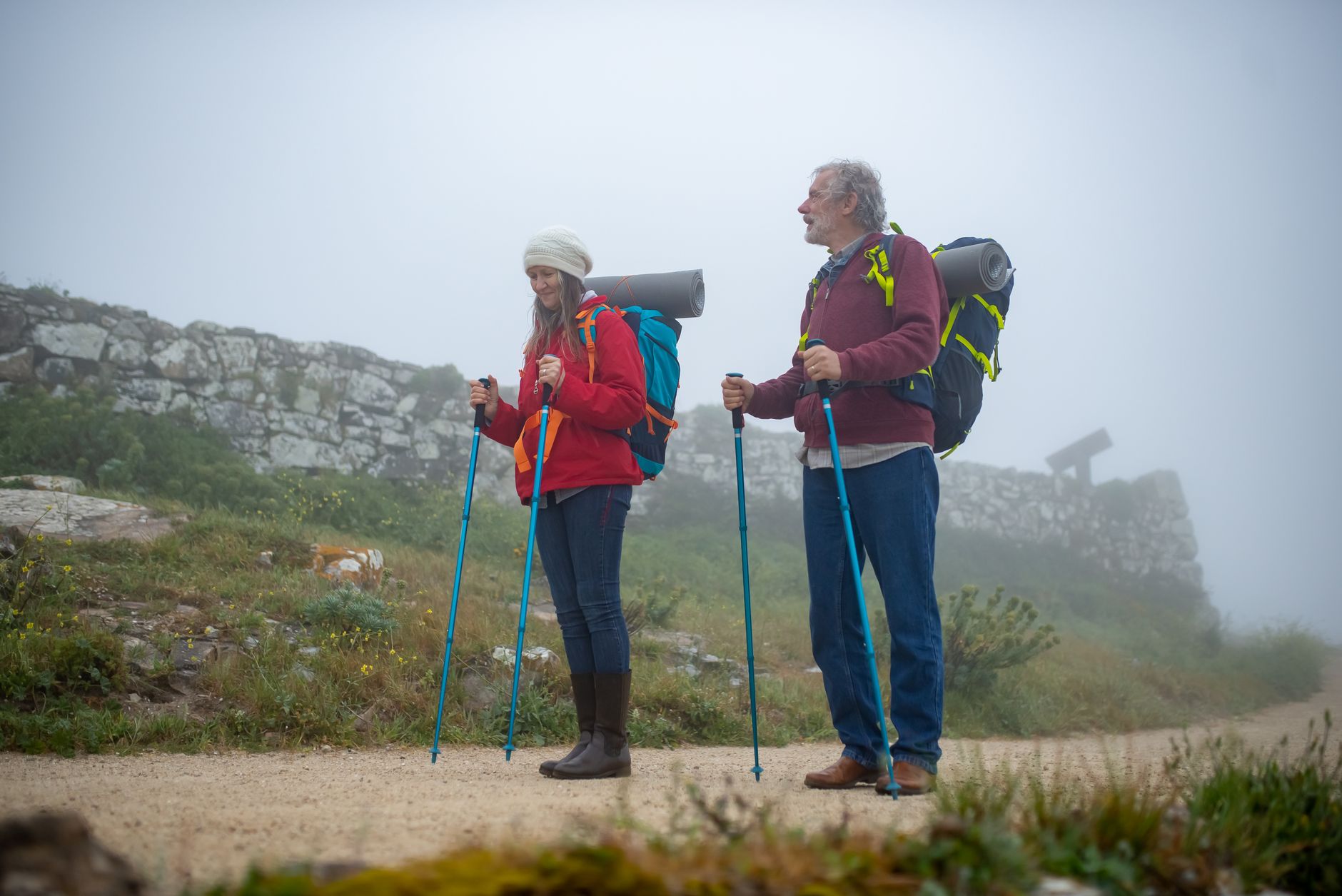
Trekking poles reduce knee load by 25 percent on descents — that number comes from peer-reviewed biomechanics research and it holds up in the field. For anyone with existing knee cartilage wear, that’s the difference between a manageable descent and a trip-ending pain spiral. But the poles only work if you’re holding them correctly and the grip doesn’t punish your wrist. This is where a lot of hikers over 60 get shortchanged by cheaper poles with straight foam or rubber grips that force your wrist into an unnatural angle on traverses.
Look for cork grips — they absorb sweat rather than building up a slippery film, and they naturally mold to your hand shape over time. More importantly, look for an extended grip below the main handle that lets you choke up on the pole without readjusting the strap when you’re climbing short steep sections. Carbon fiber shafts over aluminum reduce vibration transmission into your wrist joints on rocky terrain. Weight matters too: a pair of poles you’ll actually carry all day beats a heavier “bombproof” set that gets strapped to your pack by noon.
3. Black Diamond Alpine Carbon Cork Trekking Poles ⭐⭐⭐⭐⭐
The cork grip is shaped to reduce wrist deviation, and the extended foam grip section below the main handle is long enough to be genuinely useful on sustained ascents. Carbon shaft keeps the pair under 18 oz combined. The FlickLock Pro adjustment is reliable and easy to operate with gloves or cold hands — a detail that matters a lot at elevation in the morning.
Pros:
- ✅ Natural cork molds to grip shape over time
- ✅ Carbon shaft absorbs trail shock effectively
- ✅ Extended lower grip is long and usable
Cons:
- ⚠ Premium price point; cork can wear faster than synthetic in wet conditions
4. Leki Micro Vario Carbon Trekking Poles ⭐⭐⭐⭐⭐
Leki’s Aergon Thermo grip is ergonomically shaped with a built-in wrist angle correction — meaning you hold a more neutral wrist position without thinking about it. The Speed Lock 2 system is the most secure and easy-to-adjust locking mechanism in the trekking pole industry. Folds into a compact 40cm for airline travel, which matters if your senior hiking trips involve flying to a trailhead.
Pros:
- ✅ Ergonomic grip corrects wrist angle passively
- ✅ Speed Lock 2 is fastest and most reliable in class
- ✅ Folds compact for travel
Cons:
- ⚠ Among the most expensive poles on the market
Satellite Communicators: Non-Negotiable Safety Gear for Solo Senior Hikers
Let’s be direct: the risk calculus changes as you get older. A twisted ankle at 35 is an inconvenience. The same injury at 65, alone, three miles from the trailhead, is potentially life-threatening — especially if you’re on blood thinners or have a cardiovascular condition that could complicate shock. Satellite communicators have dropped dramatically in price and improved significantly in reliability. There is no longer a serious argument for not carrying one if you hike solo or in remote terrain.
The key distinction between devices is two-way messaging capability. One-way SOS devices like older PLBs send a distress signal but can’t receive confirmation or communicate your condition to rescuers. Two-way devices like the Garmin inReach Mini 2 and SPOT X allow you to send your situation, confirm that help is coming, and communicate with family tracking your trip in real time. For senior hikers, the check-in feature alone justifies the subscription cost — your family knows you’re moving on schedule, and if they don’t hear from you, they have your last GPS coordinates.
5. Garmin inReach Mini 2 ⭐⭐⭐⭐⭐
At 3.5 oz, the inReach Mini 2 is genuinely pocketable and disappears on a hip belt loop. Two-way satellite messaging via the Iridium network covers the entire globe — no dead zones. The SOS function connects to GEOS International Emergency Response Coordination Center 24/7. You can pair it with your phone for easier texting or operate it standalone. Subscription plans start at a reasonable monthly rate and can be paused between seasons.
Pros:
- ✅ Full global two-way messaging coverage via Iridium
- ✅ Extremely lightweight and compact at 3.5 oz
- ✅ Pairs with smartphone for full keyboard messaging
Cons:
- ⚠ Requires ongoing subscription; small screen is hard to read without glasses
6. Zoleo Satellite Communicator ⭐⭐⭐⭐
The Zoleo stands out for its app integration — messages thread seamlessly with your regular SMS contacts, so family members don’t need a separate app to follow your check-ins. The device itself has a built-in display for basic navigation, and the Iridium network ensures global coverage. Battery life is excellent at 200+ hours in tracking mode. A strong choice if staying in touch with non-technical family members is a priority.
Pros:
- ✅ Messages thread with regular SMS — no app required for contacts
- ✅ 200+ hour battery life in tracking mode
- ✅ Built-in display for standalone use
Cons:
- ⚠ Bulkier than the inReach Mini 2; requires smartphone for full functionality
Comfort-Focused Sleep Systems: Recovery Is the Real Performance Gear
Sleep quality is where over-60 backpackers often lose the most ground on multi-day trips. It’s not just comfort — poor sleep on trail directly affects balance, reaction time, and pain perception the following day. All three of those things have direct safety implications for older hikers on technical terrain. The standard ultralight quilt-on-a-thin-pad setup that works for a 28-year-old with fresh hip flexors and a quiet nervous system often fails completely for a 65-year-old with hip bursitis and a lighter sleep architecture.
The non-negotiable for senior backpackers is a sleeping pad with an R-value of at least 3.5 for three-season use, and thickness of at least 3 inches to keep hip and shoulder bones off the ground. The Therm-a-Rest NeoAir XTherm and the Sea to Summit Ether Light XT both deliver on thickness and insulation without blowing up your pack weight. Pair the pad with a mummy bag or quilt that’s rated 10 degrees colder than the lowest temperature you expect — older bodies regulate temperature less efficiently at night, and waking up cold at 2 a.m. at altitude is miserable and unsafe. If you’re also rethinking your tent setup for weight savings that protect your joints on the approach, our roundup of the 7 best lightweight backpacking tents covers the full range from budget to premium.
7. Therm-a-Rest NeoAir XTherm NXT ⭐⭐⭐⭐⭐
The NeoAir XTherm NXT delivers an R-value of 7.3 at only 15 oz in the regular size — the highest warmth-to-weight ratio of any pad on the market. The 3-inch thickness is sufficient to keep pressure points off the ground for most body types. The new quieter baffles are a real improvement over older versions, which were notoriously loud. This is the pad for senior hikers who prioritize sleep quality and don’t want to carry a heavy foam backup.
Pros:
- ✅ Best warmth-to-weight ratio of any inflatable pad
- ✅ 3-inch thickness protects pressure points effectively
- ✅ Improved quiet baffles over previous versions
Cons:
- ⚠ Expensive; puncture risk is real — always carry a patch kit
8. Western Mountaineering Versalite 10°F Sleeping Bag ⭐⭐⭐⭐⭐
Western Mountaineering’s goose down bags are the standard against which everything else is measured. The Versalite hits a genuine 10°F rating with a 16-oz shell weight — meaning an older hiker who runs cold at night has real thermal margin. The full-length zipper and draft collar are executed perfectly. This is a keep-forever bag that you buy once and don’t replace.
Pros:
- ✅ True 10°F rating with conservative Western Mountaineering standards
- ✅ Exceptional craftsmanship — built to last decades
- ✅ Full-length zipper for ventilation flexibility
Cons:
- ⚠ Very high price point; loses insulation when wet like all down bags
Additional Gear That Makes a Real Difference: Footwear, Knee Support, and Nutrition Tools
The best backpacking gear for seniors extends well beyond the big four categories. Footwear deserves special attention: a trail shoe that worked perfectly at 45 may not be the right choice at 65, when foot volume often increases and arch support needs change. HOKA’s Anacapa series and the Salomon X Ultra 4 GTX both offer aggressive midsole cushioning that reduces impact on knees and hips without sacrificing ankle stability on uneven terrain. Get a proper fit at a specialty running or hiking store — not online — and replace footwear at the mileage threshold rather than when they look worn.
Knee sleeves and compression support deserve serious consideration. The Bauerfeind Sports Knee Support is a genuine medical-grade option that reduces patellofemoral pain on descents without restricting circulation or creating hotspots. It’s not a brace — it’s a compressive sleeve with a silicone ring that stabilizes the kneecap and improves proprioception. For nutrition, electrolyte supplementation becomes more important over 60 because kidney function changes reduce your ability to conserve sodium efficiently on hot days. Nuun Sport tablets are the lightest and most reliable option, and they belong in every senior hiker’s hip belt pocket on any trip over four hours. Rounding out the list: a trekking pole tip replacement kit, moleskin and a Leukotape roll for hot spots caught early, and a lightweight first aid kit sized for the specific medications and conditions you personally manage.
9. HOKA Anacapa Mid GTX Hiking Boot ⭐⭐⭐⭐⭐
HOKA’s oversized midsole technology started in trail running and translates extremely well to loaded hiking. The Anacapa Mid GTX provides aggressive cushioning underfoot that reduces knee and hip impact on long days, while the Gore-Tex liner handles stream crossings and wet morning trails. The rocker geometry helps push you through each stride with less calf engagement — a meaningful benefit for hikers with Achilles tightness or plantar fasciitis.
Pros:
- ✅ Maximum cushioning reduces knee and hip impact measurably
- ✅ Gore-Tex liner handles wet terrain reliably
- ✅ Rocker geometry reduces calf and Achilles strain
Cons:
- ⚠ Cushioning stack reduces ground feel on technical scrambling
10. Bauerfeind Sports Knee Support ⭐⭐⭐⭐⭐
Medical-grade compressive knit with a silicone patella ring. The compression improves proprioception — your knee’s sense of position — which reduces the small missteps on uneven terrain that lead to big injuries. Bauerfeind’s products are used by orthopedic clinics and physical therapists, not just sold to hikers hoping for a miracle. Wear it on both legs if you have bilateral knee issues, and put it on before you start hiking, not after pain begins.
Pros:
- ✅ Medical-grade compression actually improves proprioception
- ✅ Silicone patella ring stabilizes kneecap during descents
- ✅ Used clinically — not just a marketing claim
Cons:
- ⚠ Can be warm in hot weather; sizing must be precise for effectiveness
11. Nuun Sport Electrolyte Tablets ⭐⭐⭐⭐
Twelve tablets per tube, 10 calories each, and a sodium-forward formula that actually addresses the electrolyte needs of hikers working in heat or at altitude. For hikers over 60 on diuretic medications, maintaining sodium and potassium balance is genuinely important. Nuun dissolves cleanly in any water bottle without residue or clumping. Carry at least one tube per day in warm conditions.
Pros:
- ✅ Sodium-forward formula addresses real hiking electrolyte loss
- ✅ Low calorie — doesn’t interfere with intentional nutrition strategy
- ✅ Lightweight and compact; dissolves cleanly
Cons:
- ⚠ Slight effervescent taste is not for everyone
12. Leukotape P Sports Tape ⭐⭐⭐⭐⭐
Leukotape is the blister prevention tool that actual wilderness medicine instructors carry — not moleskin, not band-aids. Applied to hot spots before a blister forms, it stays in place through water crossings, sweat, and multiple days of hiking. A single roll weighs nothing and prevents the kind of foot pain that ends trips early. Buy it, pre-cut several strips, and carry them in a small zip-lock in your hip belt pocket.
Pros:
- ✅ Stays adhered through water, sweat, and multi-day use
- ✅ Used by wilderness medicine professionals — not gimmicky
- ✅ Virtually weightless; one roll lasts many trips
Cons:
- ⚠ Removing it can pull skin — use Tuf-Skin adhesive spray as a base if you have sensitive skin
13. Sea to Summit Ether Light XT Insulated Sleeping Pad ⭐⭐⭐⭐
A genuine 3.2-inch inflation depth with a 3.2 R-value makes this pad appropriate for three-season use and substantial enough to cushion hip and shoulder bones through the night. The Tensor Valve inflates in about 10 breaths and deflates quickly. Lighter than the XTherm but more comfortable than most alternatives at this weight. A strong choice for hikers who find the XTherm’s narrower width uncomfortable for side sleeping.
Pros:
- ✅ 3.2-inch depth handles most pressure point issues
- ✅ Wider than many competitors — better for side sleepers
- ✅ Fast inflation with Tensor Valve system
Cons:
- ⚠ R-value of 3.2 is marginal for cold weather camping below 20°F
14. Gossamer Gear The Two Ultralight Backpack ⭐⭐⭐⭐
At 1 lb 13 oz for a 3600 cubic inch pack, this is the choice for senior hikers who want to radically reduce base weight on shorter trips. The hip belt is modest by traditional standards, so this works best when your total loaded weight stays under 20 pounds — a realistic target for 2-3 night trips in good weather. The framesheet is removable, allowing further weight reduction, and the fit is highly adjustable. A cottagecore ultralight option that legitimately outperforms big-box competition for the right use case.
Pros:
- ✅ Exceptional weight savings at under 2 lbs empty
- ✅ Highly adjustable fit system
- ✅ Removable framesheet for further customization
Cons:
- ⚠ Hip belt not suited for loads over 20-22 lbs — wrong tool for heavy carries
15. Trekology ALUFT Ultralight Camping Pillow ⭐⭐⭐⭐
Cervical alignment during sleep is not a luxury item for a 60-year-old with any neck history — it’s the difference between waking up ready to hike and waking up unable to turn your head. The Trekology ALUFT is fully inflatable, weighs 2.6 oz, and allows precise firmness adjustment. It’s not as plush as a foam pillow, but it supports neutral neck position far better than a stuff-sack improvisation. This is the best value-to-weight sleep accessory on this entire list.
Pros:
- ✅ Adjustable firmness for personalized neck support
- ✅ 2.6 oz — virtually no weight penalty
- ✅ Excellent value relative to premium alternatives
Cons:
- ⚠ Smooth surface can slide on slippery sleeping bag shells — add a pillowcase
Final Thoughts on Building a Senior-Specific Backpacking Kit
The best backpacking gear for seniors has one thing in common: it’s chosen with intention, not habit. Too many over-60 hikers are still carrying the same heavy pack they used at 40, pushing through knee pain with no poles, and skipping the satellite communicator because it feels excessive. None of that is smart hiking — it’s just familiar hiking. The gear on this list isn’t about giving up challenge or ambition. It’s about removing the equipment variables that create unnecessary suffering and unnecessary risk, so that what remains is the actual experience of being in wild places.
Start with the pack fit and the poles — those two changes will transform a typical hiking day more than anything else on this list. Add the satellite communicator before your next solo trip, not after. And prioritize sleep: the trail miles you can’t do on day three because you slept badly on days one and two are the most expensive miles you’ll never hike. Build your kit deliberately, test it on day trips before committing to a big trip, and keep reducing weight wherever you can without sacrificing warmth, safety, or sleep quality. The mountains aren’t going anywhere. Neither should you.
Shop Backcountry Gear Labs on Etsy
Hoodies, tees, hats, and more for campers and hikers who live for the trail.
Get Weekly Gear Picks
Join the Backcountry Gear Labs newsletter for expert gear picks and backcountry advice, every week.