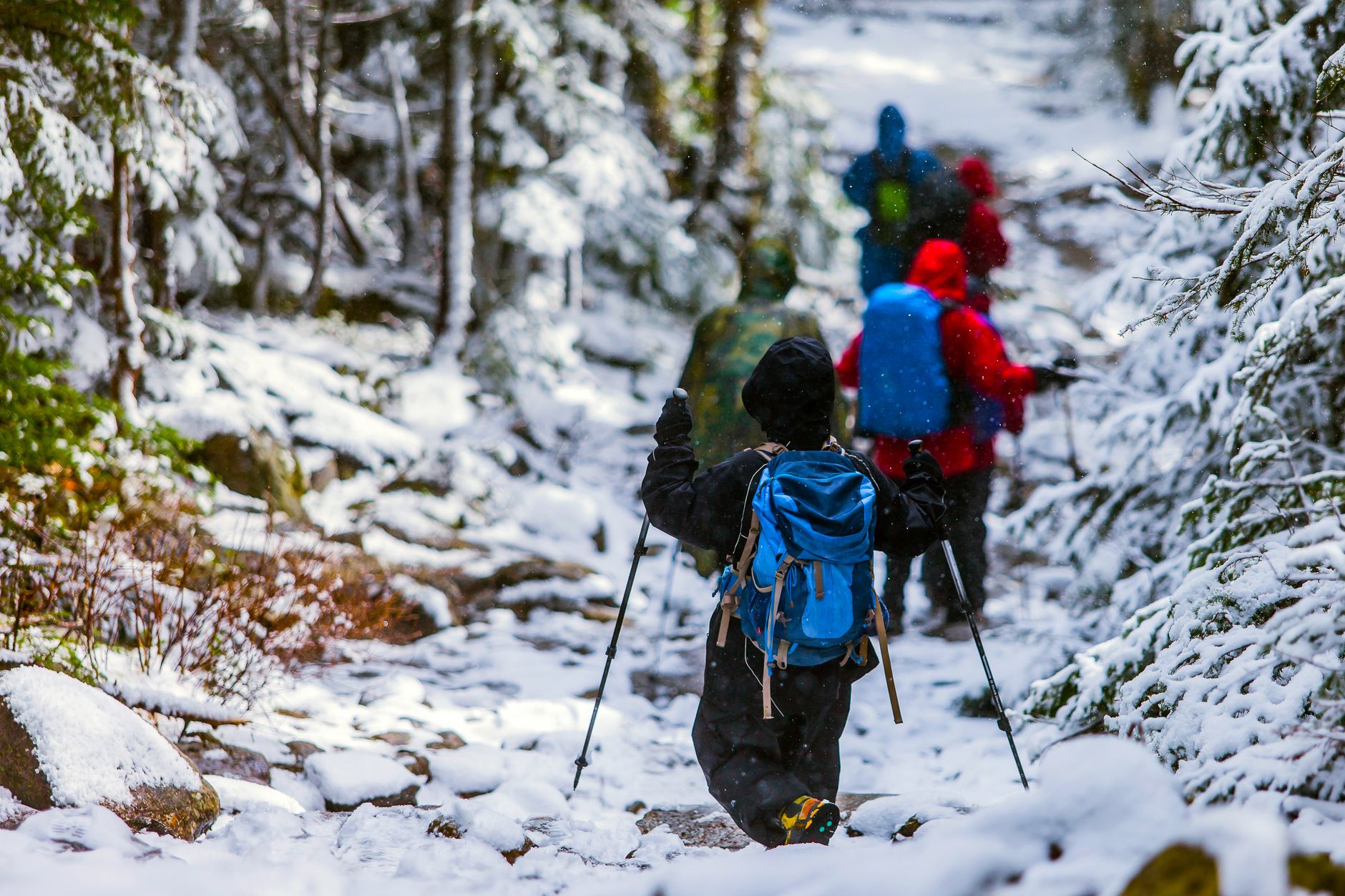
Your backcountry first aid kit might be keeping you comfortable — but is it keeping you alive? Most hikers grab a pre-packaged kit off a drugstore shelf, stuff it in their pack, and never think twice. Emergency physicians who spend their weekends deep in the wilderness think very differently. They’ve seen what kills people in the backcountry, and they build their kits accordingly.
I reached out to three emergency medicine physicians who are also serious backpackers and asked them a simple question: what’s actually in your personal wilderness med kit, why did you choose each item over the standard option, and what do most hikers dangerously overlook? Their answers were equal parts reassuring and sobering. Here’s what they told me.
This isn’t a listicle of adhesive bandages and antiseptic wipes. This is a ground-level look at how people who treat wilderness emergencies for a living think about backcountry first aid — and the specific gear they trust when they’re four days from the nearest road.
How Emergency Physicians Think About Backcountry First Aid Differently
Dr. Sarah Kowalczyk, an attending emergency physician and ultramarathon runner who logs 50-plus nights a year in the backcountry, put it bluntly: “Standard consumer first aid kits are designed for liability, not outcomes. They’re full of low-stakes items and missing everything that actually matters in a real emergency.” Her kit weighs just under 12 ounces and focuses entirely on life threats — bleeding, airway compromise, anaphylaxis, and evacuation facilitation.
Dr. Marcus Trevino, an ER doc and alpinist who’s guided trips in the Cascades and Wind Rivers, echoes that framing. “In the ER, we triage for what kills first. In the backcountry, you should do the same. Massive hemorrhage kills in minutes. A sprained ankle doesn’t. Most kits are built for the ankle and completely ignore the hemorrhage.” His kit prioritizes hemostatic control, airway tools, and a real epinephrine option — things most hikers have never heard of.
Dr. Priya Nambiar, who works in a high-volume urban trauma center and has thru-hiked the PCT and CDT, brings a slightly different lens. She thinks about kits across a risk spectrum — solo versus group travel, proximity to evacuation, technical terrain — and adjusts her loadout accordingly. “There’s no single perfect kit. But there are categories of items that every serious backcountry traveler should have regardless of trip length.”
The Exact Items in Their Wilderness First Aid Kits
All three physicians converged on a few non-negotiables. First: a tourniquet. Not a improvised one, not a compression bandage — a real CAT (Combat Application Tourniquet) or SOFTT-W. “Every wilderness first aid kit should have a windlass-style tourniquet,” Dr. Trevino says. “A trail saw accident, a bad fall on talus, a compound fracture with arterial involvement — the tourniquet is the difference between life and death, and it’s 30 seconds to apply if you’ve practiced.” Dr. Kowalczyk carries two on any trip over 48 hours.
Second: QuikClot Combat Gauze or Celox-A hemostatic gauze — not rolled gauze, not gauze pads. “Hemostatic gauze packs wounds that won’t respond to direct pressure alone,” Dr. Nambiar explains. “Junctional wounds — groin, axilla, neck — can’t be tourniqueted. Hemostatic gauze is your answer there.” She also carries a chest seal — specifically a Hyfin Vent — for any trip into technical terrain. “Pneumothorax from a chest injury is survivable if you seal it fast. Without a vented chest seal, you’re guessing.”
Third: an injectable epinephrine option. All three doctors carry either an EpiPen (or generic equivalent) or, for those with the training, a vial-and-syringe setup. “Anaphylaxis from a bee sting or unfamiliar food can kill a healthy adult in 20 minutes,” Dr. Kowalczyk says. “Diphenhydramine — Benadryl — is not adequate treatment for anaphylaxis. Epinephrine is.” She recommends that anyone spending serious time in the backcountry speak with their doctor about getting an epinephrine prescription. It’s a conversation worth having.

The One Piece of Gear Most Hikers Dangerously Overlook
All three physicians, independently, named the same overlooked item: a SAM Splint — and the knowledge to use it. “Not the mylar emergency blanket. Not the extra moleskin. A SAM Splint,” Dr. Trevino says. “Fractures and dislocations are among the most common serious backcountry injuries. If you can’t immobilize a limb properly, you’re turning a fixable problem into a vascular emergency.” SAM Splints are moldable aluminum with foam padding — they weigh under two ounces, roll flat, and can splint ankles, wrists, and forearms. They cost under $10. Almost no one carries them.
Dr. Nambiar adds a close second to that list: a reliable thermometer. “Hypothermia is massively underdiagnosed in the field because people feel fine until they don’t. A low-read clinical thermometer — one that actually reads down to 84°F — is something almost no pre-packaged kit includes. Core temperature management changes completely based on whether someone is mildly hypothermic or severely hypothermic.” She carries a Geratherm rectal thermometer when the mission calls for cold environments — something she acknowledges sounds extreme until you’ve seen a hypothermia case go wrong because field assessment was inadequate.
Dr. Kowalczyk rounds out the overlooked category with a written medication reference: specifically, the Wilderness Medicine Pocket Guide by NOLS. “You can carry the right drugs and still use them wrong under stress. A pocket reference removes the guesswork. I’ve been doing this for 15 years and I still carry it.” Knowledge, all three agree, is the most important piece of kit — and a Wilderness First Responder (WFR) course is the single highest-value investment any serious backcountry traveler can make.

Why They Replaced Standard Options With These Specific Products
The doctors also had strong opinions about upgrading away from standard kit items. Dr. Trevino swapped standard adhesive bandages for Leukotape P and a quality blister kit — specifically Blister Shield powder and Hydro Seal bandages. “Blisters end more trips than any other injury. A proper foot care system weighs less than a standard bandage assortment and does ten times more work.” If you want to go deeper on foot care on long miles, the team here at Backcountry Gear Labs put together a thorough guide in the Backcountry Foot Health Kit — worth reading before any multi-day trip.
Dr. Nambiar replaced her old irrigation syringe with an Irrimax wound irrigation shield — a device that fits on a standard water bottle or bag and allows high-pressure wound irrigation, which dramatically reduces infection risk in field wound management. “Wound infection in the backcountry is preventable with good irrigation. Dabbing a wound with antiseptic wipes is theater. Pressure irrigation actually removes debris and bacteria.” She also carries a small bottle of 2% lidocaine with epinephrine for wound closure — again, prescription required, and training is essential.
All three replaced their cheap space blankets with a SOL Escape Bivvy or similar vapor-barrier bag. “A thin mylar sheet in 30-mph wind does almost nothing,” Dr. Trevino says. “A proper vapor-barrier bivy retains meaningful heat and is the difference between mild and severe hypothermia progression during a rescue wait.” Combined with a solid backcountry survival kit, a proper thermal layer dramatically improves outcomes in any unplanned overnight situation.
Best Backcountry First Aid Kit Products — ER-Doctor Approved
1. North American Rescue CAT Tourniquet (NAR) ⭐⭐⭐⭐⭐
Price range: $28-35 | Budget pick
The Combat Application Tourniquet from North American Rescue is the most widely carried windlass tourniquet in both military and civilian wilderness medicine. It applies one-handed, locks securely under load, and has been validated in thousands of real hemorrhage cases. Every backcountry first aid kit should have at least one.
Built to last: Heavy-duty nylon webbing with a reinforced aluminum windlass rod and durable polymer buckle; built to sustain full arterial occlusion pressure without slippage or breakage.
Pros:
- ✓ One-handed application in under 30 seconds with practice
- ✓ Physician- and military-validated for real hemorrhage control
- ✓ Lightweight and packable at under 2 oz
Cons:
- ✗ Requires hands-on practice to apply correctly under stress
2. Celox-A Hemostatic Applicator (Celox) ⭐⭐⭐⭐⭐
Price range: $22-30 | Budget pick
Celox-A delivers granular hemostatic agent directly into a deep wound via an applicator syringe — no need to pack gauze into a wound in the dark. The chitosan-based formula works independently of the body’s clotting cascade, making it effective even in hypothermic patients where normal clotting is impaired. A critical tool for junctional wounds that can’t be tourniqueted.
Built to last: Sealed sterile applicator with a shelf-stable granule formula; hermetically sealed packaging maintains sterility and efficacy across wide temperature ranges typical in backcountry environments.
Pros:
- ✓ Works on wounds where tourniquets can’t be applied
- ✓ Effective even when normal clotting is compromised
- ✓ Small, lightweight applicator format
Cons:
- ✗ Single-use only; carries limited volume of agent
3. Hyfin Vent Chest Seal (North American Rescue) ⭐⭐⭐⭐⭐
Price range: $18-25 | Mid-range pick
The Hyfin Vent is a vented chest seal designed to treat penetrating chest trauma in the field — a real risk from falls on technical terrain, sharp rock impact, or branch penetration. Vented seals allow air to escape from the pleural space on exhalation without allowing air to re-enter, preventing tension pneumothorax. This is the chest seal most wilderness medicine instructors currently recommend.
Built to last: Triple-packed sterile packaging with a robust hydrogel adhesive that bonds even to wet or bloody skin; the vent channels are designed to remain patent under field conditions.
Pros:
- ✓ Vented design prevents tension pneumothorax progression
- ✓ Adhesive works on wet or hairy skin
- ✓ Compact twin-pack covers entry and exit wounds
Cons:
- ✗ Requires wilderness first aid training to deploy correctly
4. SOL Escape Bivvy (Survive Outdoors Longer) ⭐⭐⭐⭐⭐
Price range: $30-40 | Mid-range pick
The SOL Escape Bivvy is a step above the foil emergency blanket in every meaningful way. It’s a full vapor-barrier bag made from a breathable but thermally reflective laminate that retains body heat dramatically better than open mylar in wind or wet conditions. Dr. Trevino calls it the single most underrated thermal protection upgrade available for under $40.
Built to last: Made from a durable laminate combining a heat-reflective inner layer with a breathable outer shell; the seam construction and material thickness are engineered to survive repeated use unlike single-use foil blankets.
Pros:
- ✓ Vastly superior to thin mylar in real wind and rain conditions
- ✓ Reusable across multiple trips
- ✓ Packs to the size of a deck of cards
Cons:
- ✗ Heavier and bulkier than a single-use space blanket
5. Adventure Medical Kits Mountain Series Backpacker Kit (AMK) ⭐⭐⭐⭐
Price range: $55-75 | Premium pick
If you want a pre-built foundation that’s actually worth augmenting rather than replacing wholesale, AMK’s Mountain Series Backpacker kit is the most medically credible consumer option on the market. It includes quality wound care, a blister system, a SAM Splint, irrigation syringe, and an organized case — then you add your tourniquet, hemostatic gauze, and chest seal on top. All three physicians acknowledged it as the best starting point for hikers building their first serious kit.
Built to last: Housed in a ripstop nylon roll organizer with waterproof zipper compartments; individual items are sealed in labeled pouches that hold up to repeated wet conditions without compromising sterility.
Pros:
- ✓ Includes SAM Splint, irrigation syringe, and blister system — rare in pre-packaged kits
- ✓ Logical, organized layout that works under stress
- ✓ Strong foundation for augmentation with advanced items
Cons:
- ✗ Still missing tourniquet and hemostatic gauze — must be added separately
- ✗ Heavier than a custom-built minimal kit
Building Your Kit: The Final Checklist From the Field
The consensus from all three physicians is this: start with hemorrhage control, anaphylaxis response, and thermal protection — the three fastest killers in the backcountry. Everything else is secondary. A tourniquet, hemostatic gauze, epinephrine, and a proper bivy cover the most lethal scenarios. Add a SAM Splint, wound irrigation system, and a low-read thermometer and you’ve built a kit that addresses the full range of serious wilderness emergencies in a package that weighs under a pound.
Then — and all three doctors said this without prompting — take a course. NOLS Wilderness Medicine, SOLO Schools, and WEMS all offer Wilderness First Responder certification. A 70-hour WFR course turns gear into capability. Without training, even the best backcountry first aid kit is just a bag of objects. With training, it becomes a genuine life-saving system. There is no substitute.
Audit your current kit against this framework before your next trip. Pull out everything that’s there for comfort rather than outcomes. Add what’s missing. Practice with it at home — apply the tourniquet, practice wound packing, know where everything is in the dark. The backcountry doesn’t give you time to read instructions.
Shop Backcountry Gear Labs on Etsy
Hoodies, tees, hats, and more for campers and hikers who live for the trail.
Get Weekly Gear Picks
Join the Backcountry Gear Labs newsletter for expert gear picks and backcountry advice, every week.