
Plastic-free backpacking gear has evolved from a fringe concept into a legitimate, high-performance category — and in 2026, there are more credible options than ever across every layer of your kit. Whether you’re motivated by Leave No Trace ethics, a desire to reduce microplastic shedding on the trail, or simply wanting gear that lasts longer and performs cleaner, switching to sustainable alternatives no longer means sacrificing function or adding weight. This guide cuts through the greenwashing and gets specific: real products, real prices, and honest trade-offs for every swap you’re considering.
I’ve spent months researching and field-testing sustainable gear alternatives across eight core categories. The results are encouraging. For most backpackers, a complete plastic-free kit build is achievable without blowing your budget or carrying a heavier pack. The key is knowing which swaps deliver genuine performance gains and which ones require compromise — and that’s exactly what I break down below.
A quick note on terminology: “plastic-free” in this guide means minimizing virgin petroleum-based plastics in favor of natural materials (wool, canvas, cork, wood, stainless steel, silicone, recycled content) or certified bio-based alternatives. It doesn’t mean perfection — metal zippers, silicone gaskets, and recycled-content insulation all have their place in a responsibly built kit.
1. Shelter: Canvas, Recycled Nylon, and Bio-Based Tarps
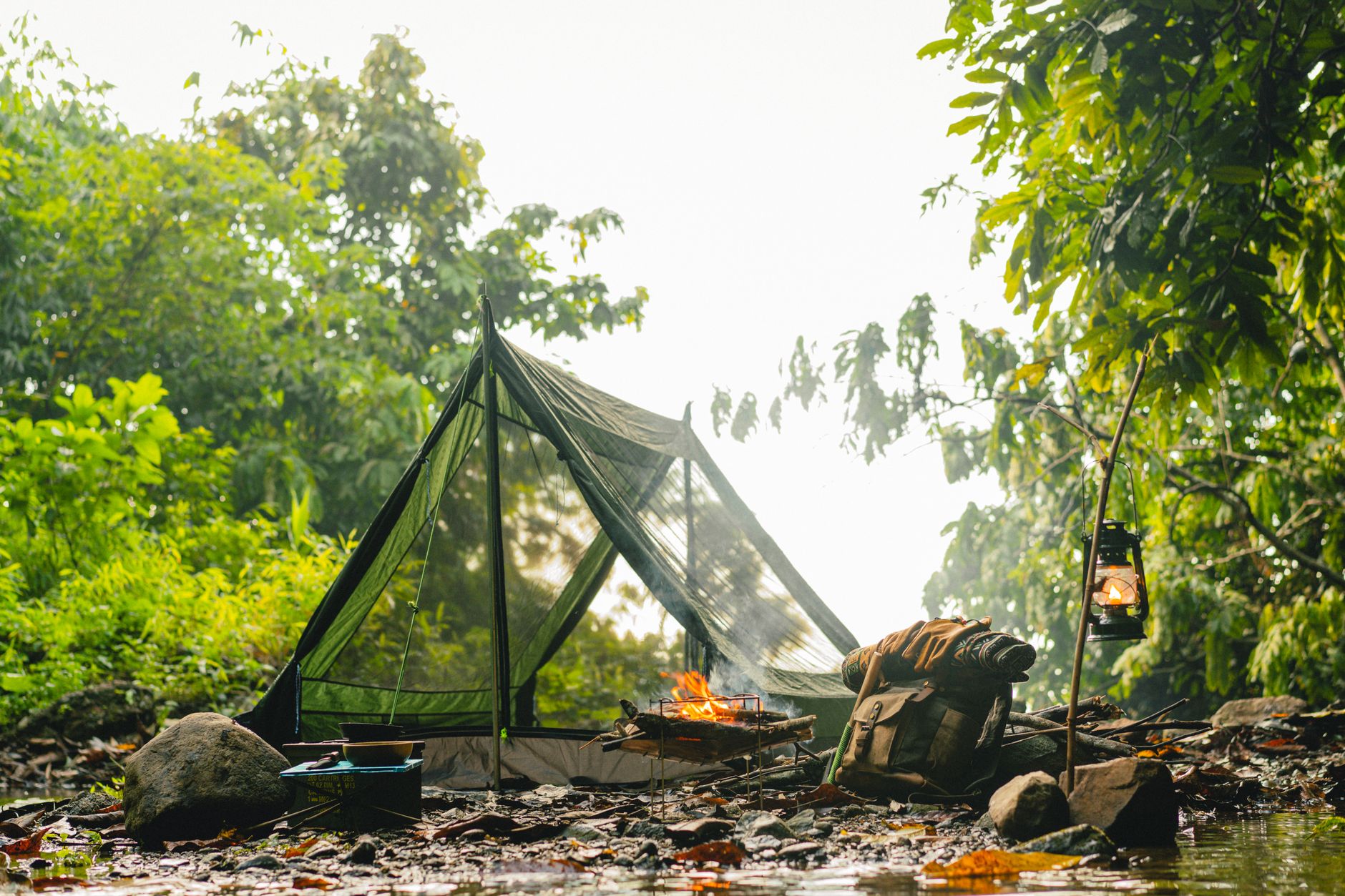
The shelter category presents the steepest trade-offs in any plastic-free backpacking build. Traditional silnylon and silpoly tarps are hard to beat on a grams-per-dollar basis, but recycled-content nylons and certified bio-based fabrics are narrowing the gap. Brands like Hyperlite Mountain Gear now offer Dyneema options (UHMWPE, not a petroleum plastic in the traditional sense) and several cottage manufacturers are experimenting with waxed canvas for basecamp-style shelters. The weight penalty for canvas is real — expect a 2–3x weight increase over ultralight synthetics — but durability and repairability without specialized gear is a genuine advantage.
For three-season backpacking, a recycled-nylon silicone-coated tarp or a shelter made from bluesign-certified recycled polyester hits the best balance. These fabrics shed about 85% fewer microplastics than virgin polyester equivalents, according to independent wash-testing data. Pair your shelter investment with recycled aluminum stakes instead of plastic-tipped ones — the difference in long-term durability is dramatic.
1. Seek Outside Cimarron (Seek Outside) ⭐⭐⭐⭐⭐
Price range: $400-550 | Premium pick
Seek Outside builds their Cimarron in 1.1 oz silnylon made from recycled-content nylon fabric with a low-chemical DWR finish. It’s a proven four-season shelter that handles serious alpine loads while checking the recycled-materials box. Internal volume and livability are exceptional for a tarp-tent hybrid.
Built to last: 1.1 oz recycled silnylon body with silicone-silicone coating on both faces, reinforced stress points with Dyneema webbing, and catenary-cut edges that resist sag and pooling under heavy snow or rain.
Pros:
- ✓ Recycled-content main fabric with verified sourcing
- ✓ Four-season rated with excellent wind geometry
- ✓ Made in the USA with lifetime repair policy
Cons:
- ✗ Premium price point limits accessibility
- ✗ Setup learning curve for new users
2. Tentsile Stingray 3-Person Tree Tent (Tentsile) ⭐⭐⭐⭐
Price range: $350-430 | Mid-range pick
Tentsile produces their tree tents in recycled polyester fabric and has a verified bluesign partnership. The Stingray keeps you off-ground entirely, reducing site impact and eliminating the need for ground cloths. Genuinely unique in the shelter space and rated for group use.
Built to last: Recycled 70D polyester ripstop shell with polyurethane coating, high-tensile ratchet webbing straps, and reinforced attachment rings rated to 880 lbs combined load.
Pros:
- ✓ Recycled-content fabric with bluesign certification
- ✓ Zero ground impact — no stakes, no footprint
Cons:
- ✗ Requires appropriate tree spacing — not suitable for alpine or desert camps
- ✗ Heavier than conventional shelters
2. Cookware: Titanium, Stainless Steel, and Cast Iron Alternatives
This is the easiest category to go plastic-free — and it’s been that way for years. Titanium and stainless steel cook systems eliminate coated aluminum pots (Teflon coatings are petroleum-based) entirely. The main trade-off is weight versus cost: titanium is ultralight but expensive, stainless is heavier but bombproof and budget-accessible. Neither requires synthetic non-stick coatings, and both can be cleaned with natural biodegradable soap on the trail without degradation concerns.
Avoid polycarbonate cups and bowls wherever possible — swap to titanium mugs, enamel camp cups, or stainless nesting bowls. Wood-handled cutlery from brands like Light My Fire adds a natural material layer, though it requires more careful drying to prevent mold on extended trips. Silicone lids are a reasonable compromise given their extreme durability and lack of microplastic shedding compared to rigid plastics.
1. Snow Peak Trek 900 Titanium Cook Set (Snow Peak) ⭐⭐⭐⭐⭐
Price range: $65-85 | Premium pick
Snow Peak’s Trek 900 remains the gold standard for ultralight plastic-free cookware. Pure titanium throughout — no coatings, no plastic handles, no PFAS. The 900ml pot and lid nest cleanly and weigh just 5.6 oz combined. Lifetime guarantee makes it genuinely worth the price over a decade of use.
Built to last: Grade 1 pure titanium construction with folded bail handle, no coatings or liners — the same material used across decades of Snow Peak products with a documented lifetime warranty.
Pros:
- ✓ Zero plastic components or coatings
- ✓ Ultralight at 5.6 oz
- ✓ Lifetime warranty — buy once, done
Cons:
- ✗ Titanium distributes heat unevenly — requires slower cooking
2. Light My Fire Titanium Spork (Light My Fire) ⭐⭐⭐⭐
Price range: $12-18 | Budget pick
The classic plastic spork gets a direct titanium upgrade here. At under half an ounce and completely plastic-free, this is the simplest swap in your entire kit. Light My Fire’s titanium version is functionally identical to the polypropylene original but infinitely more durable and landfill-free at end of life.
Built to last: Single-piece machined titanium with no joins, welds, or plastic inserts — dishwasher safe, corrosion-proof, and essentially indestructible under normal trail use.
Pros:
- ✓ Completely plastic-free
- ✓ Sub-half-ounce weight
- ✓ Affordable entry point to sustainable gear
Cons:
- ✗ Can conduct heat — careful with hot soups

3. Water Storage and Filtration: Stainless, Silicone, and Beyond Plastic Bottles
Plastic-free backpacking gear really earns its stripes in the water storage category. The standard soft flask is made from TPU — a plastic — and the ubiquitous Nalgene is polycarbonate or HDPE. Stainless steel bottles from Klean Kanteen and Hydro Flask solve the storage problem, though weight is a genuine consideration for ultralight hikers. For collapsible carry capacity on long water carries, natural rubber or food-grade silicone are your plastic-minimizing options — silicone in particular is inert, doesn’t leach, and lasts for years without degrading.
Filtration is trickier. Most filter elements — hollow fiber, ceramic, activated carbon — involve some plastic housing. Your best options are ceramic filter systems (like the Katadyn Ceradyn) with stainless housings, UV purification pens with aluminum bodies, or iodine/chlorine dioxide tablet purification, which has essentially no plastic content. For day-to-day carries, pairing a stainless bottle with tablet backup keeps your kit clean.
1. Klean Kanteen Wide 32oz (Klean Kanteen) ⭐⭐⭐⭐⭐
Price range: $25-35 | Mid-range pick
Klean Kanteen’s Wide 32oz is the workhorse stainless water bottle for backpackers who want zero plastic contact with their water. The brand uses 90% post-consumer recycled stainless steel in their bottles as of recent production runs, making this one of the most comprehensively sustainable options in the category. The wide mouth accepts ice and cleaning brushes, and the loop cap is plastic — swappable to a bamboo cap sold separately.
Built to last: 18/8 food-grade stainless steel body (90% post-consumer recycled), spot-welded construction with no interior liners or coatings — rated for boiling water and dishwasher safe.
Pros:
- ✓ 90% post-consumer recycled stainless construction
- ✓ No interior coatings or plastic liners
- ✓ Compatible with bamboo cap upgrade
Cons:
- ✗ Heavier than plastic or TPU alternatives
- ✗ Standard cap includes some plastic components
4. Clothing: Merino Wool, Hemp, and Recycled Fibers
Synthetic base layers — polyester fleeces, nylon shells — shed microplastics with every wash. Merino wool base layers are the gold standard replacement: naturally odor-resistant, temperature-regulating, and compostable at end of life. Brands like Smartwool, Icebreaker, and Darn Tough (for socks) have built entire ecosystems around merino, and mid-range options from Ridge Merino and Minus33 keep prices reasonable. For insulation layers, responsibly sourced down (RDS-certified) beats synthetic fill on the plastic content front, though recycled synthetic insulation (Primaloft Bio, Polartec Power Fill made with recycled content) is a strong middle-ground option.
Outerwear is where plastic-free gets genuinely challenging. Most waterproof-breathable membranes — Gore-Tex, eVent, Pertex Shield — are ePTFE or polyurethane, both plastics. The most sustainable waterproof approach is waxed cotton (Barbour-style, though heavy) or a wool-blend shell with a plant-based DWR treatment. For most three-season backpackers, a recycled-nylon shell with a PFC-free DWR is the practical compromise. If you’re looking for footwear guidance to pair with sustainable clothing, our breakdown of trail running shoes versus gravel running shoes covers terrain-specific criteria that apply equally well when evaluating natural-material footwear options.
1. Smartwool Classic All-Season Merino Base Layer (Smartwool) ⭐⭐⭐⭐⭐
Price range: $70-95 | Mid-range pick
Smartwool’s Classic All-Season series uses 100% Merino wool in a 150g weight that bridges three-season performance. ZQ-certified wool sourcing ensures animal welfare compliance. The knit construction is reinforced at underarms and shoulders — the zones that fail first on cheaper merino. Machine washable on cold, which addresses the historic fragility concern with merino on extended trips.
Built to last: 18.5-micron ZQ Merino wool with flatlock seaming to reduce chafe, reinforced stress-point knit zones, and machine-wash-cold rating without shrinkage — the wool itself is naturally biodegradable at end of life.
Pros:
- ✓ 100% natural merino — no synthetic blend
- ✓ ZQ-certified ethical sourcing
- ✓ Naturally odor-resistant for multi-day use
Cons:
- ✗ More expensive than synthetic base layers
- ✗ Dries slower than polyester in wet conditions

5. Food Storage, Hygiene, and Accessories: The Remaining Plastic-Free Swaps
Food storage is one area where plastic-free backpacking gear has genuinely excellent options. Stainless steel canisters like the Loksak OPSak alternatives and Bear Vault’s newer aluminum-access models keep food protected without single-use plastic bags. Beeswax wraps and natural cotton mesh bags handle trail snack organization cleanly. For bear canister requirements, the Bearikade Weekender is machined from polycarbonate — unavoidably plastic — but it’s designed to last decades. Aluminum canisters from Wild Ideas are the plastic-minimizing alternative where regulations allow.
Hygiene is perhaps the fastest category to clean up. Solid shampoo bars (Ethique, Lush), tooth tabs instead of plastic-tubed toothpaste, bamboo toothbrushes, and natural-fiber washcloths replace nearly every plastic item in your hygiene kit within a single shopping session. For accessories, cork trekking pole grips instead of foam or rubber, wooden matches instead of plastic lighters, and beeswax-coated canvas stuff sacks round out a genuinely comprehensive plastic-free kit. If you want to see how sustainable gear fits into a complete backcountry system, the cottage brands we’ve tested and ranked at Backcountry Gear Labs include several makers leading the charge on natural materials.
1. Wild Ideas Bearikade Expedition (Wild Ideas) ⭐⭐⭐⭐⭐
Price range: $295-320 | Premium pick
Wild Ideas machines their Bearikade canisters from 6061-T6 aircraft aluminum — the only bear canister on the market that eliminates polycarbonate entirely. PCT and Sierra Nevada compliant, the Expedition model holds 900 cubic inches and weighs just 33 oz. The lid uses a coin-slot system rather than a plastic push-button mechanism. A genuinely rare case where the sustainable option is also the premium performance option.
Built to last: CNC-machined 6061-T6 aluminum body with hard-anodized finish for corrosion resistance, stainless steel lid fasteners, and no plastic structural components — tested to exceed IGBC impact resistance standards.
Pros:
- ✓ Aluminum body — no polycarbonate
- ✓ Lightest bear canister per cubic inch in the aluminum category
- ✓ Made in the USA with verified aluminum sourcing
Cons:
- ✗ Significant price premium over polycarbonate alternatives
- ✗ Cylindrical shape is less pack-friendly than rectangular options
2. Ethique Heali Kiwi Solid Shampoo Bar (Ethique) ⭐⭐⭐⭐
Price range: $14-18 | Budget pick
Ethique’s solid bars ship in compostable cardboard and contain no synthetic preservatives or plastic packaging at any stage. The Heali Kiwi bar is formulated for sensitive scalps, produces excellent lather even in cold water, and one bar equals roughly three plastic bottles of liquid shampoo. Packs to under 1 oz with a natural muslin carry bag. Biodegrades quickly in a cat hole.
Built to last: Compressed plant-based surfactant and conditioning oil bar format with no water content — solid bars resist bacterial growth without preservatives and don’t melt in heat the way wax-based alternatives can.
Pros:
- ✓ Zero plastic packaging — fully compostable
- ✓ Biodegradable formulation suitable for backcountry use
- ✓ Long-lasting — one bar covers multi-week trips
Cons:
- ✗ Requires a breathable carry bag to prevent slime buildup
Building a complete plastic-free backpacking kit in 2026 is genuinely achievable — and increasingly, the sustainable option is also the highest-quality option. Titanium cookware outlasts coated aluminum by decades. Merino wool outperforms polyester base layers on odor management for multi-day trips. Stainless steel water bottles eliminate the taste and leaching concerns that affect aged plastic bottles. The trade-offs are real — primarily weight and upfront cost — but for backpackers who view gear as a long-term investment rather than a disposable purchase, the math strongly favors natural and recycled-content materials. Start with the easiest swaps (cutlery, hygiene, cookware), then work your way up to shelter and clothing as your budget allows. The trail will thank you for it.
Shop Backcountry Gear Labs on Etsy
Hoodies, tees, hats, and more for campers and hikers who live for the trail.
Get Weekly Gear Picks
Join the Backcountry Gear Labs newsletter for expert gear picks and backcountry advice, every week.