Making the jump from road running to trail running is one of the most exciting transitions in endurance sport — but walking onto a trail start line with road gear is a fast track to a bad day. If you’ve been searching for a road runner to trail runner gear guide, you already know the basics don’t transfer cleanly. The terrain, the nutrition demands, the navigation, the footing — everything changes the moment you leave the pavement.
I’ve watched dozens of road runners toe the line at their first trail race in stability shoes designed for asphalt, holding a single water bottle, with no idea what’s coming at mile six when the trail dissolves into loose shale. This guide exists so that’s not you. Below are the seven most critical gear swaps — with specific product recommendations at budget, mid-range, and premium price points — so you can make your trail debut confidently and completely equipped.
One important note: this isn’t about buying everything at once. Start with swap one and build from there. Trail running gear has a learning curve, and your preferences will evolve. But these seven categories are where road runners consistently get caught underprepared.
Swap 1: Road Stability Shoes to Trail Runners — The Most Important Road Runner to Trail Runner Upgrade
Your road shoes are engineered for heel-to-toe rolls on flat, consistent tarmac. Trail running demands lateral stability, rock protection, and aggressive grip on surfaces that change every few steps. Running your first trail race in road shoes risks rolled ankles, slipping on wet roots, and a beaten-up midsole from rock strikes that road cushioning wasn’t designed to absorb.
Trail shoes feature lugged outsoles (rubber nubs that dig into soft earth), rock plates (stiff inserts that protect against sharp rocks), and reinforced toe boxes. The fit also runs slightly snugger in the heel with more space up front — your feet will swell and slide on descents, and a proper trail fit accounts for that. Don’t be surprised if you go up a half size.
1. Brooks Cascadia 17 ⭐⭐⭐⭐⭐
Price range: $130-145 | Mid-range pick
The Cascadia is arguably the most proven entry-point trail shoe in the game. It offers a full-length rock plate, 8mm lug depth for reliable grip on both hardpack and soft trails, and Brooks’ BioMoGo DNA midsole for responsive cushioning. Road runners love it because it doesn’t feel alien — it’s protective without punishing your stride mechanics.
Built to last: Durable rubber outsole compound and reinforced mesh upper hold up through several hundred miles of mixed terrain; the TrailTack rubber formula resists wear on abrasive surfaces.
Pros:
- ✓ Forgiving for road-to-trail transition runners
- ✓ Rock plate protects without stiffening the ride
Cons:
- ✗ Not aggressive enough for very muddy or steep technical terrain
2. Salomon Speedcross 6 ⭐⭐⭐⭐⭐
Price range: $140-160 | Premium pick
If your first trail race involves significant elevation, soft ground, or technical singletrack, the Speedcross 6 is where serious road runners land. The 6mm chevron lugs provide aggressive grip, the Contagrip MA outsole handles wet rock, and the snug Sensifit upper locks your heel in place on steep descents — a feeling that will immediately feel different and much safer than anything road-built.
Built to last: Contagrip rubber compound is famously wear-resistant; the welded overlays on the upper eliminate stitching failure points and add structure without significant weight penalty.
Pros:
- ✓ Outstanding on soft, technical, and wet terrain
- ✓ Excellent heel hold reduces ankle roll risk
Cons:
- ✗ Lugs feel clunky on hardpack or gravel roads

Swap 2: Road GPS Watch to a Watch with Topo Maps
Your Garmin Forerunner or Apple Watch records pace and distance on roads just fine because roads don’t require navigation. Trails are different. Junctions appear without signage, course markings get pulled down, and without topographic awareness you have no idea whether you’re about to climb another 800 feet or drop into a valley. A GPS watch with built-in topo maps and breadcrumb navigation is not a luxury — it’s a safety tool on unfamiliar trails.
Pair your watch with a dedicated offline navigation app for your pre-race recce runs. We’ve tested several over real wilderness conditions, and our breakdown of the best offline trail apps tested in real no-service conditions will help you pick the right one to complement your watch.
3. Garmin Forerunner 265 ⭐⭐⭐⭐⭐
Price range: $430-460 | Mid-range pick
The Forerunner 265 threads the needle between training-focused GPS watch and legitimate trail navigation tool. It supports downloadable topo maps, offers up to 24 hours of GPS battery life, and includes Garmin’s ClimbPro feature — which shows you upcoming climbs in real time, a game-changer for pacing your first trail race. For most runners doing events up to 50K, this is the sweet spot.
Built to last: Corning Gorilla Glass 3 lens, fiber-reinforced polymer case, and a silicone band designed to withstand sweat, mud, and trail debris across years of heavy use.
Pros:
- ✓ Topo maps plus ClimbPro pacing assistance
- ✓ AMOLED display is readable in full sunlight
Cons:
- ✗ Battery life shorter than dedicated trail watches at max GPS accuracy
Swap 3: Handheld Water Bottle to a Hydration Vest
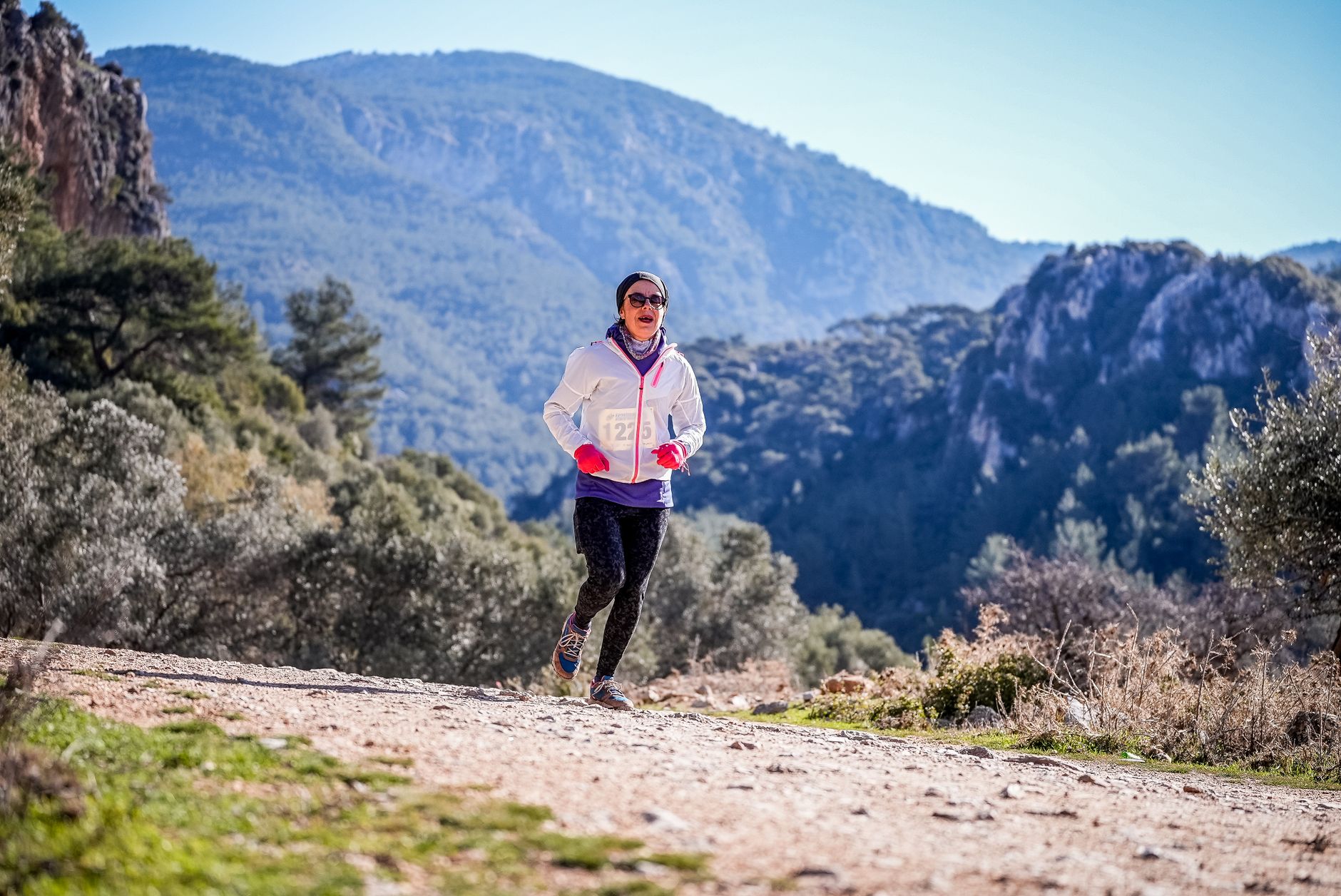
Road races have aid stations every mile or two. Trail races might go six to ten miles between water sources, and sometimes you’re responsible for carrying everything you need between checkpoints. A single handheld bottle doesn’t cut it, and a waist pack bounces on technical terrain in ways that become maddening over a few hours. A trail running hydration vest distributes weight across your chest, stays put on descents, and lets you carry soft flasks, nutrition, a headlamp, a rain jacket, and a first aid kit without sacrificing running form.
Fit is critical here — vests are sized by chest circumference, not shirt size. Try one on loaded with water before race day. A poorly fitted vest will chafe your arms raw by mile ten.
4. Nathan Vapor Halo 4L ⭐⭐⭐⭐⭐
Price range: $95-115 | Budget pick
For your first trail race, the Nathan Vapor Halo delivers everything you need without overcomplicating things. It comes with two 20oz soft flasks up front, 4 liters of total storage, and a breathable mesh back panel that minimizes heat buildup. The quick-adjust sternum straps let you dial in fit in under a minute — essential if you’re new to vest running and still figuring out what “locked in” feels like.
Built to last: Ripstop nylon construction throughout, reinforced stress points at the sternum buckles, and high-quality YKK zippers on the main pockets hold up across seasons of hard training.
Pros:
- ✓ Affordable and accessible for beginners
- ✓ Includes soft flasks — nothing additional to buy
Cons:
- ✗ Limited storage for mandatory gear requirements at longer events

Swap 4: Road Running Socks and Shorts to Trail-Specific Kit
Cotton socks are a blister factory on trails. Road running socks are typically thin and low-cut, leaving your ankles exposed to debris and your heels to hot spots on uneven ground. Trail socks — brands like Darn Tough, Injinji, and Smartwool — use merino wool or synthetic blends with reinforced heel and toe zones, and they come in crew or quarter crew heights that keep grit and gravel out. This is a $25 swap that prevents hours of misery.
Trail shorts differ from road shorts primarily in pocket placement. You need quick-access side pockets deep enough to hold soft flasks or a phone without bouncing. Most trail shorts also feature built-in liners with anti-chafe seaming. For your race-day kit, prioritize a short with at least two hip pockets rated for a 500ml flask.
While you’re building out your race kit, it’s also worth reviewing what medical professionals actually recommend carrying on trail — our backcountry first aid kit guide from 3 ER doctors covers exactly what to tuck into your vest pocket for self-sufficiency between aid stations.
Swap 5: Gel Pockets to a Full Nutrition Strategy — Plus Three More Swaps Rounded Out
Road marathoners typically carry three to five gels tucked in a waistband. Trail races demand a longer horizon: even a 25K can take 3-5 hours depending on terrain, and you’ll need real food, salt, and more calories per hour than you’re used to consuming on flat ground. Climbing requires significantly more energy, and your gut behaves differently when you’re moving at trail pace versus road pace.
The remaining three swaps road runners often overlook: First, a headlamp rated at 300+ lumens — even a morning race can run long. Second, lightweight trekking poles for races with significant vert; poles are legal in most events and save your quads on descents. Third, a lightweight emergency rain layer, because trail conditions above treeline can change without warning and hypothermia is a real risk at altitude even in summer months.
5. Black Diamond Distance Carbon Z Trekking Poles ⭐⭐⭐⭐⭐
Price range: $170-200 | Premium pick
The Distance Carbon Z is the pole that serious trail runners actually race with. At roughly 130 grams per pole, they collapse to a size that straps to any vest, deploy in seconds, and provide genuine structural support on technical climbs and quad-crushing descents. If your race involves more than 3,000 feet of gain, these will change your relationship with climbing entirely.
Built to last: 100% carbon fiber shaft resists flex and fatigue over long days; the Z-Pole folding system uses internal cord tension rather than traditional sections, eliminating the twist-lock failure point common on cheaper poles.
Pros:
- ✓ Ultralight and fast to deploy mid-race
- ✓ Compact fold fits any running vest without dangling
Cons:
- ✗ Fixed length — no adjustability for varying terrain grades
Final Advice Before Your First Trail Start Line
The biggest mistake road runners make on trails isn’t gear-related — it’s pace. You will run slower. Your GPS pace will look alarming. That’s correct. Effort-based running replaces pace-based running the moment you hit meaningful elevation. Learn to run by feel and heart rate before your race, or you’ll blow up on the first climb and spend the back half of the course walking. Trail running humbles everyone equally at first.
Get each piece of gear dialed before race day. Wear your vest on long training runs. Run in your trail shoes on varied terrain, not just smooth paths. Practice eating and drinking while moving. The gear swaps above are proven to close the gap between road competence and trail readiness — but they need miles in them before the gun goes off. Now go get dirty.
Shop Backcountry Gear Labs on Etsy
Hoodies, tees, hats, and more for campers and hikers who live for the trail.
Get Weekly Gear Picks
Join the Backcountry Gear Labs newsletter for expert gear picks and backcountry advice, every week.