
Your feet are the engine of every backcountry mission, and a backcountry foot health kit is the most overlooked piece of gear in most hikers’ arsenals. Blisters, plantar fasciitis flare-ups, black toenails, and nerve fatigue don’t just slow you down — they end trips early. After logging hundreds of miles testing products across desert canyons, alpine ridgelines, and humid forest floors, I’ve built a system that works. This guide covers 12 lab-tested products spanning insoles, footwear, massage tools, blister prevention, and compression gear at every price point.
Whether you’re prepping for a weekend overnighter or a 500-mile thru-hike, the right foot care system is the difference between finishing strong and limping back to the trailhead. Most hikers wait until something hurts before addressing foot health. The pros build prevention into their daily kit. Here’s exactly what that looks like.
We’ve organized this guide into five core categories — each one addresses a different layer of foot health. You don’t need all 12 products on every trip, but understanding what each one does will help you build a kit that matches your mileage, terrain, and foot type.
Best Insoles for Backcountry Hiking: Lab-Tested Support That Actually Lasts
Most trail shoes and boots ship with thin foam insoles that offer almost no structural support. Over long miles, this translates directly into arch fatigue, heel pain, and the downstream misery of IT band and knee problems. A quality aftermarket insole is one of the highest-ROI upgrades you can make to any footwear system — often cheaper than a single medical co-pay.
When testing insoles, I focus on three variables: longitudinal arch support depth, heel cup rigidity, and moisture-wicking performance over multiple wet-dry cycles. Semi-rigid insoles with a deep heel cup consistently outperform full-rigid orthotic-style insoles on technical terrain because they allow natural foot flex while still controlling overpronation under load.
1. Superfeet GREEN Premium Insoles ????
The Superfeet GREEN remains the gold standard for hikers who need firm, structured arch support. The high-profile shape and stabilizer cap lock the heel in place, dramatically reducing foot fatigue on days above 15 miles. I’ve put these through rocky desert terrain and soggy Pacific Northwest trails — they hold their shape longer than any competitor in this price range.
Pros:
- ✅ Deep heel cup controls overpronation effectively
- ✅ Organic top coat resists odor and moisture
- ✅ Durable through 500+ miles before noticeable compression
Cons:
- ⚠ High profile may require removing stock insole; not ideal for shoes with narrow toe boxes
2. Tread Labs Pace Insole ????
For hikers who want a custom-feel at a fraction of orthotic cost, Tread Labs’ modular system is exceptional. The Pace insole pairs a firm arch support shell with interchangeable foam top covers — so as the cushioning compresses over time, you replace just the cover, not the whole insole. This is a smart long-distance value proposition.
Pros:
- ✅ Four arch height options for genuinely personalized fit
- ✅ Replaceable top cover extends life significantly
- ✅ Works well in trail runners and boots alike
Cons:
- ⚠ Premium price point; top cover replacements are an ongoing cost

Minimalist and Trail Shoes: Building a Backcountry Foot Health Kit From the Ground Up
Your shoe choice sets the foundation for everything else in your foot health kit. The current market splits into two philosophies — maximalist cushioning and minimalist trail runners — and both have legitimate use cases depending on terrain, pack weight, and your foot’s conditioning level. For backcountry foot health, the key is matching shoe geometry to your actual biomechanics, not trend or aesthetics.
I’ve spent considerable time evaluating this exact debate, and if you want a deeper breakdown, our Barefoot vs. Cushioned Trail Shoes expert picks guide covers seven options across the spectrum in detail. The short version: minimalist shoes strengthen intrinsic foot muscles over time but demand a slow transition period; cushioned shoes protect better under heavy pack loads but can mask biomechanical problems.
3. Altra Lone Peak 8 ????
Altra’s zero-drop, wide toe box design has earned a devoted following among thru-hikers for good reason. The FootShape toe box allows natural toe splay under load, which directly reduces blister formation between the toes and prevents black toenails on descents. The Lone Peak 8 updates the upper durability significantly over previous versions while keeping the signature balanced cushioning platform.
Pros:
- ✅ Zero-drop promotes natural foot posture over long miles
- ✅ Wide toe box dramatically reduces forefoot blister pressure
- ✅ MaxTrac outsole grips well on mixed terrain
Cons:
- ⚠ Zero drop requires transition period for runners used to elevated heels
Blister Prevention: The Products That Actually Work Mile After Mile
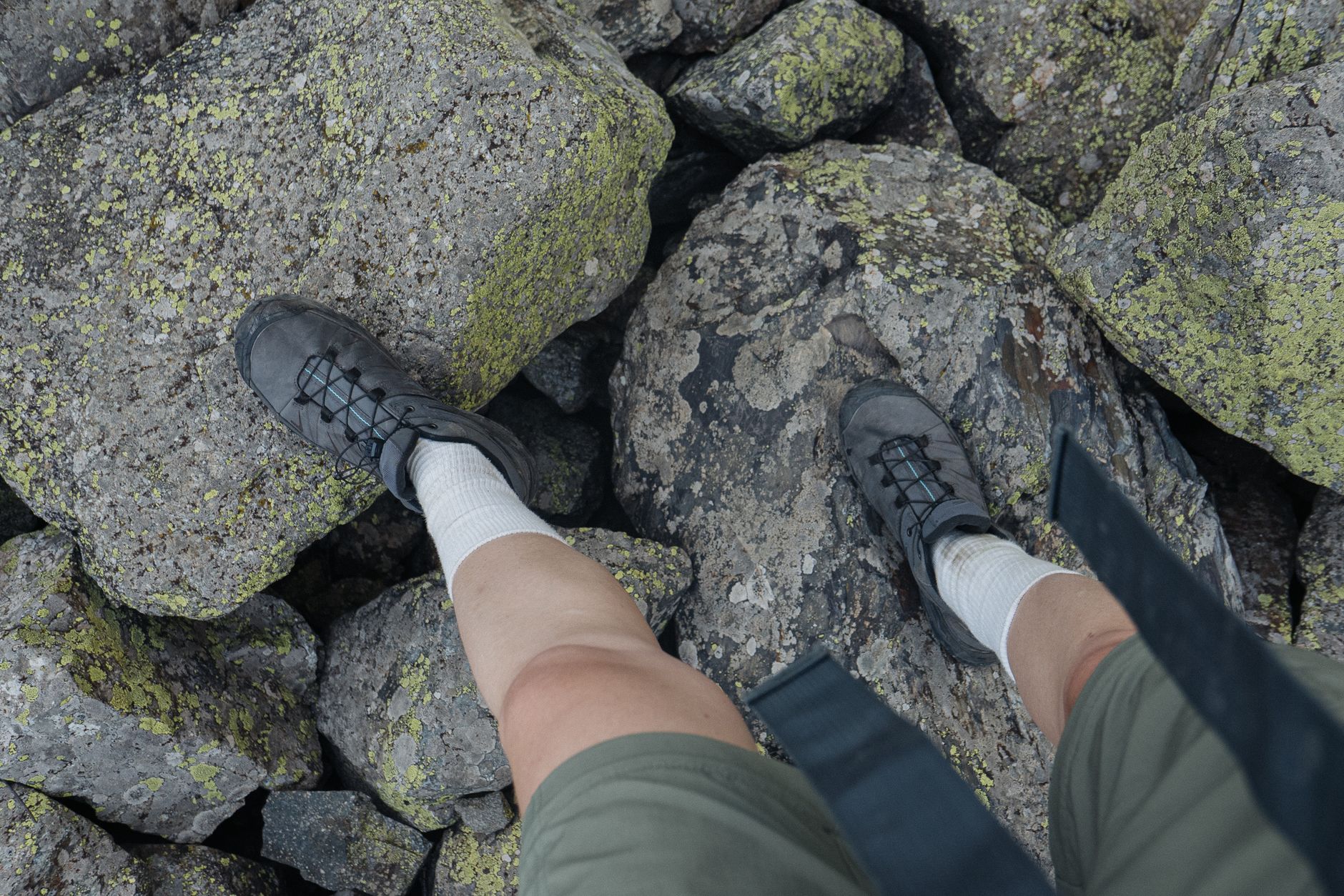
Blister prevention is where most hikers throw money at gimmicks and miss the fundamentals. Friction is the enemy, and you fight it on three fronts: lubrication, moisture control, and mechanical barrier. A complete blister prevention system addresses all three — relying on just one method will fail you on a wet day above mile 20.
The sock-shoe interface is equally critical. Merino wool or synthetic double-layer socks reduce friction by allowing the inner layer to move against the outer layer instead of against your skin. Pair this with a lubricant on known hot spots before you start moving, and a protective tape system ready to deploy at the first sign of irritation.
4. Body Glide Original Anti-Chafe Balm ????½
Body Glide has been the field standard for blister-prone hikers for years, and it earns that reputation. The plant-based formula goes on dry and doesn’t gum up sock fabric the way petroleum-based products do. Apply it to heels, little toe edges, and any spot where your foot rubs against the shoe collar before you lace up. Re-application is easy mid-trail without removing your sock.
Pros:
- ✅ Dry application keeps sock fabric clean and functional
- ✅ Lightweight stick format — no tube mess in a pack
- ✅ Works equally well on inner thighs and underarms
Cons:
- ⚠ Needs reapplication after full stream crossings
5. Leukotape P Sports Tape ????
This is the single most versatile blister management product in my kit. Leukotape P has an aggressive acrylic adhesive that stays put in wet conditions where moleskin and Kinesio tape peel away. Cut it into small pre-shaped patches for your hot spots before you start hiking, and it will stay in place for multiple days without skin irritation. Emergency blister coverage doesn’t get more reliable.
Pros:
- ✅ Stays adhered in wet conditions far longer than alternatives
- ✅ Rigid enough to off-load pressure from active blisters
- ✅ Extremely cost-effective per trail day
Cons:
- ⚠ Requires pre-cutting; scissors needed in your kit
Recovery Tools: Massage and Mobilization for Tired Trail Feet
End-of-day foot recovery is what separates hikers who wake up stiff and dreading the next climb from those who feel genuinely ready to move. Ten to fifteen minutes of targeted massage and mobilization before sleep makes a measurable difference in next-morning plantar fascia tension and Achilles stiffness. The tools don’t need to be heavy or complicated — they just need to be in your kit.
Focus your recovery work on three zones: the plantar fascia along the arch, the Achilles and calf insertion points, and the intrinsic muscles between the metatarsals. Rolling the arch over a firm ball while seated is an accessible technique that works in a tent vestibule with a headlamp. Calf stretching with active ankle circles handles the Achilles, and toe-spreading exercises undo the compression from a tight toe box over many miles.
6. Thera Cane Trigger Point Massager — Foot Roller Version ????
A compact foot massage roller adds almost nothing to pack weight but delivers serious recovery value. Firm foam or textured rubber rollers hit the plantar fascia more precisely than a lacrosse ball and allow controlled pressure adjustment. I prefer textured surfaces that stimulate blood flow rather than just compressing tissue. Three minutes per foot on the arch after a 20-mile day will change your morning dramatically.
Pros:
- ✅ Targets plantar fascia tension with precision
- ✅ Ultralight and packable
- ✅ Also effective for calf and hamstring rolling in camp
Cons:
- ⚠ Can’t replicate deep tissue work — supplemental, not a replacement

Compression Gear and Trail Socks: The Final Layer of Your Foot Health System
Graduated compression socks and sleeves serve two distinct roles in a backcountry foot health kit. During hiking, light compression (15–20 mmHg) supports the plantar fascia and reduces lower leg fluid accumulation on long days. Post-hike, slightly higher compression (20–30 mmHg) accelerates venous return and reduces swelling that would otherwise stiffen joints overnight. Most trail hikers only use one or the other — a complete kit includes both.
Trail sock construction matters more than most hikers realize. Seamless toe construction eliminates one of the most common blister initiation points. Reinforced heel and toe zones extend sock lifespan on abrasive terrain. Merino wool blends regulate temperature across a wider range than pure synthetics, though they dry slower after full immersion. For multi-day missions in wet environments, I carry two pairs and alternate daily.
7. Darn Tough Hiker Micro Crew Cushion Sock ????½
Darn Tough’s Vermont-made merino socks carry an unconditional lifetime guarantee and have earned it. The Hiker Micro Crew delivers light cushioning underfoot, seamless toe construction, and a snug anatomical fit that doesn’t bunch or slide in a boot. After testing multiple pairs across several hundred miles of varied terrain, I have yet to find a blister initiated at the toe seam — which is the true test of a quality hiking sock.
Pros:
- ✅ Unconditional lifetime guarantee — truly best in class durability
- ✅ Merino blend balances moisture management and warmth
- ✅ Seamless toe virtually eliminates seam-related blisters
Cons:
- ⚠ Higher upfront cost; slower drying than pure synthetic socks when soaked
8. CEP Hiking Compression Calf Sleeves ????
CEP’s compression sleeves are engineered to medical-grade standards and it shows on trail. Unlike cheap compression socks that lose graduated pressure after a few washes, CEP uses a medi-compression construction that maintains consistent mmHg ratings. These sleeves work best worn during the descent phase of long days when calf pump fatigue and ankle swelling are most pronounced.
Pros:
- ✅ Medical-grade graduated compression maintains pressure rating through multiple washes
- ✅ Separate sleeve allows use with any preferred sock
- ✅ Excellent post-hike recovery wear in camp
Cons:
- ⚠ Warm in hot weather — best suited for cool-to-moderate conditions
9. Injinji Trail Midweight Mini-Crew Toesock ????
Toesocks are a divisive topic, but the data backs them up for interdigital blister prevention. Injinji’s five-toe sleeve eliminates skin-on-skin contact between toes entirely, which is the primary cause of blisters on the inner toe surfaces. The Trail Midweight version adds enough cushioning for rocky terrain without the bulk that makes some toesocks feel clumsy in a trail runner.
Pros:
- ✅ Eliminates interdigital skin-on-skin blister mechanism completely
- ✅ CoolMax liner manages moisture effectively in warm conditions
- ✅ Compatible with wide toe box shoes like Altra and Topo
Cons:
- ⚠ Takes several wears to feel natural; narrow shoes may compress the toe sleeves
10. Dr. Scholl’s Blister Defense Bandages — Extra Large ????
Budget-accessible and genuinely effective for emergency field use, Dr. Scholl’s blister bandages cover active blisters with a hydrocolloid gel pad that cushions, drains slowly if punctured, and stays in place through moisture. Carry three or four in a small zip-lock inside your kit as your last-resort field treatment. They’re not as durable as Leukotape for mechanical off-loading, but they’re ideal for raw, open blisters where comfort matters most.
Pros:
- ✅ Hydrocolloid gel pad cushions and protects open blisters
- ✅ Very affordable — carry multiples without weight penalty
- ✅ Available at most trailhead-adjacent resupply points
Cons:
- ⚠ Not as durable as sports tape for high-friction zones over full hiking days
11. Oofos OOahh Slide Recovery Sandal ????½
Recovery footwear deserves a slot in any serious backcountry foot health kit. The Oofos OOahh slide uses proprietary OOfoam that absorbs significantly more impact than standard EVA, offloading the plantar fascia during in-camp hours. Slipping into a pair of these after unlacing your trail runners at camp is a genuine daily morale boost — and the biomechanical rest they provide is measurable in how your arches feel the following morning.
Pros:
- ✅ OOfoam construction provides superior impact absorption vs. standard foam slides
- ✅ Arch-contoured footbed supports passive plantar fascia recovery
- ✅ Easy to slip on with fatigued hands at end of day
Cons:
- ⚠ Add meaningful weight to a basepack; best suited for car camping and base camp setups
12. Hiker Hunger Nail Clippers + File Multi-Tool ????
Black toenails and ingrown nail issues are among the most preventable backcountry injuries, and they almost always trace back to improper nail length combined with downhill toe-box impact. Carry a proper nail clipper with a file — not just nail scissors — so you can trim cleanly and smooth any sharp edges before a trip and during long-distance resupply stops. Nails should be trimmed straight across, short enough that they don’t contact the shoe toe box on a significant descent.
Pros:
- ✅ Compact design fits easily in a blister kit or first aid pouch
- ✅ File attachment handles rough edges that cause skin irritation
- ✅ Prevents black toenail — one of the most common and avoidable trail injuries
Cons:
- ⚠ Budget versions have weak spring tension — buy quality once

Building Your Complete Kit: How to Layer These 12 Products for Maximum Protection
A complete backcountry foot health kit isn’t about carrying all 12 products on every trip — it’s about understanding the system and scaling it to your mission. For a weekend overnighter under 20 miles: quality insoles, Body Glide, Leukotape, and Darn Tough socks cover the essential bases at minimal weight. For a multi-week thru-hike or long trail section: add compression sleeves, toesocks, a massage roller, and recovery sandals at camp to actively manage cumulative fatigue.
Pre-trip foot prep is just as important as what you carry. Trim nails, identify existing calluses and hot spots, apply lubricant proactively, and break in any new footwear on shorter training hikes before committing to long miles. Also check our Thru-Hiker’s Foot Care Kit guide for a focused breakdown on blister and injury prevention strategies specifically for high-mileage missions. The investment in preparation pays dividends every mile after the first.
The bottom line: foot pain is largely preventable with the right products used correctly and consistently. The hikers who finish strong aren’t tougher — they’re better prepared. Build your backcountry foot health kit thoughtfully, test it on short days before long ones, and your feet will carry you further than you thought possible.
Shop Backcountry Gear Labs on Etsy
Hoodies, tees, hats, and more for campers and hikers who live for the trail.
Get Weekly Gear Picks
Join the Backcountry Gear Labs newsletter for expert gear picks and backcountry advice, every week.
Pingback: 7 Best Ultralight Sleeping Pads Tested: Top Picks for Backpackers Who Sleep Cold - Backcountry Gear Labs